
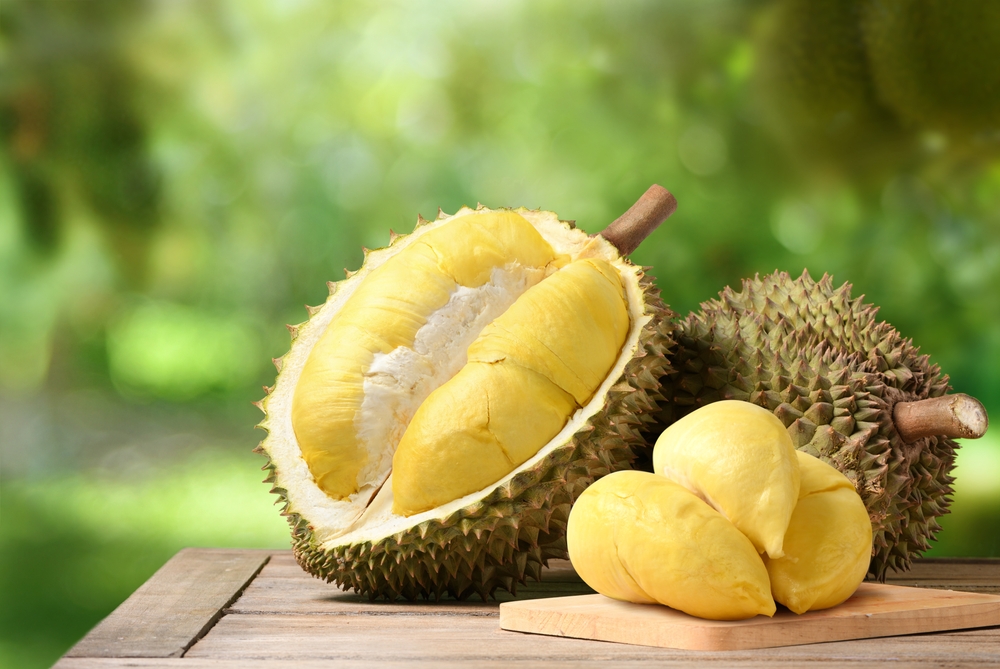
Recently, news of a significant drop in the price of durian has caused a sensation online, with headlines like “Durian Prices Plummet”,”Durian Prices Completely Collapse”, and “Durian Prices Avalanche This Summer” making waves. The once-considered “king of fruits”, the Jinzhen durian, previously sold for around 30 to 40 yuan per pound, with premium ones fetching prices exceeding 300 yuan. However, many supermarkets have now reduced prices to as low as 19.9 yuan per pound, with wholesale prices at some markets dropping below 15 yuan.
On social media platforms in mainland China, many netizens have reported buying Jinzhen durian for as low as 9.9 yuan per pound at fruit shops. This has sparked discussions among netizens, questioning if Jinzhen durian has entered the era of being priced at 9.9 yuan?
According to reports from various media outlets such as the “Urban Express,” many fruit shops and supermarkets nationwide are selling durian around the 19.9 yuan per pound mark, while at a fruit wholesale market in Guangdong, prices have dropped below 15 yuan per pound.
At the Linping Hongfeng Agricultural Market, several fruit stalls selling durian have displayed prices of “9.9 yuan.”
However, the quantity of durian priced at “9.9 yuan per pound” is limited, with some stalls having only one piece with subpar quality, considering the regular price is 25.9 yuan per pound.
According to Lanjing News, many supermarkets and local fruit stores in multiple cities across the country have already offered promotional prices at 19.9 yuan per pound, with wholesale prices for Vietnamese Jinzhen durian dropping below 15 yuan per pound.
The trend of declining prices first appeared in large domestic agricultural wholesale markets, with reports from the “Yangcheng Evening News” revealing that at the Guangzhou Jiangnan Fruit and Vegetable Wholesale Market, the wholesale base price of grade B Vietnamese Jinzhen durian hit a low of 13.8 yuan per pound, while a significant amount of secondary-grade stock was purchased at prices generally below 15 yuan.
Moreover, in national core fruit markets such as Jiaxing, Kunming, and Zhengzhou, the supply of durian containers continues to increase, leading to a slower turnover speed in the market. Many fruit wholesalers have noted that the price drop for durian this year happened earlier than in previous years, with a rapid downward trend, and minimal chance for a rebound in market conditions after initiating price reductions in the summer.
Based on public information from previous years, during the same period in August of 2024 and 2025, the mainstream wholesale price of Jinzhen durian in domestic markets ranged from 22 to 30 yuan per pound, with offline supermarket retail prices stable between 28 and 40 yuan per pound. A Jinzhen durian weighing 4 to 5 pounds used to cost generally between 150 and 200 yuan, with premium ones even exceeding 300 yuan.
Calculating based on the current retail price of 19.9 yuan per pound, a Jinzhen durian weighing 4 to 5 pounds would only cost between 80 and 100 yuan, nearly halving the purchase cost compared to the same period in previous years.
Why has the price of durian dropped significantly this summer? Firstly, there has been a surge in supply. From 2018 to 2020, the consumption of durian in China witnessed explosive growth, leading to a planting boom of durian orchards in Southeast Asia, including Vietnam, Thailand, and Malaysia.
Durian is not a crop that bears fruit annually. It usually takes several years from planting to reaching a stable period of fruiting. Now, the newly planted durian trees from those years have started producing fruits, contributing to the increased supply in the market.
Chinese customs data shows that this year, major durian-producing regions in Southeast Asia have experienced increased production, while China has also witnessed a record high in durian imports. In just the first half of 2026, China imported nearly 1.07 million tons of fresh durian, a nearly 50% increase compared to last year. With a large influx of new supply entering the Chinese market, both wholesale and retail sectors naturally face significant pricing pressure.
Additionally, since 2022, countries such as Thailand, Vietnam, the Philippines, Malaysia, Cambodia, and Laos have been allowed to export fresh durian to China. Due to the current oversupply situation in the domestic market, industry analysts believe that retail prices are unlikely to increase in the short term.