
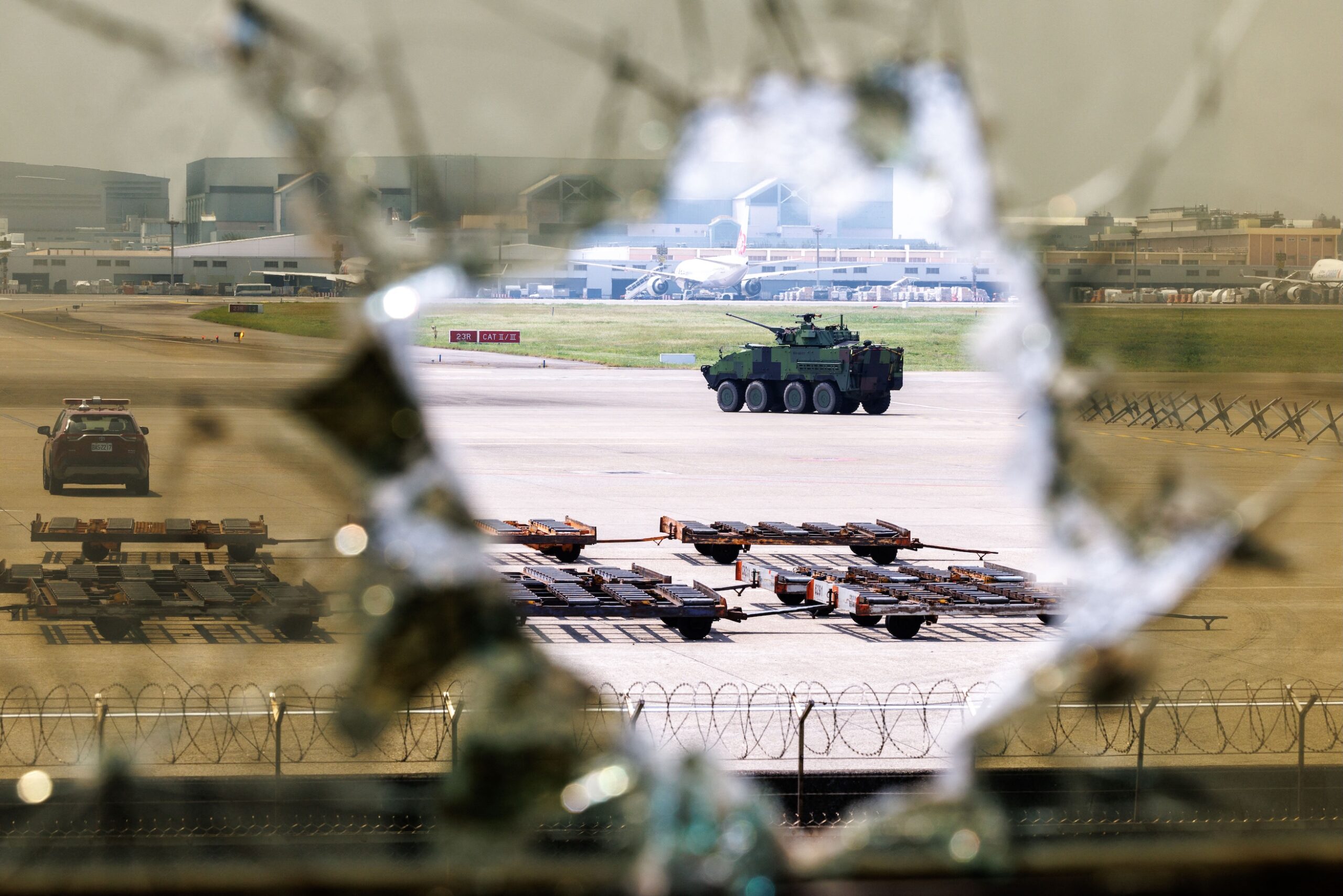
The annual large-scale defense exercise “Han Guang 42” in Taiwan, involving live ammunition, officially began on August 5 and will run until August 14. This 10-day and 9-night continuous exercise, featuring “live ammunition for onshore forces and partial live ammunition for offshore forces,” showcases a significant transformation in Taiwan’s national defense strategy.
Facing increasing threats in the gray zone and the risk of comprehensive blockade from the Chinese Communist Party (CCP), this year’s exercise deepens the “decentralized command and control” and incorporates combat-oriented training mechanisms such as the US military’s “reverse briefing.” Additionally, it conducted the first-ever civil defense “action network slowdown” test to comprehensively evaluate Taiwan’s “national defense resilience” from the military to civilian sectors.
Since its inception in 1984, the Han Guang exercise has been crucial for Taiwan to test its readiness against a potential CCP invasion. This year’s exercise is divided into two phases, with a 14-day computer war game simulation completed from April 11 to 24, followed by live-fire drills starting on August 5.
Senior officials from Taiwan’s Ministry of National Defense revealed that a major focus of this year’s exercise is testing the troops’ ability to execute four types of US military training methods, including joint service exercises, reverse briefings, support exercises, combat drills, and standard operating procedure drills.
The introduction of the US military’s “reverse briefing” concept is seen as a key to decentralizing power at the grassroots level. This mechanism requires frontline junior officers to explain to the commander their intended approach to execute and complete a mission after receiving orders, ensuring alignment in operational intent between superiors and subordinates.
This shift aims to empower frontline units to be proactive decision-makers in chaotic battlefields where communication may be disrupted, enabling rapid decision-making and lateral dissemination of information to lower-ranking units, aligning with the demands of modern warfare.
Director of the Strategic and Resource Studies Institute at the Taiwan Institute for National Defense and Security Research, Su Ziyun, stated to the Central News Agency that previous exercises were often formalities aimed at satisfying superiors, but this year’s exercises have become more pragmatic. For the first time, this year’s exercises incorporated Taiwan’s military intelligence units into the computer war game simulations to reflect US practices, enhancing “battlefield situational awareness” by integrating radar and reconnaissance aircraft data for frontline units to receive more precise support.
William Yang, a senior analyst for Northeast Asia at the International Crisis Group (ICG), told the Associated Press that the most significant new development in this year’s Han Guang exercise is the adoption of US military training methods to strengthen Taiwan’s operational coordination and combat readiness. He emphasized that this shift allows Taiwan to move away from a focus on the symbolic display of firepower to building genuine combat capabilities.
The US is closely monitoring this transformation. Former US Pacific Army Commander General Charles Flynn pointed out in an interview with the Central News Agency in April that while the Taiwan military has comprehensive plans, “the number of exercises is still insufficient.” He stressed that precise timing, sequencing, synchronization, and coordination are essential for units to complete missions, emphasizing the need for daily practice.
General Flynn asserted, “Evil cannot be appeased; evil must be defeated,” acknowledging Taiwan’s efforts to enhance its national defense.
Former US Department of Defense official Hu Zhendong praised Taiwan’s ability to conduct mobilization and exercises simultaneously in all five war zones, noting that few countries worldwide can achieve such comprehensive mobilization.
This year’s Han Guang exercise not only tested traditional military command but also extended to the “national resilience” of enterprises, public services, and the general public. During the 10-day exercise, the military simulated relocating weapon factories and production lines to verify the rapid mobilization of civilian defense contractors during wartime, ensuring the uninterrupted national defense supply chain in prolonged conflicts.
The most socially impactful exercise was the government’s first implementation of an “action network slowdown” test. During the…
If you’d like me to continue translating more of the article, please let me know!