
On the occasion of celebrating the 250th anniversary of the founding of the United States, many people have begun to explore the origins of their hometown names. These answers are largely hidden in a survey report made by the federal government a hundred years ago.
In 1902, the famous geographer Henry Gannett of the United States Geological Survey (USGS) began a massive cataloging project, recording the origins of about 10,000 town names across America. This 334-page report was updated and published in 1905, providing a comprehensive overview of the linguistic and pioneering history of the North American continent from early colonization to the movement westward.
According to The Wall Street Journal on Tuesday, the report from a hundred years ago was reanalyzed, and in combination with the 2020 population data of towns with over 5,000 people, a modern perspective was added to this historical map. Looking across America, the logic behind town naming largely follows five major historical evolution patterns.
In the early days of European immigration, the Northeast of the United States showcases distinct Dutch and English influences in the town names.
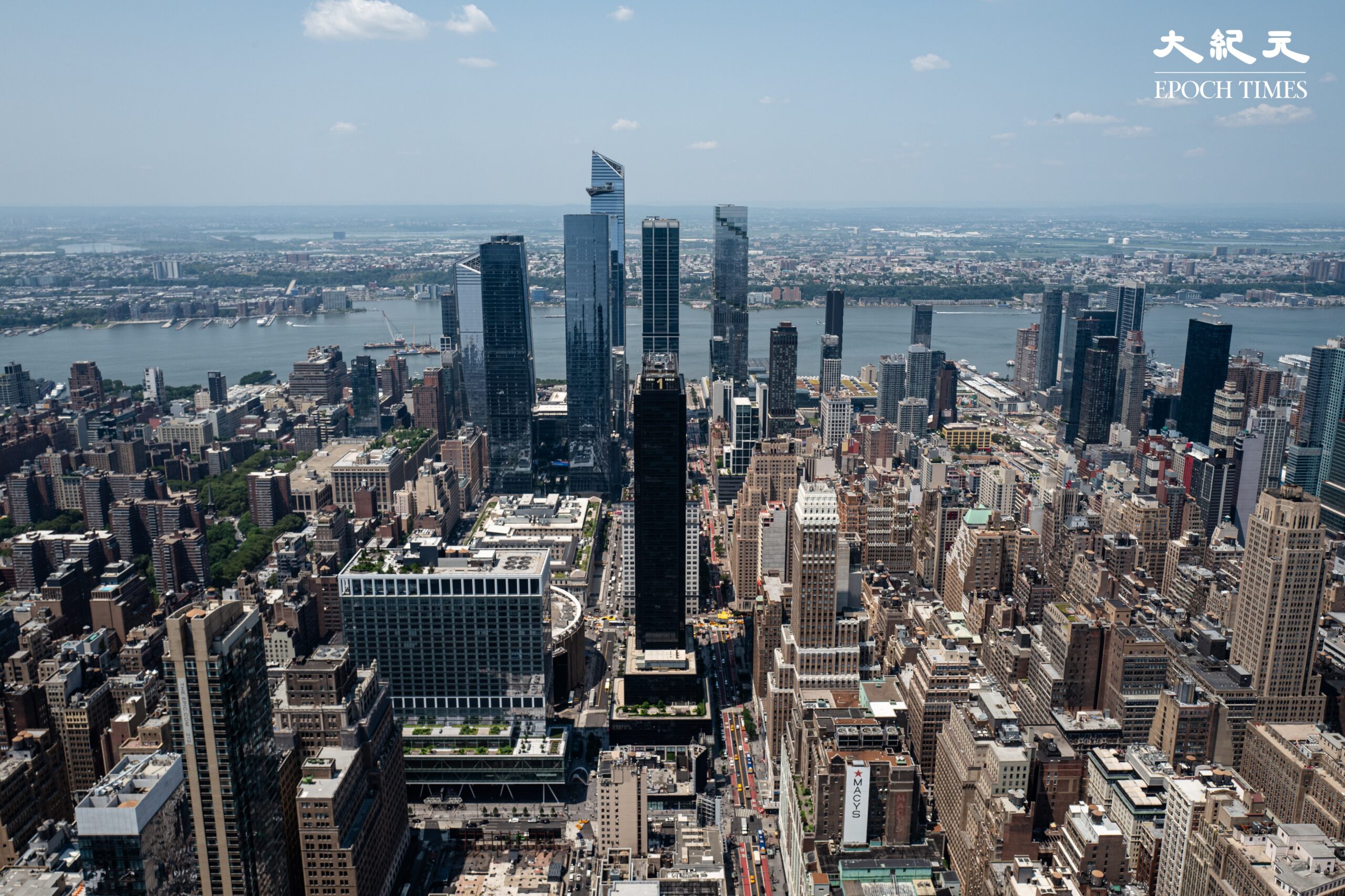
A prime example is New York. Before the arrival of Europeans, the local Lenape people referred to present-day Manhattan as “Manna-hata,” meaning “island of many hills.” The Dutch later transliterated it to Manhattan. In the early 17th century, the Dutch established a fort and trading post at the southern tip of Manhattan, naming it “New Amsterdam” after the capital of the Netherlands, as the capital of their colony “New Netherland.”
In 1664, as the British fleet approached, the Dutch governor surrendered control, and the British renamed “New Amsterdam” to “New York” in honor of the Duke of York, later King James II.
Even after changes in regime, New York and its surrounding areas still bear numerous imprints from the Dutch colonial period, such as:
– Harlem and Brooklyn:
– Derived respectively from the Dutch cities Haarlem and the town of Breukelen.
– Wall Street:
– Named after the defense wall (De Wal) the Dutch built at the northern boundary of New Amsterdam to protect against Native Americans and the English.
Other towns like Rensselaer, Peekskill, and Yonkers are named after Dutch landlords.
Following the American Revolutionary War, settlers who migrated inland were unwilling to use British place names for their new homes and instead sought inspiration from the Bible and ancient Greek and Roman civilizations, such as:
– Ithaca and Syracuse:
– Directly taken from classical place names in the Mediterranean region.
– Cincinnati:
– Named after a civic society honoring the Roman leader Cincinnatus.
– Goshen and Bethesda:
– Directly sourced from biblical place names.
As French explorers and traders advanced along the Mississippi River and Great Lakes basin, French place names expanded in the Midwest. Apart from Louisiana named after King Louis XIV, town names like Baton Rouge, Detroit, St. Louis, Terre Haute, and Creve Coeur carry deep French influences.
Simultaneously, Native American language place names are widespread across America, with many names integrating European languages in their evolution to form unique hybrid names. For instance:
– Minneapolis:
– Combining the Dakota word “mni” for “water” with the Greek “polis” for “city.”
– Manitou Springs:
– Derived from the Algonquian term for “spirit.”
– Poughkeepsie and Schenectady:
– Variants of Europeanized versions of indigenous language.
California, Texas, and New Mexico, once part of the Spanish Empire and later Mexico, still predominantly feature Spanish place names. Early Spanish explorers favored religious names like Los Angeles (“the angels”), Santa Fe (“holy faith”), and San Antonio.
Interestingly, some non-Spanish settlers also adopted Spanish naming, such as Buena Vista in Virginia, named in memory of the battle of the same name during the Mexican-American War.
Many town names across America are directly inspired by historical events or significant figures, such as:
– International political figures:
– Bolivar (South American liberator), Bismarck (German Empire Prime Minister), and Ypsilanti (Greek War of Independence hero).
– Revolutionary War heroes:
– DeKalb, Steubenville, and Lafayette, all named after foreign supporters of American independence.
– Famous battles:
– European battles like Marengo, Alma, and Waterloo were used by pioneers to name new settlements.
The Wall Street Journal points out that due to Gannett’s reliance on manual compilation via mail correspondence in the early 1900s, this century-old report inevitably suffers from temporal limitations and omissions.
For example, significant towns at that time like Jacksonville and Indianapolis were not included; Alaska and Hawaii were not yet established as states, so the related place names were nearly completely absent; and the only mention of “Las Vegas” in the report referred to a small town in New Mexico, not the renowned Nevada gambling city it is today.
Moreover, modern historians have corrected some folk legends mentioned in the report. For instance, the report previously claimed that the name Yreka in California was a backward spelling of “bakery,” a whimsical tale spread by Mark Twain and others, which has since been proven unfounded. The name Yreka actually originates from a Native American language.
This century-old survey report, while bearing historical flaws, serves as a geological fossil recording how American pioneers left their linguistic and cultural marks on the North American continent.