
The Chinese National Supply and Marketing Cooperatives recently released their “15th Five-Year Plan” for development, aiming to achieve full coverage of supply and marketing networks in urban and rural areas within the next five years. Analysts have pointed out that the expansion of this network may pave the way for a centralized procurement and distribution system, potentially leading to a return to a wartime economic structure. There are warnings that if such a system is reinstated, hundreds of millions of farmers could once again find themselves in a situation of unfreedom akin to being “self-sufficient serfs.”
According to Xinhua News Agency, the Chinese National Supply and Marketing Cooperatives recently announced the “15th Five-Year Plan” for national supply and marketing cooperatives, which includes 18 key tasks.
As per the plan, by 2030, the entire system will establish or renovate approximately 100 national strategic agricultural input reserves and about 1000 county-level agricultural input distribution centers. To achieve this goal, the national supply and marketing cooperatives system will build or renovate around 20 national strategic agricultural input reserves and over 200 county-level agricultural input distribution centers this year.
Currently, the Chinese supply and marketing cooperatives system consists of approximately 37,000 grassroots cooperatives and around 856,000 operating service outlets, which are widely distributed in counties and rural areas.
With official plans unveiling specific figures, controversies surrounding this national supply and marketing network are gradually coming to the forefront.
On August 6th, veteran media personality Shishan introduced the concept of the “Maoist Era 2” during a program. He explained that the supply and marketing cooperatives during Mao Zedong’s era were part of the “Maoist Era 1,” and the current resurgence signifies Xi Jinping’s “Maoist Era 2.”
Shishan emphasized that the most alarming aspect of the supply and marketing cooperatives is not the network itself but the system it embodies. He expressed concerns that the Chinese Communist Party’s sole purpose in promoting the cooperatives is to return to centralized procurement and distribution, which he deemed extremely frightening.
He explained the system by saying, “Centralized procurement and distribution mean that I have set all the prices, and your products can only be sold to me; you can only purchase what you need from me. Farmers can only sell their agricultural products through the cooperatives; they have no market.”
Shishan made a chilling conjecture, suggesting that the Chinese authorities may be preparing to address the next wave of economic shortages and essential goods scarcity, possibly gearing up for a wartime economy with centralized procurement and distribution. He highlighted the irony that it has only been a few decades since the Chinese people moved away from the era of rationing, and yet they might be moving back towards it.
Introducing a term he described as “chilling to the bone,” Shishan coined the term “self-sufficient serf,” derived from the concept of “self-sufficient five.” He argued that under the collective farming system and centralized procurement and distribution in Communist China, the farmers are essentially enslaved.
He further stated, “Under the household registration system, there is no freedom of movement, no land of your own (the current land contract period is 30 years), you have to bring your own provisions for farming, buying seeds, fertilizers, pesticides, and farming tools at high prices, while the prices for the produce are suppressed. Isn’t this a form of self-sufficient serfdom?”
Shishan emphasized that he was not endorsing this system but condemning it unequivocally. He pointed out that despite not endorsing slavery, life conditions under the Communist regime make individuals practically slaves in comparison to historical slaves who had their basic needs provided by their owners.
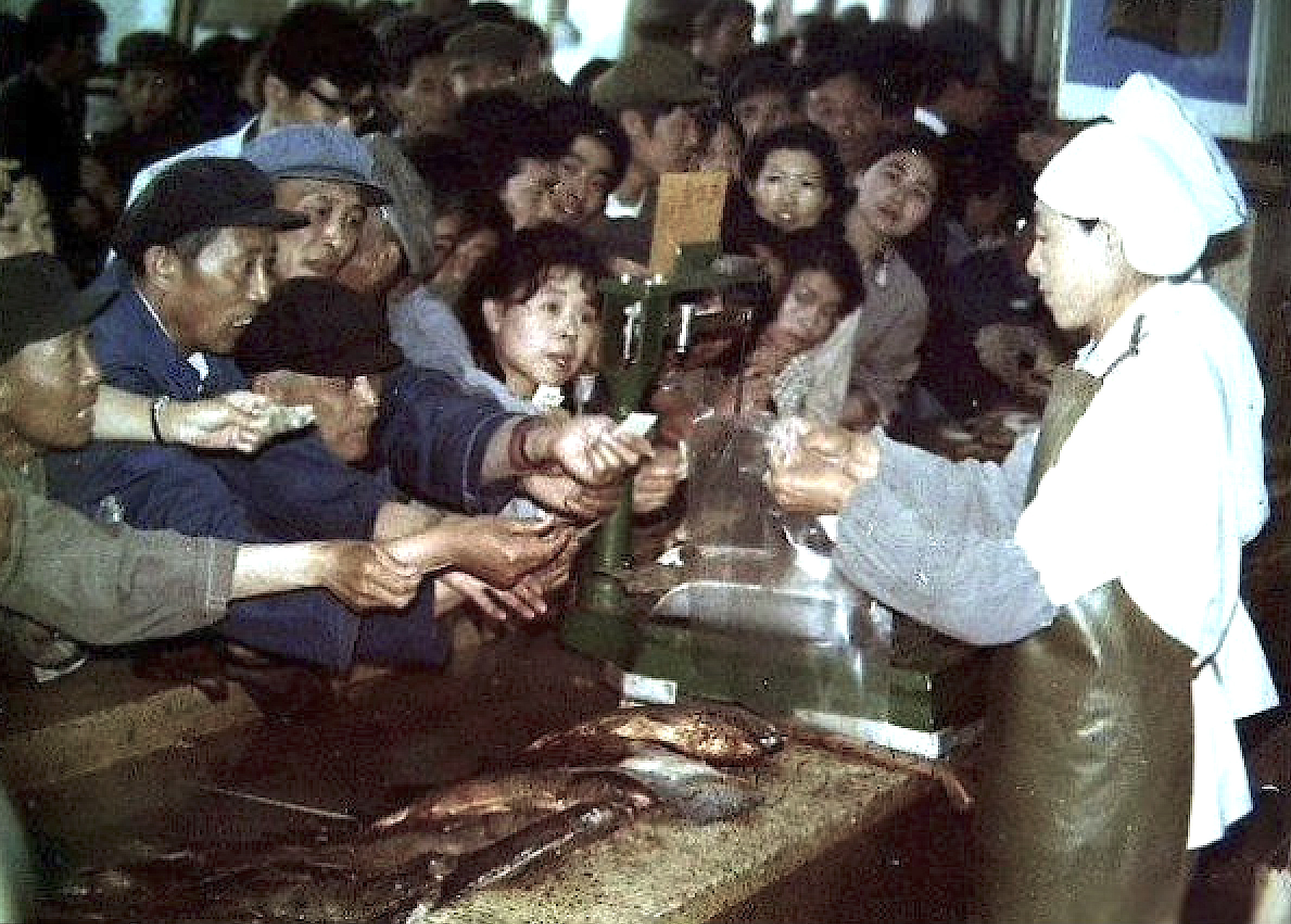
In the late 1960s and 1970s, the supply and marketing cooperatives were iconic symbols of China’s planned economy, leaving memories of material scarcity. Since the implementation of the so-called “reform and opening up” policies by the Chinese Communist Party, the cooperatives have gradually faded into obscurity.
However, after China’s 20th National Congress, the supply and marketing cooperative model that has been dormant for nearly half a century is being rapidly resurrected, attracting attention both domestically and internationally. By 2022, the Communist authorities promulgated the “Opinions on Accelerating the Construction of a National Unified Large Market,” requiring the expedited development of a national unified large market, seen as a new flagship for the supply and marketing cooperatives.
Professor Xie Tian from the Darla Moore School of Business at the University of South Carolina previously expressed to the Epoch Times that behind the national unified large market lies the comprehensive national monopoly of the Chinese Communist Party, effectively reverting to a planned economy. He noted that for the Chinese people, this would be a disaster, an absolute catastrophe.