
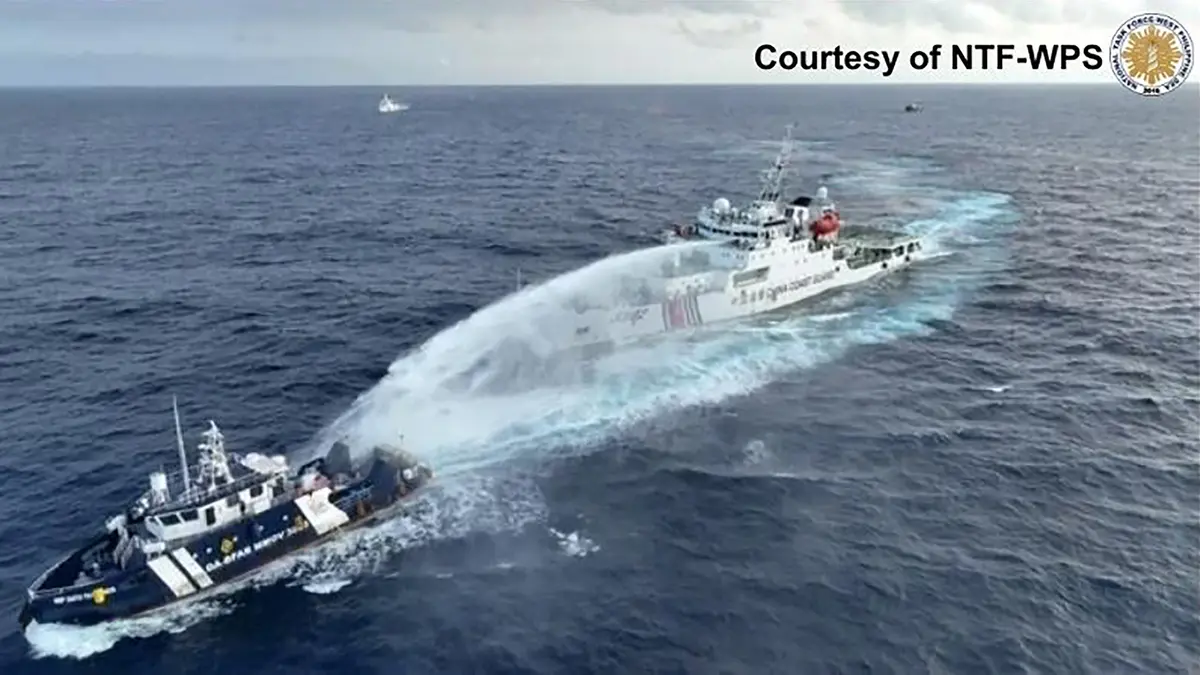
Last August, a collision between a Chinese coast guard vessel and a navy warship during a chase of a Philippine patrol boat in the South China Sea went viral. However, the Chinese authorities did not confirm the incident at the time and instead deleted related discussions on the internet. It wasn’t until a year later that official sources revealed that the accident had resulted in the deaths of two Chinese coast guard sailors.
According to a report from Chinese state media “CCTV Military” released on August 5th, four individuals including Yi Xinyu, Miao Jian, Cheng Long, and Qiao Helin were posthumously honored as “loyal guards of the Armed Police” for their roles in the incident.
Official records show that Yi Xinyu and Cheng Long, both from Shandong Province, died on August 11, 2025, during a maritime operation.
Yi Xinyu was a soldier in the Chinese coast guard according to official records, which stated that he “sacrificed in a frontline rights protection operation in the South China Sea in August 2025.”
Cheng Long was an enforcement officer with the third division of the Chinese coast guard, and official records also indicated his sacrifice during a maritime rights protection operation in August 2025 without specifying the exact location.
On August 11, 2025, a video released by the Philippine Coast Guard showed the Chinese coast guard vessel engaging in a high-speed chase with the Philippine patrol boat “BRP Suluan” in the waters of the Nansha Islands (Huangyan Island in Chinese), resulting in a collision with the Chinese missile destroyer “Guilin,” causing a loud impact sound on the scene. The bow of the Chinese coast guard vessel was severely damaged and rendered inoperable.
Philippine Senator Panfilo Lacson confirmed the deaths of two Chinese coast guard personnel in the accident, with reports from international media also mentioning Chinese crew fatalities.
After the collision, the Philippine Coast Guard offered medical assistance and drugs to the Chinese side through radio communication, but the Chinese destroyer “Guilin” did not respond immediately and continued chasing the Philippine vessel before eventually slowing down. Subsequent footage from the Philippine Coast Guard showed a large hole on the left side of the bow of the Chinese vessel.
Approximately an hour after the collision, Chinese naval and coast guard units initiated a search and rescue operation. The Chinese naval supply ship “Honghu” (hull number 906) approached to assist, while several civilian vessels also participated in the rescue operation east of the shoal located 15 to 25 nautical miles away.
However, the Chinese authorities did not report the incident of their own vessels collision, and it was not covered by the mainland media.
At the time, the video from the Philippine side was widely shared on Chinese social media platforms, sparking heated discussions, while internet censors continued to delete related posts and discussions.
Analysts pointed out that the collision incident between the Chinese vessels was inevitable due to the aggressive actions taken by the Chinese coast guard personnel operating in the South China Sea. The poor communication and command coordination between different units within the Chinese maritime forces were also highlighted.
Experts and commentators raised concerns regarding the lack of professionalism and training within the Chinese military, emphasizing that such incidents may expose the limitations and weaknesses in the operational capabilities of the Chinese armed forces, further deepening strategic challenges faced by the Chinese military.
Reflecting on the incident, experts noted that the aggressive maneuvers undertaken by the Chinese maritime forces, including the use of water cannons, tracking, interception, and intentional collisions with foreign vessels, may lead to escalating tensions in the region. The incident not only damaged China’s reputation but also highlighted systemic issues within the Chinese military command structure.