
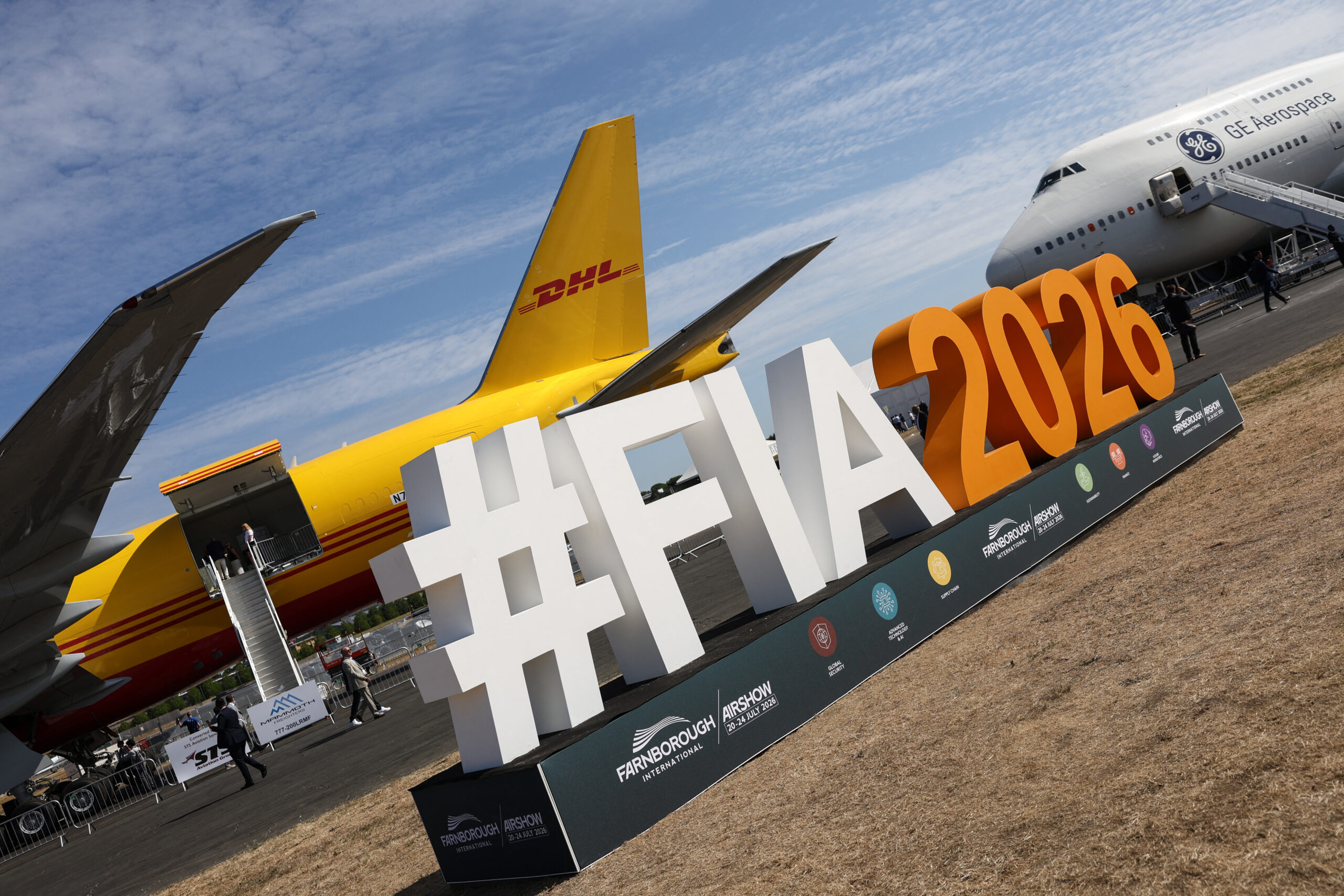
At the Farnborough International Airshow held on Monday, July 20th, GE Aviation officially announced a groundbreaking technological achievement: the world’s first high-altitude flight powered by hybrid propulsion assistance. This milestone signifies a significant step in the aviation industry’s move towards an “electrified” future.
GE Aviation Chairman and CEO H. Lawrence Culp, Jr. emphasized the historical significance of this achievement and expressed gratitude to partners for accelerating the commercialization process of this technology to meet customer demands for increased efficiency, durability, and extended range.
The official press release from GE Aviation highlighted that the flight test was not just a simulation on paper but involved real flight data verification. A modified Saab 340 aircraft successfully climbed to an altitude of over 30,000 feet with the assistance of the hybrid propulsion system, equivalent to the typical cruising altitude of commercial aircraft.
During the test flights in hybrid propulsion mode, the aircraft achieved single-flight durations exceeding two hours, demonstrating the feasibility of hybrid propulsion systems in commercial flight environments.
To achieve this milestone, GE Aviation extensively modified the right engine of the Saab 340B aircraft. The system integrated a series of high-precision components, including core components consisting of megawatt-grade electric motors/generators, power converters, and inverters, as well as batteries provided by BAE Systems and critical support from a dedicated nacelle supplied by Aurora Flight Sciences, a Boeing subsidiary, ensuring ventilation and cooling for the hybrid propulsion system.
This achievement was not solely the result of GE Aviation’s efforts but a collaborative effort across different fields. NASA’s Electric Propulsion Flight Demonstration (EPFD) program provided core infrastructure and financial support for the technological development.
BETA Technologies served as the system integrator and managed the scheduling of aircraft and route test flights. The team had previously completed numerous tests, including a challenging transatlantic flight.
Boeing provided aircraft integration and aerospace engineering support, showcasing industry leaders’ consensus on advancing new propulsion technologies.
Developing hybrid propulsion flight systems poses significant engineering challenges, including thermal management in high-altitude low-pressure environments, optimization of power density, and hardware reliability requirements. GE Aviation’s transformation of “simulations” into “reality” proves the capability of these technologies to meet the demanding conditions of commercial aviation.
The research goal of this technology is to develop more efficient and environmentally friendly power engines for future single-aisle aircraft, successors to the Boeing 737 or Airbus A320. The hybrid propulsion system can be combined with traditional gas turbine engines to optimize power output during different phases of flight and is highly compatible with CFM International’s (a joint venture between GE and Safran) RISE program.
The RISE program aims to develop advanced designs like the Open Fan to reduce existing engine fuel consumption by over 20%.
Kyle Clark, CEO of BETA Technologies, described the test flight as a “flying laboratory,” providing invaluable empirical data for all future hybrid propulsion designs.
The announcement at the Farnborough Airshow clearly signals that the aviation industry’s “hybrid era” has transitioned from concept verification to substantial test phases, bringing the goal of real applications in commercial aircraft fleets one step closer.