
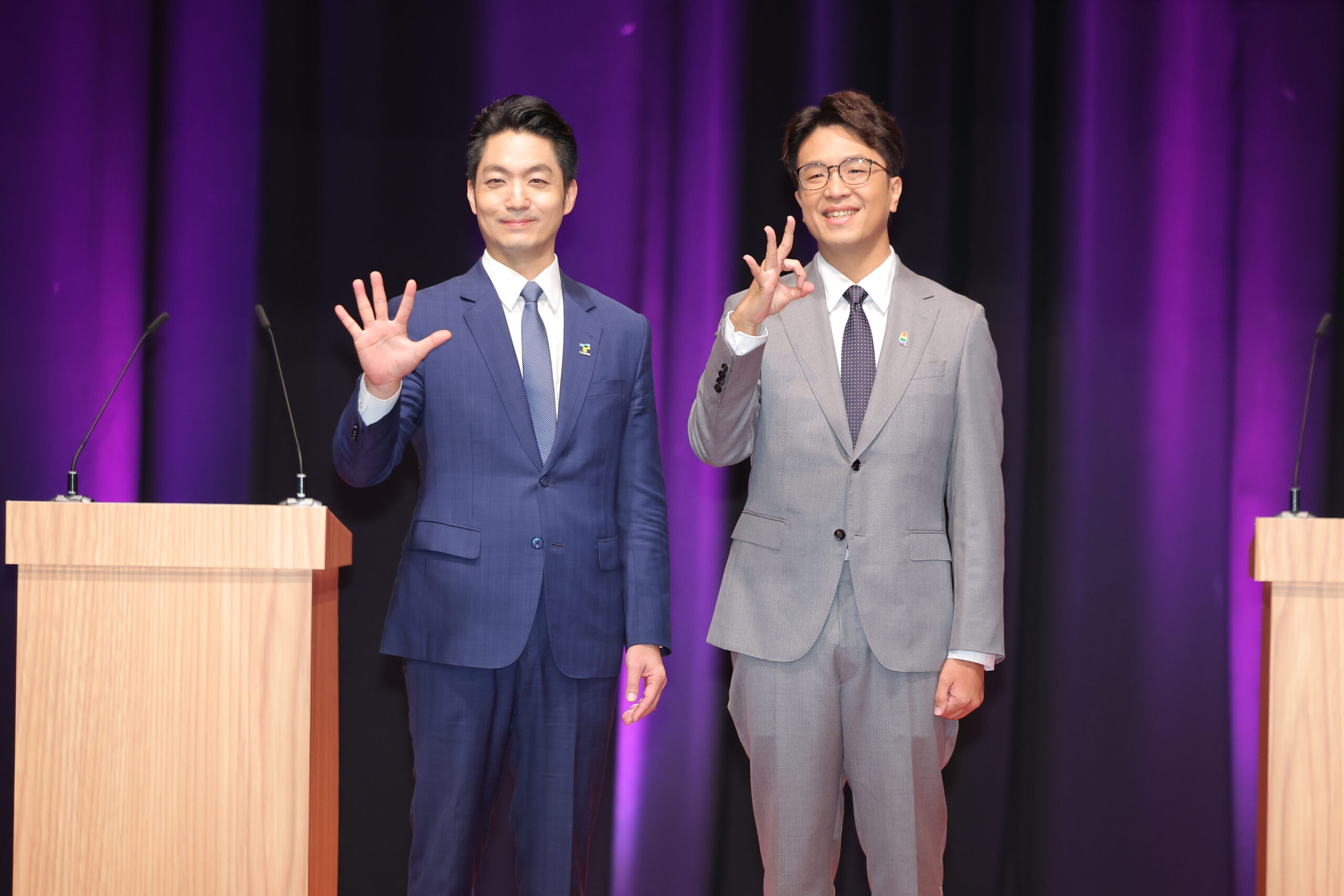
Taiwan is gearing up for the highly anticipated local elections scheduled for November 28. The mayoral race in the capital city of Taipei is presenting a unique competitive landscape, contrasting sharply with previous electoral contests. The current mayor, Chiang Wan-an of the Kuomintang (KMT), is campaigning for re-election based on his administrative achievements and experience within the party. On the other hand, Shen Bo-yang, a Democratic Progressive Party (DPP) legislator, is harnessing social media and grassroots activism to rally a wave of support he refers to as the “Yang Wave.”
The rivalry between these two candidates extends beyond mere partisan allegiance; it encompasses critical municipal issues such as urban renewal, technological development, and housing for young residents. This upcoming election serves as a crucial lens through which to examine the interplay between traditional political mobilization and digital community engagement.
As the election date approaches, three different polls released following a televised debate on October 31 indicated markedly different scenarios regarding voter sentiment. The TVBS poll reveals that Chiang leads Shen by only 4 percentage points, whereas the ETtoday poll shows a more considerable lead of 11.3 points. In stark contrast, a study commissioned by the Taiwan Strategic Research Alliance indicates that Shen is ahead by 17.3 points.
The TVBS poll indicates that among voters willing to cast their ballots, Chiang received support from 46%, while Shen has 42%, leaving 12% undecided. Conversely, the survey by the Taiwan Strategic Research Alliance reveals Shen leading with 52.6% compared to Chiang’s 35.3%, with a margin of error of ±2.6%. Meanwhile, the ETtoday poll shows Chiang at 52.0% versus Shen’s 40.7%, with a margin of error of ±2.2%.
When addressing city management issues, respondents in the Taiwan Strategic Research Alliance survey expressed that urban renewal should be the top priority for the next mayor, receiving 24.3% of the votes. Following that, concerns for transportation, environmental health, and education garnered 15.2%, 12%, and 11.9% respectively. Housing issues received 7.5% of the emphasis.
The results of these three polls collectively illustrate not a definitive advantage for any particular candidate, but rather highlight the discrepancies in voter support arising from different polling methodologies and the varying perceptions voters have regarding the candidates, their political performances, and the content examined during debates.
Since the establishment of Shen Bo-yang’s campaign headquarters on October 4, a wave of supporters has come together, characterized by vibrant floral shirts, music, and extensive social media engagement. Supporters have dubbed this energized political movement the “Yang Wave”, disseminating images and messages across platforms like Facebook, Threads, and YouTube.
In an interview with a magazine, Professor Tsai Jung-hsiang from National Chung Cheng University suggested that the participants in “Yang Wave” events are not only traditional DPP supporters but also include young adults who previously engaged in significant activism and certain moderate voters who reject negative campaigning.
One such participant, a 40-year-old office worker attending her first campaign event, expressed how Shen’s discourse and policies left a positive impression on her, also noting her fatigue with negative electoral tactics.
This phenomenon demonstrates that campaign events can draw in individuals who may have traditionally been less active in political rallies.
Shen’s campaign team is not solely relying on social media for communication. They are also employing LINE for interactions, digital identity cards, flash mob activities, and content produced by supporters, thus extending online engagement into real-world events. This has allowed for the dissemination of political messages beyond the confines of party organizations and traditional media channels.
However, the enthusiasm manifested online does not necessarily guarantee corresponding outcomes at the polls.
In a media interview on November 2, Li Zhe-hua, chair of the KMT’s Organizational Development Commission, acknowledged the effectiveness of the “Yang Wave” in utilizing digital tools and social media but questioned whether online momentum could translate into actual votes. The KMT continues to mobilize local organizations and supporters, aiming to engage both their established base and undecided voters.
In contrast to Shen’s emphasis on innovative political engagement methods, Chiang’s primary campaign assets include his incumbency and the achievements he has amassed over the past four years.
Chiang has prioritized urban renewal, social housing, family welfare, transportation infrastructure, and the attraction of technology industries within his administration’s focal points, using his governance results to garner voter support.
The first televised debate between Chiang and Shen occurred on October 31, with urban renewal, public safety, tree conservation, and city development becoming key points of contention.
During the debate, Chiang highlighted the policies and administrative experience his city government has already put into action, while Shen scrutinized overall progress, policy effectiveness, and systemic issues.
While Chiang’s current status enables him to present solid policy records, he must also address the outcomes and controversies surrounding his governance. On the other hand, Shen can propose alternative policy directions, yet he is required to elaborate on the budgets, administrative processes, and implementation capabilities necessary for reform.
Research from the Global Taiwan Institute (GTI) indicates that Chiang was initially viewed as the frontrunner for re-election; however, Shen’s sustained campaign efforts over several months have significantly boosted his support, heightening the competitive nature of the race. It has also been suggested that engaging voters who do not align with either of the two major political parties remains a critical focus for both candidates.
The competition between these two candidates has gradually extended into the everyday urban development issues faced by Taipei residents.
In terms of urban renewal, Chiang has initiated the “Publicly Funded Urban Renewal 5099” program, which lowers the threshold for public assistance from 75% to 50% of resident willingness, aspiring to accelerate the integration of aging communities.
Nonetheless, the Taipei City Government clarified that the 50% only represents the threshold for entering the initial assistance process, not a direct approval for renewal projects to be executed or initiated, as further compliance with legal regulations and requirements is still necessary.
Shen argues that urban renewal should not solely focus on the number of cases accepted or approved but should also evaluate factors like the actual commencement of work, completion, and improvements to building safety. He has suggested enhancing safety assessments for older buildings and providing assistance to residents.
The policies proposed by both candidates involve differing stages of execution. Whether reducing the initial integration threshold can shorten the overall renewal timeline remains contingent upon the progression of subsequent projects and verification of administrative data.
Another crucial issue is the development of the Beitou-Shilin Science Park (Bei Shi Ke).
Chiang has highlighted the successful acquisition of land for NVIDIA’s (also known as Bringing High Tech to Taiwan) overseas headquarters in the Beitou-Shilin area as evidence of the city’s efforts to promote technological industry growth.
In contrast, Shen has proposed the “Star Cluster Plan,” aiming to merge the tech industry with energy, transportation, and urban experimentation, thereby broadening connections between the park and surrounding industries.
However, the processes to attract businesses and acquire land rights do not equate to the completion or operational status of corporate headquarters. Shen’s proposed Star Cluster Plan is also still an unimplemented campaign promise. The tangible outcomes from both proposals must be measured against future development, investment, job creation, and fiscal data.
Young residents’ housing issues have clear empirical support.
According to the real estate information platform of Taiwan’s Ministry of the Interior, the price-to-income ratio for housing in Taipei during the first quarter of 2026 was 14.72 times, with a mortgage burden ratio of 64.41%. This was based on median housing prices, a 70% loan amount, and conditions assumed for a 20-year repayment plan.
Chiang is addressing housing demand through the supply of social housing and the “Happy Housing” policy. In contrast, Shen proposes housing initiatives specifically aimed at youth, homes for young families, and initiatives for savings among young residents.
The Taipei mayoral election has long drawn attention from political analysts outside of Taiwan. In 1994, DPP candidate Chen Shui-bian won the mayoral race, only to be defeated four years later by KMT’s Ma Ying-jeou. In a surprising turn during 2014, independent candidate Ko Wen-je triumphed over KMT’s Sean Lien and reclaimed success in a three-way race in 2018. In 2022, Chiang defeated DPP’s Chen Shih-chung and independent Huang Shan-shan, enabling the KMT to regain control of the Taipei mayoral position.
Recent research from the GTI suggests that Taipei has historically been viewed as a city with a solid KMT support base; however, in the past decade, independent voters, the personal appeal of candidates, and the overarching political environment have significantly influenced election outcomes.
Research authors Abby Fu and Karyn Kao pointed to Ko Wen-je’s victories in 2014 and 2018 as evidence of his success in attracting voters unaligned with traditional parties. Despite five candidates running for office in 2026, the primary focus of the electoral battle remains concentrated on Chiang and Shen.
The authors also perceive this election as a significant political test for Taiwan’s two main parties following the major recall movement of 2025. The position of Taipei mayor has historically been a pivotal stepping stone for political figures like Chen Shui-bian and Ma Ying-jeou to advance to a national political platform, thus this election also garners interest in light of the upcoming presidential election in 2028.
However, political observer Lucy Best, writing for the National Bureau of Asian Research (NBR), cautions that although local elections in Taiwan do carry national implications, it is imprudent to overly extrapolate the results of local elections when analyzing the 2028 presidential race.