
Western officials have indicated that British and European allies will be permitted to return fire in the event of an attack by Russian forces if they are deployed to Ukraine following a ceasefire agreement in the ongoing conflict between Russia and Ukraine. This announcement coincided with the declaration from the British and French governments on November 3, that military exercises involving 11 countries and approximately 2,800 personnel will take place in Poland later this month. These drills are intended to prepare for a potential deployment of forces to Ukraine in the future.
The multinational force, known as the “Multinational Force – Ukraine” (MNF-U), which is spearheaded by the UK and France, aims to stay away from the front lines while assisting Ukraine in rebuilding its military capabilities. However, there remains a possibility that they may engage in direct combat with Russian troops. Russia has previously voiced strong opposition to the presence of foreign troops, and the feasibility of such deployments will hinge on the cessation of hostilities.
According to a report from The Guardian, a Western official familiar with the plans stated, “Clearly, we will protect our troops from any acts of aggression.” This official emphasized that the actions of Western forces will primarily be defensive. Sky News has also quoted officials who reaffirmed that British troops will have the capability to retaliate if they come under attack.
The British Broadcasting Corporation (BBC) clarified that specific rules of engagement have yet to be published, although officials have confirmed that the deployed forces will possess self-defense capabilities.
In January this year, a “Statement of Intent” was signed by Ukraine and its participating allies, which stipulated that Ukraine would authorize these nations to use necessary means—including the application of force—while complying with international law and coordinating with Ukrainian forces to fulfill their mission and protect personnel, equipment, and facilities involved.
Russian President Vladimir Putin stated in September 2025 that any foreign troops stationed in Ukraine would be viewed as “legitimate targets” during the conflict. He also argued that if a lasting peace were achieved, there would be no necessity for foreign military presence.
The UK Ministry of Defence has announced that military exercises codenamed “Koalicja” will take place from November 9 to November 22. The term “Koalicja” is Polish for “coalition.”
This marks the first large-scale exercise for the Multinational Force – Ukraine, designed to test troop deployment, protection protocols, supply lines, and cross-national command coordination capabilities. It aims to lay the groundwork for assisting the Ukrainian military in its efforts to rebuild and enhance security guarantees post-ceasefire.
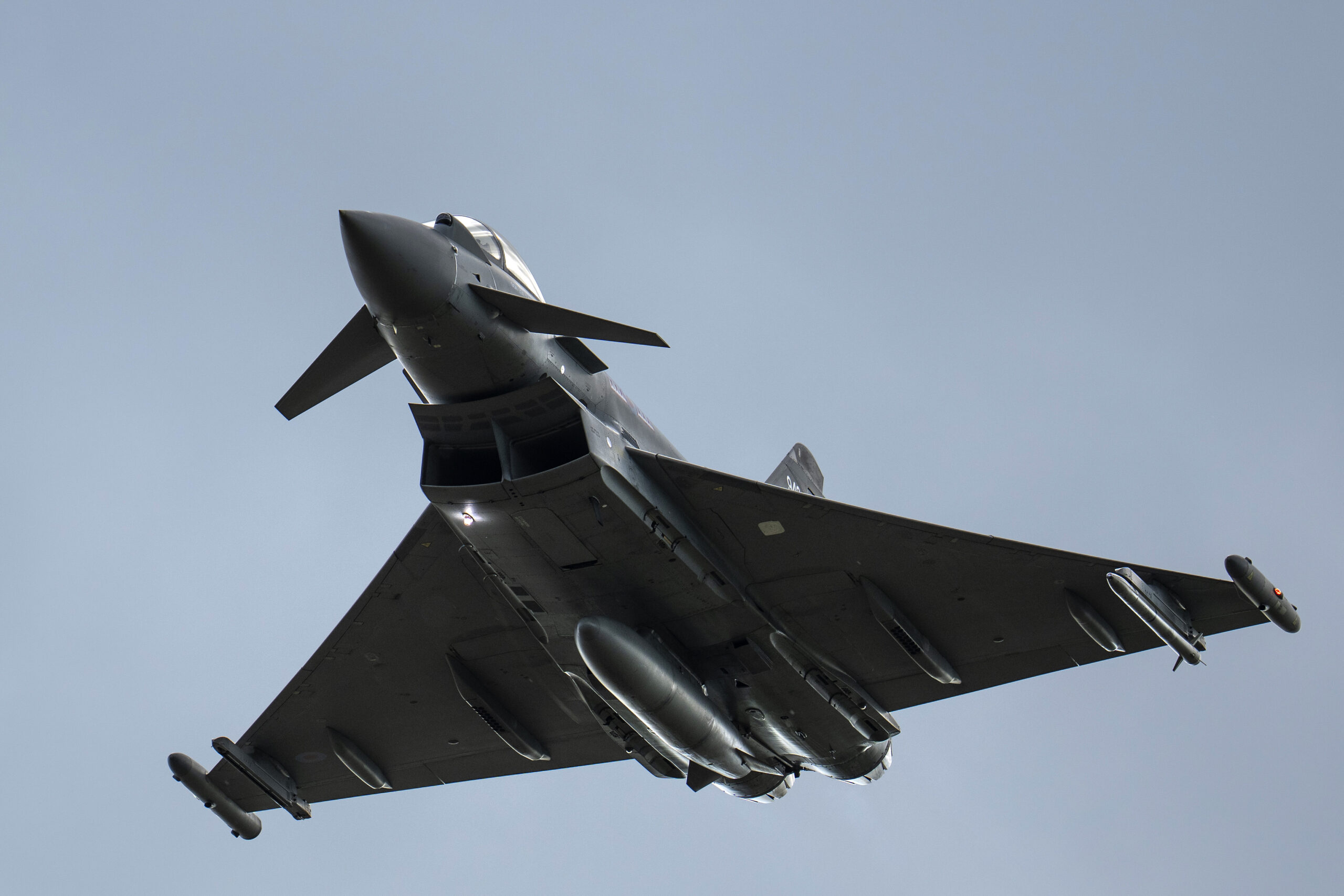
Among the participants in the military exercises will be 300 British troops, which will also include the deployment of Typhoon fighter jets and a Voyager aerial refueling aircraft. These aircraft will practice procedures to support the restoration of commercial flights in Ukraine. Turkey will be conducting maritime mine-clearing drills in Istanbul to prepare for the resumption of shipping operations at Ukrainian ports.
UK Defence Secretary Wes Streeting remarked, “This is not a hypothetical plan, but rather a real force that is ready to assist Ukraine once hostilities cease.”
Notably, the United States is not a member of this multinational force and will not be participating in the military exercises. According to Sky News, Western officials indicated that the exercises will not rely on American communications or other systems. Furthermore, The Guardian reported that future deployments are also planned to minimize reliance on American technologies like Starlink, with the expectation that the forces will be predominantly composed of European nations.
Nevertheless, the United States remains engaged in discussions regarding post-war security arrangements for Ukraine.
As reported by Reuters, U.S. Special Envoy Steve Witkoff mentioned that this week, American representatives would meet in Brussels with officials from the UK, France, Germany, the European Union, and NATO to discuss security guarantees for Ukraine. Additionally, plans are underway for negotiations in Abu Dhabi on November 10 and 11, aimed at addressing post-war security and methods to conclude the ongoing conflict.
The UK Ministry of Defence emphasized that the deployment of the multinational force is not a NATO mission and will not encompass peacekeeping or ceasefire monitoring responsibilities. According to the BBC, these forces will not be engaged in offensive operations or stationed at the frontline; instead, their role will be to aid Ukraine in rebuilding its military strength, enhancing defensive capabilities, and supporting Ukraine’s security through aerial and maritime missions.
However, the deployment will only occur if hostilities cease and at the request of the Ukrainian government. Earlier this year, the UK government indicated in response to parliamentary inquiries that any decision to send British troops would be subject to debate and a vote in the House of Commons.
The BBC also pointed out that the actual scale of forces, troop composition, and specific arrangements for deployment in Ukraine have yet to be determined. These factors will depend on the conditions of the ceasefire and the political decisions of the participating nations.