
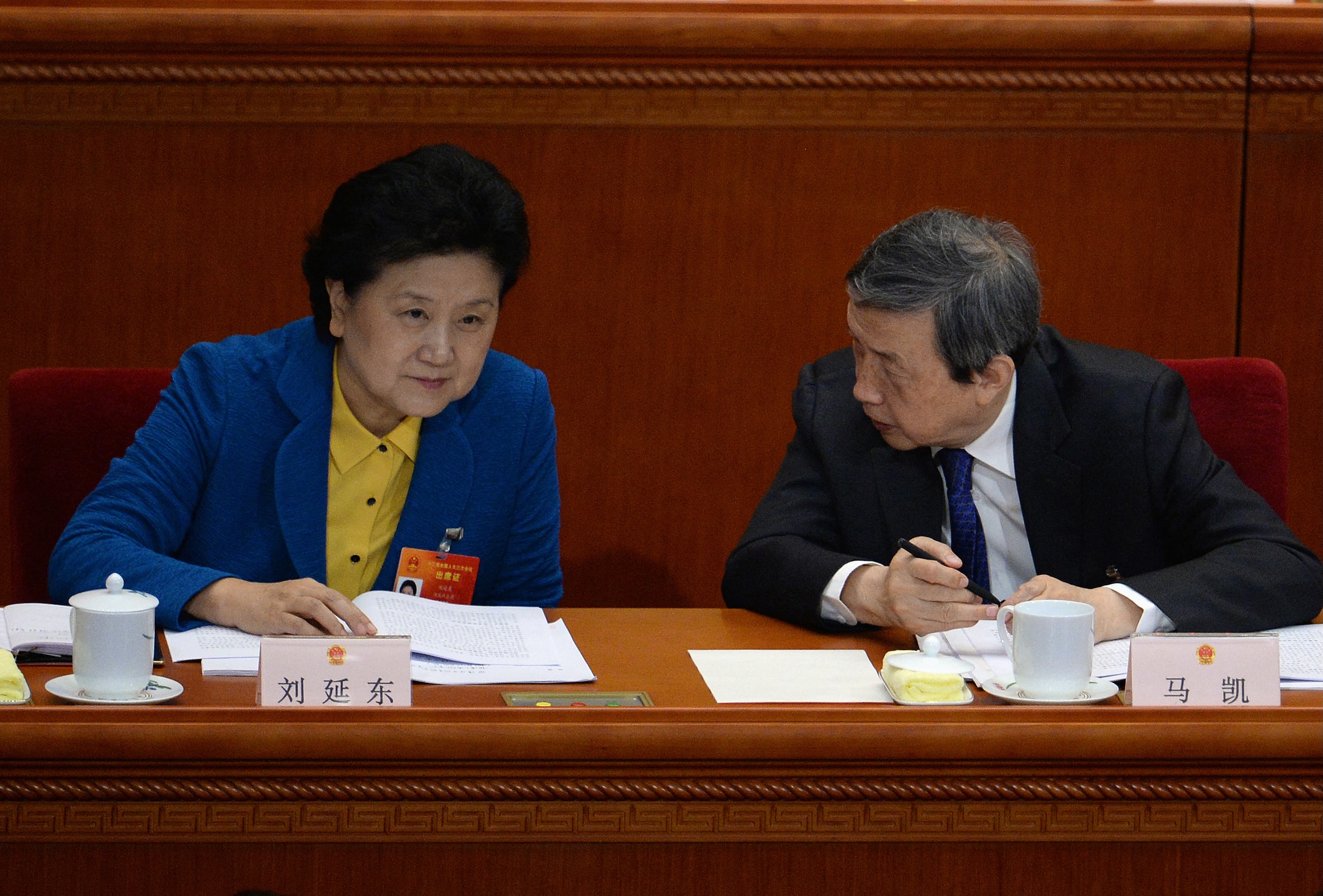
Today, a farewell ceremony was held in Beijing for former Chinese Vice Premier Liu Yandong, who passed away recently at the age of 81. The event was attended by current leaders, including General Secretary Xi Jinping and other high-ranking officials. Additionally, Hu Jintao, a former party chief and Liu’s mentor, expressed his condolences.
On the afternoon of November 3, as reported by Xinhua, Liu was cremated at the Babaoshan Cemetery in Beijing. This ceremony took place amidst the backdrop of the 20th Central Committee’s fifth plenary session, highlighting the significant timing of her passing.
Notably absent from the farewell was Premier Li Qiang, who was attending the opening ceremony of the 2026 World Internet Conference in Wuzhen, Zhejiang Province. However, Liu’s connections within the Communist Party’s elite ensured that numerous high-ranking officials, including Politburo Standing Committee members and Vice President Han Zheng, paid their respects at Babaoshan.
Prior to Liu’s death, which was officially announced by various state media, reports indicated that she had been gravely ill. Party leaders, including Hu Jintao, visited her in the hospital or conveyed their condolences through other means. Liu’s death has rekindled discussions about her historical significance and role within the party.
Born in November 1945 in Nantong, Jiangsu Province, Liu Yandong was a prominent figure within the “princeling” faction of the Communist Party. She came from an influential family, with her father, Liu Ruilong, having served as a senior official in Shanghai and later as a vice minister in the Ministry of Agriculture. This connection to powerful political figures, including former party chief Jiang Zemin, played a crucial role in her political career.
Liu graduated from Tsinghua University with a degree in chemical engineering and spent much of the 1980s working with the Communist Youth League. She held several significant positions within the League, eventually assisting Hu Jintao, who was then its head. This experience laid the groundwork for her ascent in the party hierarchy.
In subsequent years, Liu Yandong occupied key roles, including Minister of the United Front Work Department, Vice Chairwoman of the Chinese People’s Political Consultative Conference, and State Councilor. She served as Vice Premier until her retirement in 2018 and was a member of the 17th and 18th Politburo.
Liu’s legacy has drawn scrutiny, especially regarding her actions during the Tiananmen Square protests in 1989. As the political turmoil escalated, she found herself in a precarious position. When key figures in the Youth League leadership fell ill, Liu stepped in, contributing to efforts to manage the situation amid a chaotic atmosphere.
Reports indicate that, during the spring and summer of 1989, as student-led protests grew more intense, Liu was among the League leaders who faced immense challenges. An unexpected illness befell the League’s first secretary, leaving Liu to take the reins during a pivotal moment. As tensions mounted and officials debated how to respond, many within the Youth League sought to show solidarity with the students, even while the central government was ramping up its crackdown.
The aftermath of the Tiananmen protests proved to be a double-edged sword for Liu. Although her princeling background insulated her from severe repercussions—unlike many of her contemporaries—she still faced scrutiny regarding her role in the events that unfolded. This mix of privilege and peril illustrates the complex dynamics within the upper echelons of the Communist Party—a world where loyalties and past actions are often scrutinized.
As the party continues to navigate its legacy and historical narrative, Liu Yandong’s life and career encapsulate the intertwining of personal history, political maneuvering, and the ever-present shadow of monumental events that have shaped modern China. Her passing inevitably prompts reflection on both her contributions and the controversies that have marked her time in power.