
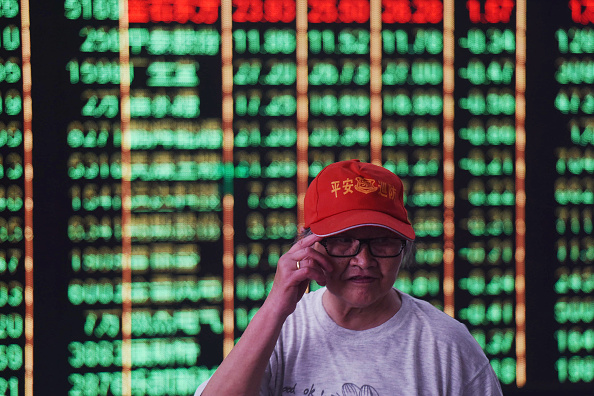
China’s stock market has experienced a significant setback, with market capitalization dropping by approximately $3.5 trillion from the peak seen in May of this year to the end of October. This decline has been particularly pronounced in the technology sector, leading to a substantial erosion of investor confidence. At the same time, the Chinese economy faces mounting pressures, characterized by a sluggish real estate market, weak consumer spending, and insufficient corporate investment. The manufacturing purchasing manager index (PMI) recently published for October has also dipped back into contraction territory.
In response to the dual pressures of economic decline and stock market turmoil, the Chinese government announced a series of measures aimed at stabilizing the market. Experts suggest that the government’s proactive approach to bolster the stock market reflects growing concerns over a potential panic sell-off that could jeopardize financial stability and disrupt financing channels for emerging industries, including artificial intelligence (AI). However, they warn that relying solely on financial intervention is unlikely to resolve the underlying issues of weak corporate profits and insufficient demand in the real economy, indicating that these measures are merely superficial fixes.
On Monday, November 2, leading financial regulatory bodies in China convened to announce a shift in stock repurchase and lending policies from a temporary to a long-term structural arrangement. The interest rate for new loans was also cut from 1.25% to 1%, while the central bank initiated overnight reverse repurchase operations, starting from the same day at an operational rate of 1.25%.
Reports from Bloomberg highlight that from May to the end of October, the Chinese stock market saw a staggering loss of about $3.5 trillion in valuation. In a related report by Reuters, the ChiNext 50 Index, which focuses on technology and semiconductor stocks, plummeted nearly 40% within four months, resulting in a market capitalization loss of about $480 billion. Additionally, the Shanghai and Shenzhen 300 Index fell over 20% from its peaks last month, officially entering a bear market.
Industry veteran Xu Zhen shared insights, indicating that the recent decline in A-shares stems not only from weak economic fundamentals but also from the manipulation of official funds and a lack of market confidence.
Following a massive drop in the market in September 2024, the government had previously stepped in with substantial capital to stabilize the market, pushing the index from just over 2,600 points back up to between 3,000 and 3,500 points. According to Xu, this range reflects an area where state-controlled entities typically build positions. He speculates that once the index reached between 4,000 and 4,200 points earlier this year, government entities may have begun selling off their holdings, effectively profiting from a situation likened to “harvesting scallions.”
Xu emphasizes that although the market currently stands around 3,600 points, there remains a considerable gap before the government makes any genuine efforts to stabilize it, suggesting that the Chinese Communist Party (CCP) is not inclined to act charitably towards investors. He warns that the measures introduced, such as overnight repurchase agreements, serve merely as a band-aid and are more of a placebo for market concerns.
Furthermore, Xu points out that the real fear for the authorities lies not in individual investor losses, but rather in the possibility of a continued market decline leading to panic, which could significantly impact financial stability. The CCP had initially hoped to guide household savings into the stock market to finance the burgeoning AI sector, but with the market’s downturn, this strategy has become increasingly challenging, placing China at a disadvantage in the competitive landscape against the U.S. in AI.
Economic scholar Huang David expressed that the intensified market stabilization efforts from Beijing signal a deep worry regarding the interaction between economic weakness and falling stock prices, noting that both elements exacerbate each other.
Data reflects that “the economic recovery in China remains shaky, burdened by significant downward pressure.” He cautions that if the stock market continues to plummet, it could further erode household wealth and reduce corporate financing capabilities, exacerbating financial risks for institutions holding stocks as collateral. This could result in a vicious cycle of difficulties for businesses and declining consumer spending.
Huang believes the government’s market stabilization initiatives primarily aim to prevent the spread of financial risk, yet he asserts that what the market genuinely cares about is not whether the government intervenes, but whether such policy changes can enhance corporate profitability. While short-term increases in buying may prop up stock prices, long-term improvements in the economy are contingent on better business operations, rising personal income, and renewed investment interest.
In addition to the repurchase policy adjustments, the central bank has also formalized overnight reverse repurchase operations to be conducted every working day, starting from November 2. The operational interest rate has been set at 1.25%, intended to sharpen the precision of short-term liquidity management and stabilize financial market rates.
Huang explains that overnight reverse repurchase transactions provide short-term funding to financial institutions through collateralized transactions, which are then reclaimed upon maturity. Normalizing these operations is aimed at preventing financial institutions from having to sell assets or tighten credit due to short-term funding crunches, thus fostering a smoother functioning of the financial market.
However, he cautions against equating overnight and seven-day reverse repurchase rates, as they belong to different time frames and should not be assessed solely on interest rate comparisons. Additionally, the normalization of these operations does not guarantee that the same amounts of new funds will be injected into the market daily—actual operational volumes will need to be closely observed.
Xu further delineates that “over the overnight reverse repurchase signals a technical maneuver, not necessarily a market rescue strategy. These operations will not resolve the stock market decline. The pressure from state-led selloffs and the bursting of the AI bubble, alongside a crisis of confidence in the government, are critical factors for the recent downturn, rather than a mere lack of funds. Similarly, in the real economy, businesses are reluctant to borrow even at lower interest rates when faced with insufficient orders.”
Data shows that the weighted average of the overnight pledged repurchase rate among interbank deposit institutions stood at 1.2805% in October, while the ChiNext Index and the ChiNext 50 Index saw declines of 23.02% and 24.13%, respectively, during the same period.
Huang further emphasizes that corporate investment is not solely determined by loan interest rates; rather, companies also consider future orders, capacity utilization, and market demand. If businesses face long-term order shortages and excess capacity, even drastically lower borrowing costs may not compel them to expand production.
The same applies to households; Huang notes that families remain wary about income, employment, retirement, healthcare, and education, and may not increase consumption even with ample funds available. Thus, he concludes that such measures only tackle surface issues without addressing deeper economic challenges.
Both experts concur that while stock repurchase policies and increased lending may provide temporary support for market conditions, they are unlikely to engender a sustained bull market.
Xu states, “Repurchase and increased lending will not yield a long-term bull market. The national team may sell at high positions while simultaneously encouraging listed companies and major shareholders to borrow funds for stock buying—this is the greatest irony of all.”
Huang assesses that moderate stock repurchases can enhance shareholder returns when executed by companies that are undervalued, financially sound, and possess strong cash flow. If post-repurchase shares are canceled, it also serves to reduce the number of circulating shares, potentially enhancing earnings per share.
However, he warns against companies that are in poor operational conditions resorting to continuous stock repurchases through bank loans. “This merely escalates corporate liabilities, as interest payments still must be made, and decreasing share counts will not automatically boost stock prices,” he cautions. “Depending on continual borrowing to maintain buying power only pushes problems into the future, leading to a worsening situation over time.”
According to data from China’s National Bureau of Statistics, the October PMI, a critical indicator of industrial activity, stood at 49.3, while the non-manufacturing business activity index fell to 49.7, both slipping below the neutral mark of 50 and indicating renewed economic contraction.
Huang concludes that the stock market reflects investor expectations for the future and is subject to influences from policy directions and interest rate changes. Thus, a rise in the stock market can coexist with weak real economic performance.
Taking the real estate market as an example, official data indicates that property investment from January to September declined by 20.6%. However, some real estate-related stocks may have shown some improvement in performance; Huang clarifies that this does not imply a rebound in home sales or that real estate companies have managed to rectify their losses.
He believes that while a short-term market rebound may enhance financial conditions and confidence among investors, if the business model and profitability of corporations do not see fundamental changes, such an upsurge is unlikely to be sustainable.
“A market that relies on policy interventions to maintain asset prices indicates that both corporate development and market health are in jeopardy,” Huang states.