
Since May of this year, the value of China’s stock market has plummeted by approximately 25 trillion yuan. The CSI 300 index has now entered a technical bear market phase. In response to stabilize the stock market, the Chinese government has resorted to two measures: the introduction of “swap facilities” and “stock buybacks with increased loans.” However, analysts suggest that these moves are essentially a strategic use of low-cost public resources directed to prop up the stock prices of state-owned enterprises, thus transferring benefits to specific shareholders. Unfortunately, the ultimate losers in this scenario are individual investors.
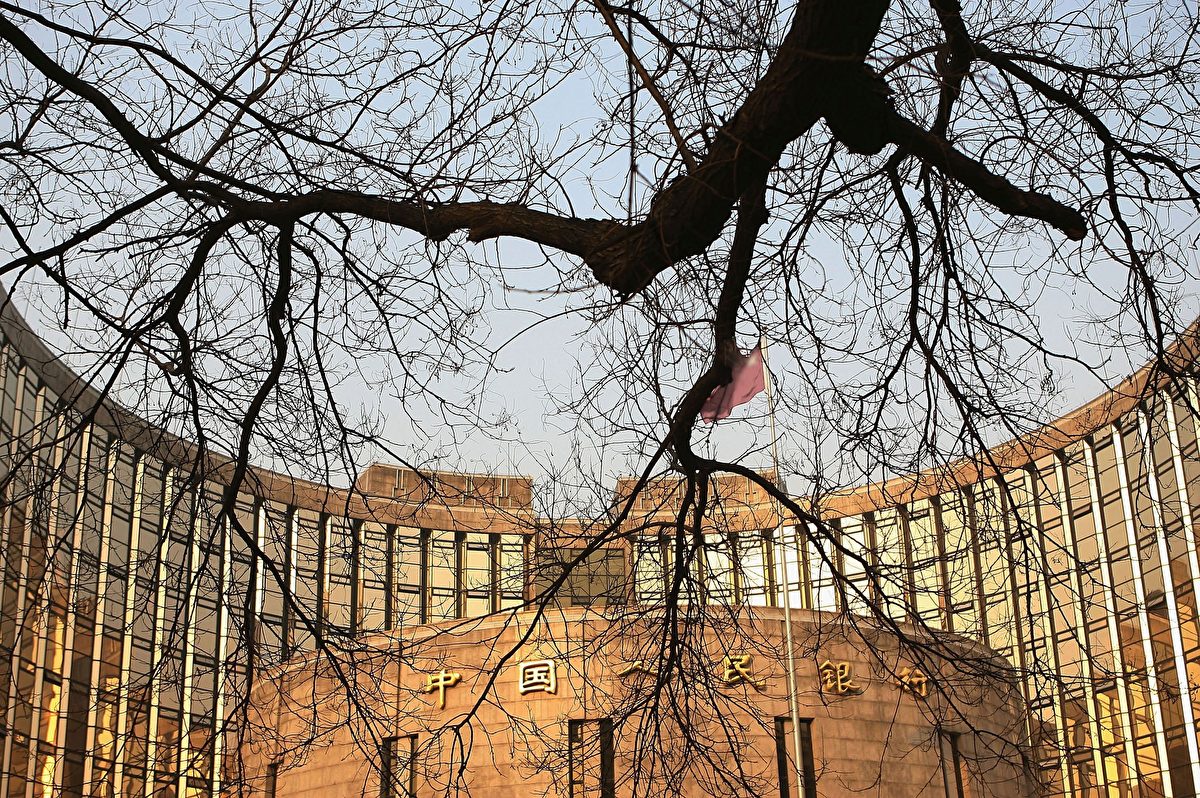
According to information released by the People’s Bank of China, on November 2, a closed-door meeting was held with the China Securities Regulatory Commission, where banks, securities, and fund institutions gathered to discuss various specialized tools to support the stable functioning of the capital market. Another significant meeting was convened by the central bank alongside the National Financial Supervisory Administration and the CSRC. The discussions focused on further implementing the “increased loans for stock buybacks” policy. Representatives from 23 securities and fund companies and 26 banks participated in the meeting, including well-known institutions such as China International Capital Corporation, Guotai Junan Securities, CITIC Securities, and various major banks like Industrial and Commercial Bank of China, China Construction Bank, CITIC Bank, and Industrial Bank.
The central bank announced that the stock buyback and increase loans policy would transition from a temporary measure to a long-term institutional arrangement, while the relending rate would be cut from 1.25% to 1%.
The stock buyback special relending program is a structural monetary policy instrument established by the central bank. It aims to stabilize the capital market by providing low-cost funds specifically to support listed companies in their stock buyback activities and to encourage major shareholders to increase their holdings.
A new operation of the Swap Facility for Securities, Funds, and Insurance Companies (SFISF) is set to begin on November 3, with a swap term of one year, subject to possible extensions. This will mark the third operation of this tool since its inception. Currently, 31 securities and fund companies have reported a demand exceeding 100 billion yuan. The SFISF tool was previously used for operations in October 2024 and January 2025, cumulatively amounting to 105 billion yuan.
The SFISF serves as an “official channel” providing liquidity support to the market for non-bank financial institutions. The recent market intervention by the Chinese government is believed to be a response to the declining trend in the mainland stock market observed in October.
Publicly available information reveals that the Shanghai Composite Index dropped a cumulative 6.3% in October, and the Shenzhen Component Index fell by 15.9%, with relevant indices for the ChiNext and Sci-Tech Innovation Board experiencing declines of over 23%. On the last trading day of October, the Shanghai index plummeted by 1.44%, breaching the 3600-point mark for the first time this year. A notable figure of over 4,600 stocks collectively experienced declines, with the two exchanges seeing a significant increase in trading volume to approximately 1.69 trillion yuan.
Simultaneously, reports have emerged that a state-owned bank is planning to approve an additional special stock buyback relending quota for state-owned enterprises like Guoxin Holdings and China Chengtong Holdings Group, potentially adding up to 100 billion yuan to their existing limits.
Political observer Xia Yan pointed out that Guoxin Holdings, under the supervision of the State-owned Assets Supervision and Administration Commission, uses these specialized loans for stock buybacks, which may appear market-oriented. However, the nature of these funds and the risk-control requirements dictate that they can only be allocated to “politically safe,” approved central enterprise stocks. While this intervention stabilizes the index, the use of low-cost public resources to artificially inflate the prices of certain stocks ultimately benefits specific shareholders, primarily senior executives and institutional investors of state-owned enterprises. This setup allows them to engage in risk-free arbitrage while individual retail investors bear the losses.
A financial commentary by the China-based media outlet “Liu Xiaobo Talks Finance” noted on November 2 that since the inception of the SFISF, the tool had been employed in two previous operations with a cumulative amount of 105 billion yuan. The actual funds that will be released in this operation remains to be observed.
The article further analyzes that this year marks the beginning of the “15th Five-Year Plan” (2026 to 2030), making it crucial to stabilize growth and expectations. If the stock market continues to underperform, it could significantly impact the economy and lead to risk spillover. Therefore, maintaining stability in the stock market is of utmost importance.
According to a recent report by Bloomberg, since May, the total market value in the mainland stock market has evaporated by about 25 trillion yuan. The CSI 300 index has entered a technical bear market territory, dropping over 20% from its peak in June, and reflecting a continued trend of weakness. The index for the Shanghai Stock Exchange’s Sci-Tech Innovation Board has experienced a decrease of approximately 40%.