
Recently, federal officials provided a list of over 20,000 suspected non-U.S. citizen voters to the California Secretary of State and the Los Angeles County Registrar’s Office, requesting a review and segregation of these ballots by a deadline. However, this request was declined. In response, the Justice Department filed a lawsuit seeking to suspend the counting of these mail-in ballots until the citizenship status of the individuals can be confirmed, aiming to prevent the dilution of votes from lawful citizens.
Dean Logan, the Los Angeles County Registrar, stated that approximately 20,930 records on the list included only about 7,035 individuals (or 33.6%) who reside in Los Angeles County, while the remaining records were from other areas of California. After examining 200 records from the list, the county asserted that around 43% of the registrations had been canceled, and more than 70% of those individuals had no voting history. Furthermore, out of those with recorded birthplaces, about 38.9% had their registrations canceled, and the same trend of inactive voting persisted.
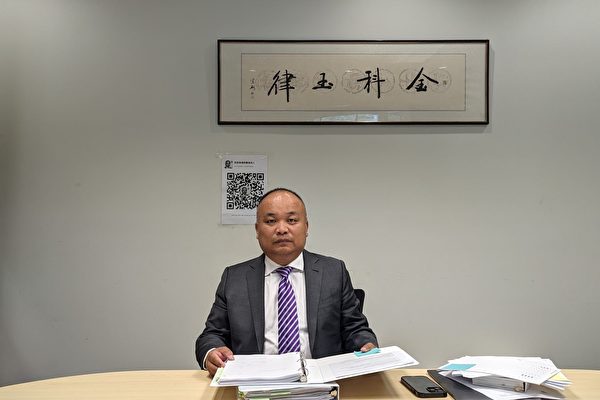
Logan emphasized that the county cannot withhold ballots based on “unverified allegations” and does not have the authority to process records outside its jurisdiction, dismissing the list as “unreliable.” However, attorney David Liu expressed significant doubts and contradictions in Logan’s statements, suggesting they served merely to explain “why there was no action taken.”
A key point raised by Liu is that the data purporting individuals as “born in the U.S.” originated from self-reported information on voter registration forms, lacking any federal immigration records to validate these claims. The U.S. Citizenship and Immigration Services (USCIS) confirmed that none of the 200 individuals sampled by the county had immigration records identifying them as U.S.-born.
The issue of non-citizens falsely reporting their birthplace or citizenship status has been a long-standing vulnerability within California’s voter registration system. The county admits it has no independent means to verify citizenship status and lacks legitimate paths to obtain immigration records.
Moreover, Liu pointed out that a “high number of canceled registrations and lack of voting history” does not necessarily prove citizenship status. The elevated rates of cancellation or inactivity might indicate that these individuals were initially registered improperly but were later cleaned from the rolls due to lack of participation. Notably, around 42% of those on the list remained active, with some receiving mail-in ballots in the current election.
Logan’s claim of the entire list being unreliable based solely on the sampled 200 records is, according to Liu, insufficient. Additionally, the county initially refused to open a USB drive provided by the Justice Department, citing security protocols as a reason, only beginning the review after receiving electronic forms, indicating a potential delay in compliance.
In 2024, Liu filed a lawsuit (case number: 2:24-cv-08585, Long David Liu v. Gavin Newsom et al) in the U.S. District Court for the Central District of California, challenging Governor Gavin Newsom and Attorney General Rob Bonta over the signing of SB 1174, a law concerning voter identification requirements in elections. This law prohibits local governments from enacting or enforcing regulations requiring voters to show identification at various polling locations, unless otherwise mandated by state or federal law.
Liu criticized SB 1174 for depriving local communities of their fundamental authority to safeguard election integrity, effectively opening the floodgates for anyone willing to register while disregarding the essential verification of identity. While voter identification is a norm in elections worldwide, including in most states across the U.S., California has opted to criminalize effective tools against non-citizen voting under the guise of “protecting voting rights.”
“This is not about protecting democracy; it’s about weakening it,” Liu stated. “I filed this lawsuit to uphold the constitutional voting rights of citizens from dilution, asserting that only U.S. citizens should have the right to vote—a fundamental principle of justice.”
On Friday, the Ninth Circuit Court of Appeals rejected the Justice Department’s request to urgently segregate the disputed ballots with a 2-1 vote. Following this decision, the Justice Department issued subpoenas to local election officials, including the Los Angeles County Registrar’s office, demanding their appearance in court on November 4, the day after the election, along with relevant documentation.
Simultaneously, the Justice Department’s “Protecting Ballots Initiative,” launched in California in October, has led to criminal charges against certain green card holders.
Liu commented that the federal government’s shift to a grand jury criminal investigation underscores its determination to pursue this matter thoroughly. After the court hearing on November 4, if the requested documents and communications reveal inappropriate handling or knowledge of non-citizen registrations by local officials, the Justice Department retains the authority to expand its investigation and potentially take further legal action against those responsible.