
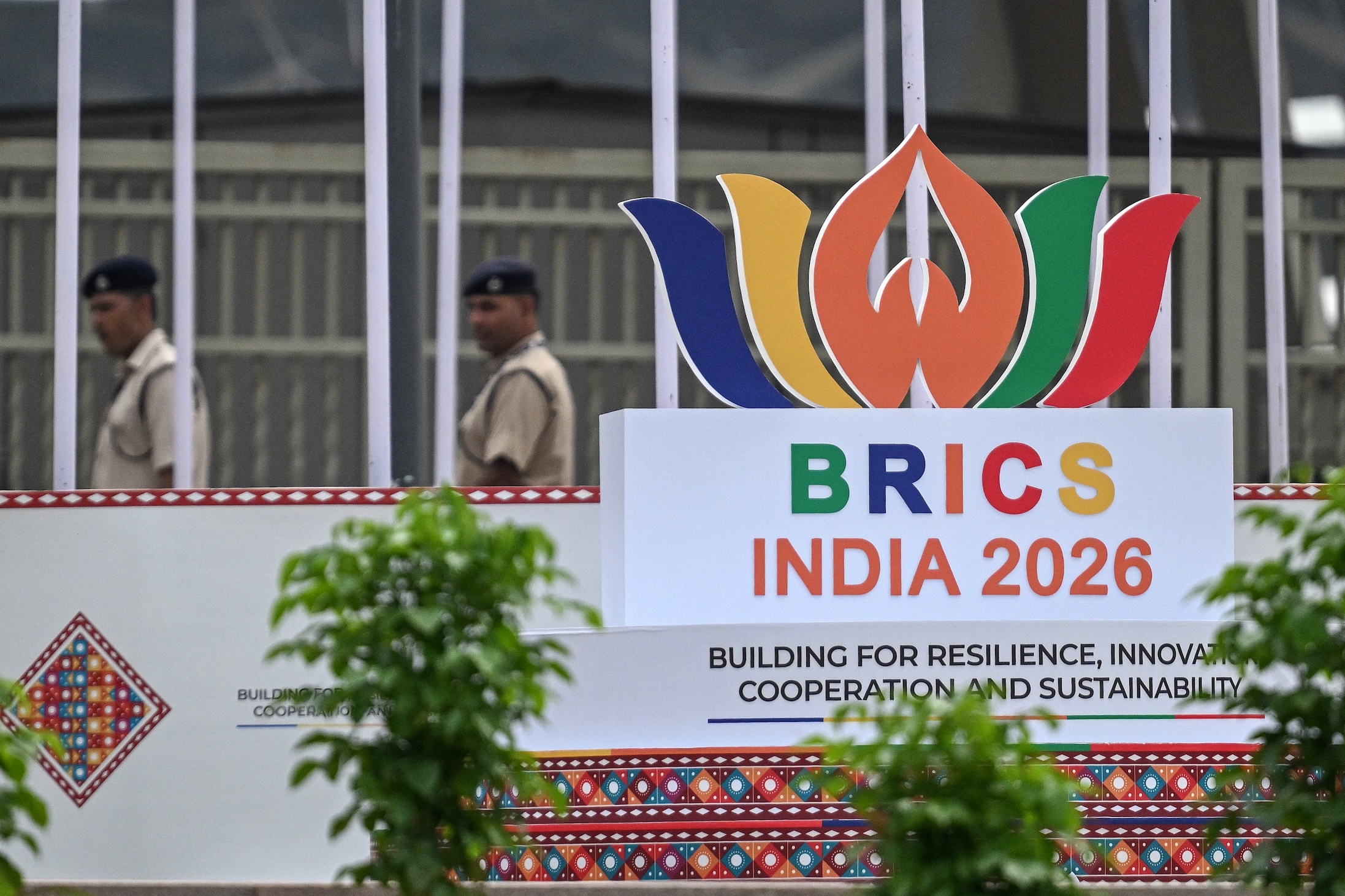
The 2026 BRICS Summit concluded in New Delhi, India. Chinese Communist Party leader Xi Jinping delivered speeches reiterating opposition to unilateralism, power politics, and trade protectionism. However, analysts believe Xi’s remarks lacked novelty. With evident divergences in BRICS members’ interests, especially amidst ongoing US-China competition and India-China rivalry, Beijing’s influence on BRICS countries remains limited, making it difficult to form an anti-US front.
The 18th BRICS Summit was held from September 12th to 13th, 2026 in New Delhi, India. Following the summit, the “New Delhi Declaration” was issued, focusing on “building resilience, innovation, cooperation, and sustainable development.” The declaration opposed unilateralism, tariffs, and protectionism, but India, as the host country, did not turn BRICS into a collective political front against the US or the West.
2026 marks the 20th anniversary of the establishment of the BRICS cooperation mechanism. The BRICS has expanded to 11 formal members: Brazil, Russia, India, China, South Africa, Egypt, Ethiopia, Indonesia, Iran, Saudi Arabia, and the UAE.
According to Indian officials, these 11 countries account for approximately 49.5% of the global population, around 40% of global GDP, and about 26% of global trade.
In his first-phase speech at the 18th BRICS leaders’ meeting, Xi Jinping proposed opposition to unilateralism, power politics, protectionism, Cold War mentality, and confrontational blocs, urging BRICS countries to share responsibility and take the lead.
Chinese-American writer and political commentator Chen Pokong told Epoch Times that Xi Jinping’s speech this time “brings nothing new,” similar to his previous remarks, often seen as a way to challenge the US before visiting. However, countries like Brazil and India are unlikely to risk angering the US by siding with China, so Xi’s speeches are often seen as self-serving.
In the second-phase speech, Xi Jinping put forward five cooperation initiatives, with “sharing open-source AI” being the first. Meanwhile, US media disclosed China’s capability to distill models such as Claude from the US using AI companies associated with the CCP for overseas surveillance.
Chen Pokong noted that under this backdrop, Xi Jinping’s speech at the BRICS Summit is highlighted, indicating his informational insularity and “cognitive impairment.” He suggested reading Xi’s words in reverse to understand his true intentions.
With US-China relations increasingly tense and an upcoming visit to the US, Xi Jinping’s position speeches have attracted great attention.
Xi Jinping mentioned in his speeches that “being detached and isolated cannot hinder our development; building high walls around oneself only imprisons and disjoints the world.” He criticized tariff abuse and all forms of protectionist measures. While these remarks were seen as directed at the US, they did not explicitly name the country, and the second-phase speech was notably less confrontational.
China expert Wang He stated that Xi Jinping’s speeches had limited specific targeting towards the US; he broadly talked about the importance of maintaining peace and stability. Wang emphasized that Xi’s statements were more about signaling a stance rather than substantial content.
Wang noted that with the China-US summit approaching, Xi Jinping would likely refrain from provocative actions or statements towards the US. Due to limited national power, the CCP aims to attract other countries through BRICS cooperation but lacks the ability to rival the US politically.
Xinhua News Agency mentioned on September 14 that Xi Jinping’s proposals guided the direction of the BRICS cooperation. Chinese Party media described China’s position in BRICS cooperation as an active participant, strong advocate, and significant contributor, promoting global governance and increasing the voice of developing countries.
Regarding the Chinese Party media’s narrative, Wang He pointed out that the impact of BRICS cooperation itself is limited due to significant internal divergences.
Wang highlighted that India emphasizes cooperation with China but is wary of becoming reliant on key industries. China’s expanding manufacturing sector and massive trade surplus motivate countries like India to reduce dependency on China and establish diversified supply chains.
He stated that Russia and China aim to shape BRICS as a balance against the West, while India and Brazil focus more on economic cooperation and global governance reform. Therefore, it is difficult to reach a unified position on major international issues, leading to elusive language to skirt contentious matters.
Wang added that if BRICS were to turn against the US, it would likely face US retaliation and fragmentation, making complete opposition to the US and the West unlikely, with nations seeking limited “improvements” in the international order.
Chen Pokong remarked that BRICS Summit members each have their own agenda, with most favoring the US while utilizing China. BRICS serves as a platform where nations play their own games behind the scenes, showing outward unity while internally divided. Both Russia and China are playing a strategic game but lack genuine cooperation capabilities.
This visit marks Xi Jinping’s first trip to India in seven years (only to attend the BRICS Summit, not invited for a formal visit to India simultaneously).
BBC believes that as long as fundamental conflicts like the Sino-Indian border dispute persist, the relationship between the two countries will remain one of “tactical easing, not strategic reset.”
Chen Pokong stated that China has consistently opposed India’s permanent seat on the UN Security Council. India and Japan are long-term candidates for permanent Security Council seats under reform efforts, but China obstructs their accession. He emphasized that the substantial essence of the China-India relationship is discordant, characterized by mutual opportunism.
He stressed that the BRICS Summit and the Shanghai Cooperation Organization are platforms where countries lack trust and genuine political coordination, solely using them to challenge the West and as a bargaining chip without substantive political unity.