
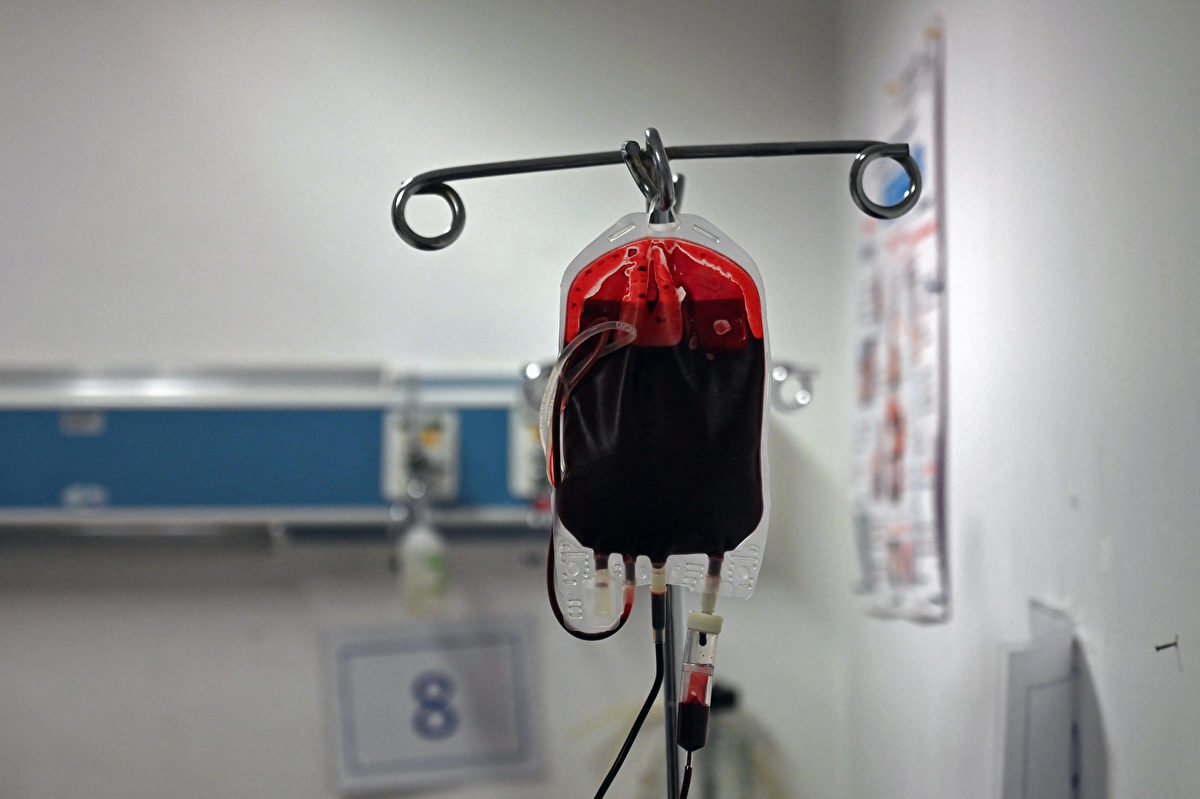
Recently, the statement of the Chinese National Health Commission on the chaos surrounding “plasma replacement anti-aging” has attracted public attention. Experts believe that the CDC was forced to speak out under public pressure, exposing the industry’s dark secrets over the past decade, which are primarily caused by the Chinese regulatory system, revealing issues such as illegal collection and underground transactions driven by interests, potentially forming a grey industry chain.
In a recent cosmetic surgery investment video, the founder of the Yumeiren International Group, Yu Wenhong, promoted the so-called “blood exchange anti-aging” project. He claimed to collect blood from healthy young men aged 17 to 21, extract “microvesicles” from it, and then transfuse it back into the client’s body, claiming that it could make them look ten years younger in just two weeks and even extend a woman’s menstrual period to 80 years old. The project’s one-time fee ranges from 1.5 million to 20 million RMB. Subsequently, these claims sparked skepticism and public outcry in the medical community.
Amid continued public scrutiny, the Chinese National Health Commission held a press conference on September 7th, publicly addressing the related chaos for the first time. Hu Qiangqiang, the Commission’s spokesperson, stated that recent monitoring had discovered individual medical institutions engaging in illegal practices by conducting plasma exchanges beyond their approved scope while exaggerating the effectiveness, packaging the related technology as so-called “anti-aging” and “disease prevention” “miracles.”
Tang Jingyuan, a Chinese-American commentator with a medical background, told Epoch Times, “Why is there a lack of sufficient evidence-based basis for such a technology to enter licensed hospitals, become a million-dollar consumption project, and operate for at least a decade? The reason behind this is quite simple.”
He believes this is related to the power structure within the Chinese communist medical regulatory system. He mentioned, “Some seemingly ‘advanced’ medical technologies, before safety and long-term risks are fully understood, if allowed to enter the market, may lead to ordinary consumers bearing the cost of trial and error.”
A possible scenario could be that such technologies are first widely used in the private sector, observing their effects and side effects through numerous cases. “In other words, it’s like the Chinese Communist Party treating hundreds of millions of common people as experimental guinea pigs,” he said.
Jonathan Liu, professor at the Canadian Traditional Chinese Medicine Academy and director of the Kangmei Traditional Chinese Medicine Clinic, has refuted this technology from a technical perspective. He told Epoch Times that plasma replacement is a specialized medical technology that can be used to clear specific harmful substances from the body in severe diseases, kidney failure, poisoning, etc., but it is not meant for anti-aging in healthy individuals.
“Many of these techniques are related to dialysis or detoxification. For example, if the kidneys are failing, it needs to remove those toxins, absolutely not a method for anti-aging.”
Liu believes that some medical institutions are repackaging medical technologies with clear indications as “anti-aging” or “blood purification” to attract consumers, which can easily lead to misinformation.
So why can these technologies lacking sufficient evidence-based basis enter licensed medical institutions and become long-term commercial projects?
Looking at it from an industry perspective, the popularity of the anti-aging concept is closely related to the transformation of consumption in China’s aging society, which is another clue worth paying attention to besides the recent disclosure.
Liu said, as China enters an aging society, anti-aging medical research has its practical demands, including early diagnosis and related medical research, but commercializing scientific research and unverified therapies are two different matters.
“Because the elderly population in China is very large, and at the same time, the elderly have relatively more wealth, so many people target the pockets of the elderly,” he explained.
Liu believes that some organizations may exploit the anxiety of the elderly about health, longevity, and aging by packaging medical technologies to attract consumers.
Tang Jingyuan also pointed out that this issue is a result of Chinese government policies. “In recent years, the Chinese authorities have not completely rejected the development of the anti-aging industry. Against the backdrop of economic pressure and the need to expand consumption, some economically better-off middle-aged and elderly people have become a potential consumer group.”
“In plain terms, the authorities want to exploit this segment of the elderly population.”
However, as the anti-aging industry continues to expand, controversies surrounding technologies like plasma replacement have started to garner attention. He mentioned that this is one of the reasons why the official stance on related projects has recently put on the brakes. Furthermore, if the plasma replacement anti-aging project continues to expand, it may overlap with previous international controversies regarding organ transplants and related ethical issues, thus creating greater public pressure.
Tang Jingyuan believes the authorities’ actions are more of a stance rather than indicating that the long-standing problems have been fully resolved.
Based on the official disclosure this time, the Chinese regulatory authorities are focusing not just on the medical technology itself but also on institutions that exceed the scope of use of the technology, misleading the healthy population into unnecessary medical procedures through exaggerated propaganda.
Liu believes that, in the current economic and consumption pressures in China, some official medical institutions may face greater operational pressures, which could drive some institutions to seek new sources of income.
He views this phenomenon from a broader perspective of medical reform and commercialization. “After commercialization, especially since the late 1990s, when Jiang Zemin, then the head of the Chinese Communist Party, began medical reforms, the situation has worsened after 2000.”
According to Liu, if medical institutions overemphasize economic gains, it may lead to conflicts between medical services and their original professional ethics. “Many hospitals are not about saving lives but about making money, thinking about how to increase the hospital’s GDP.”
Tang Jingyuan expressed concerns that the limited source of plasma required for plasma replacement, coupled with a potentially ongoing demand through commercial projects, could open up space for illegal channels if the normal supply cannot meet the demand.
He believes this could lead to issues such as illegal collection, underground transactions, and further develop into grey or even black industry chains.
From the excessive use of non-compliant medical technology by medical institutions, to the commercialization of anti-aging concepts, to the sources of plasma and potential underground profit chains, the related controversies have gone beyond the core medical technology itself.
Tang Jingyuan even worries that if the demand continues to grow, more serious criminal issues may arise. “It will bring huge problems, that is illegal criminal activities, forming a new area, just like organ harvesting.”
Regarding the emergence of the “young blood source” narrative on the internet and in public discourse, he also raised his concerns and linked it to the issue of young people going missing. However, he emphasized that his concerns are speculative risks and not based on independently confirmed causal relationships.