
Starbucks China has recently introduced a controversial policy requiring customers to make a purchase before occupying a seat, a move that has sparked heated debates online concerning the business’s operational rules and the needs of elderly individuals seeking free rest areas.
The issue came to light through a series of incidents involving disputes between customers who had not made purchases and store employees. Notably, a man repeatedly occupied seats at a Starbucks location in Jiangsu Province’s Nanjing City without making any purchases for several days. On October 29, a staff member approached him with a menu, reminding him of the new policy that necessitates a purchase for seating. The man reacted negatively, accusing the employee of being rude, and even called the police after his complaint to the store yielded no results. Officers responded to the scene and mediated the situation, leading to the man ultimately leaving the store.
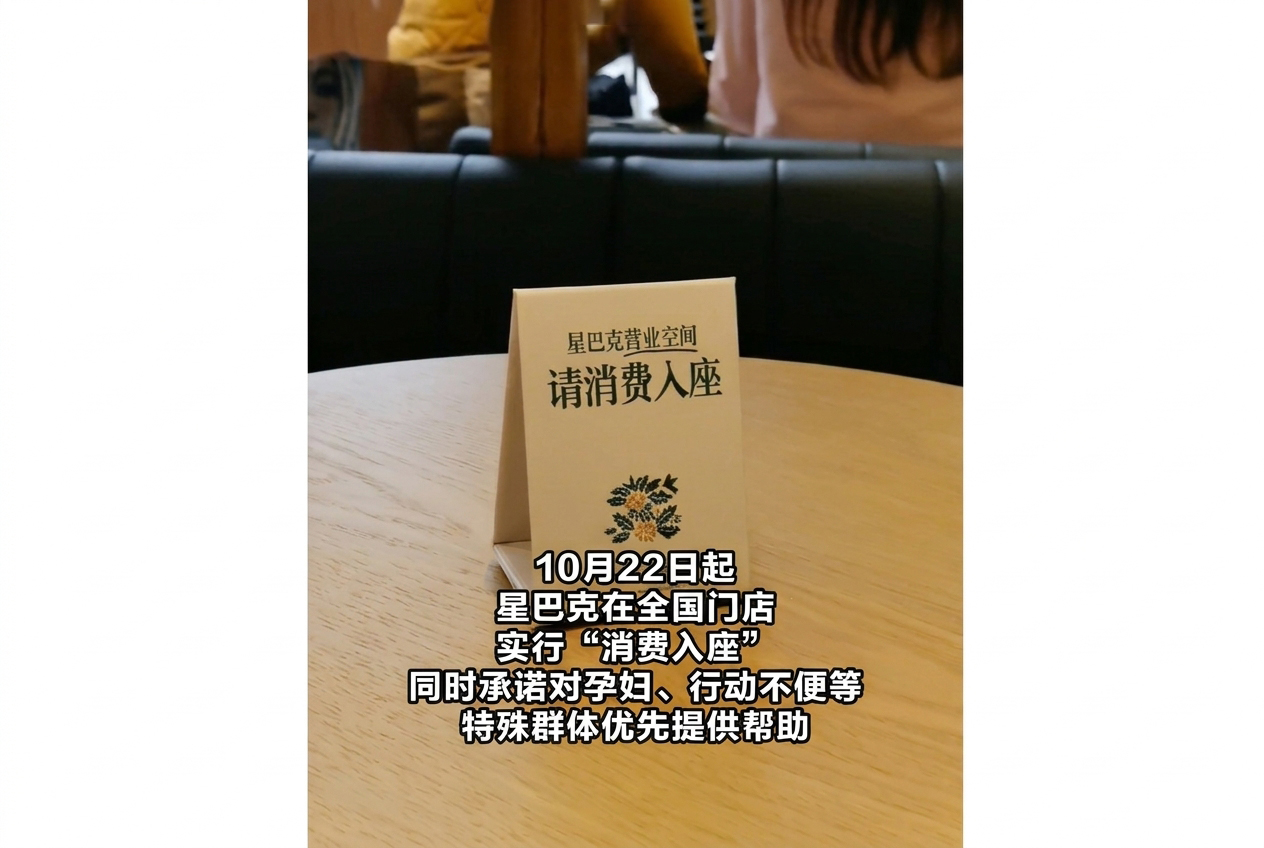
Employees at the store confirmed the incident, explaining that they had displayed signs instructing customers to “please consume before seating.” While staff members regularly remind customers who occupy seats without purchasing, they noted that enforcement is not a strict requirement.
On October 30, Yu Donglai, the founder of a well-known restaurant chain, made a post suggesting that the policy should support the “purchase to seat” model while simultaneously allowing restaurants to refuse takeout orders. His comments ignited a broader societal discourse surrounding business order and consumer rights.
A visit to the involved Starbucks location by local reporters on October 31 revealed that some individuals were still seated without having placed orders, often in more secluded areas of the cafe. Staff members mentioned that during peak ordering times, when they are busy preparing coffee, they may not have the opportunity to check for unpurchased seats individually.
In a separate incident in Fujian Province’s Jinjiang City, an elderly individual brought a personal water cup to a Starbucks, requesting hot water. Due to safety considerations, the staff declined to fill the cup completely, leading the elder to lash out verbally at the employees. After police intervention, the elderly patron eventually left the store.
Starbucks China officially announced the implementation of the “purchase to seat” policy on October 21, to take effect starting October 22, with signage placed in all locations nationwide. The company asserted that its stores would adhere to a unified service guideline, interacting with customers in a friendly manner and responding appropriately to unexpected needs and special circumstances. They stated that priority assistance would be given to customers who are pregnant or have mobility difficulties. While rules are clear, the company emphasized that the execution of these rules would remain considerate.
According to earlier reports, Starbucks employees indicated that individuals such as delivery personnel, passersby seeking shelter from the rain, local security staff, and pregnant women could rest without making a purchase and that the stores would provide free hot water.
Further developments on October 28 from a local news outlet illustrated that in Starbucks locations around Jinan, Shandong Province, the flow of customers remained stable, and most patrons seated in the stores had made a purchase. Store staff mentioned that if they encounter someone occupying a seat without ordering for an extended period, they typically remind them after 10 to 15 minutes but do not forcibly ask them to leave.
The tension between Starbucks and consumers occupying seats without purchasing is not a new phenomenon.
On September 15, a social media user captured footage of certain tables and chairs at a Starbucks location in Sichuan Province’s Nanchong City being chained shut, with a sign stating, “For Starbucks customers only, thank you for your understanding.” Employees at the store explained that the outdoor seating was designated for paying customers, but they had observed many elderly patrons occupying seats for long periods, particularly during the afternoon. Staff found it difficult to address the issue without causing disputes, which led to the decision to lock some tables and chairs.
They also mentioned that the store had previously created 15 signs, but 13 of them had been discarded or damaged, leaving just two remaining.
Following the revelation of this situation, the store unlocks all chained furniture and shifted to verbal reminders instead.
Starbucks first established its presence in China by opening its inaugural location in Beijing in 1999. The brand has long been positioned as a provider of high-end coffee within a “third space” environment, reflecting a space beyond home and work where individuals can enjoy coffee, socialize, read, work, and relax. A typical cup of coffee is priced around 30 to 40 RMB, aiming not only to sell beverages but also to create a venue for social interaction and identity recognition among consumers.
However, with the rapid expansion of local coffee brands such as Luckin and Cafe Kudi, which offer lower prices and more convenient small storefronts, Starbucks is facing increasing competitive pressure in the market.
According to data available until June 2026, there were approximately 284,000 coffee shops across China, a year-on-year increase of 20.1%, with the chain store rate rising to 47.3%. As of July 2026, both Luckin Coffee and Cafe Kudi had expanded their national store counts to about 36,000 and 15,000, respectively.
As market competition intensifies, Starbucks’ market share in China has noticeably declined. A November 2025 report by Reuters, citing data from Euromonitor International, indicated that Starbucks’ market share had plummeted from 34% in 2019 to just 14% by 2024 based on the sales value of professional coffee shops.
Consequently, Starbucks China is undergoing a phase of business adjustment. In November 2025, the company announced a joint venture with the Chinese investment firm Boyu Capital to jointly operate retail businesses in China. This transaction was formally completed in early April 2026, with Boyu Capital acquiring a 60% stake in Starbucks’ retail operations in China, allowing Starbucks to retain 40% and maintain ownership of its brand and intellectual property.
Starbucks has long advocated the concept of a “third space,” defined as an environment outside of home and work where people can gather for coffee, social interaction, reading, working, and relaxation. However, a growing question surrounds whether this “third space” should accommodate individuals who do not make purchases and occupy seating for extended periods.
Supporters of the “purchase to seat” policy argue that cafes are commercial spaces that bear costs for rent, labor, utilities, and other expenses, suggesting that seating should primarily be reserved for paying customers. They particularly emphasize that during peak times, if some individuals occupy seats for long durations without spending, it hinders paid customers from finding available seating, which adversely affects the overall consumer experience.
Conversely, some individuals believe that Starbucks has historically emphasized its role as a “third space,” contributing to urban residents’ opportunities for socialization and rest beyond simply selling coffee. For many elderly individuals, finding public spaces where they can sit, drink water, and engage in conversation for free is increasingly rare. If businesses overly prioritize consumption, it risks depriving certain groups lacking leisure spaces of a venue to rest in their daily lives.
The ongoing challenge for Starbucks is to strike a balance between safeguarding the rights of paying customers while also retaining the brand’s inclusivity. This is a situation that will continue to attract public attention.