
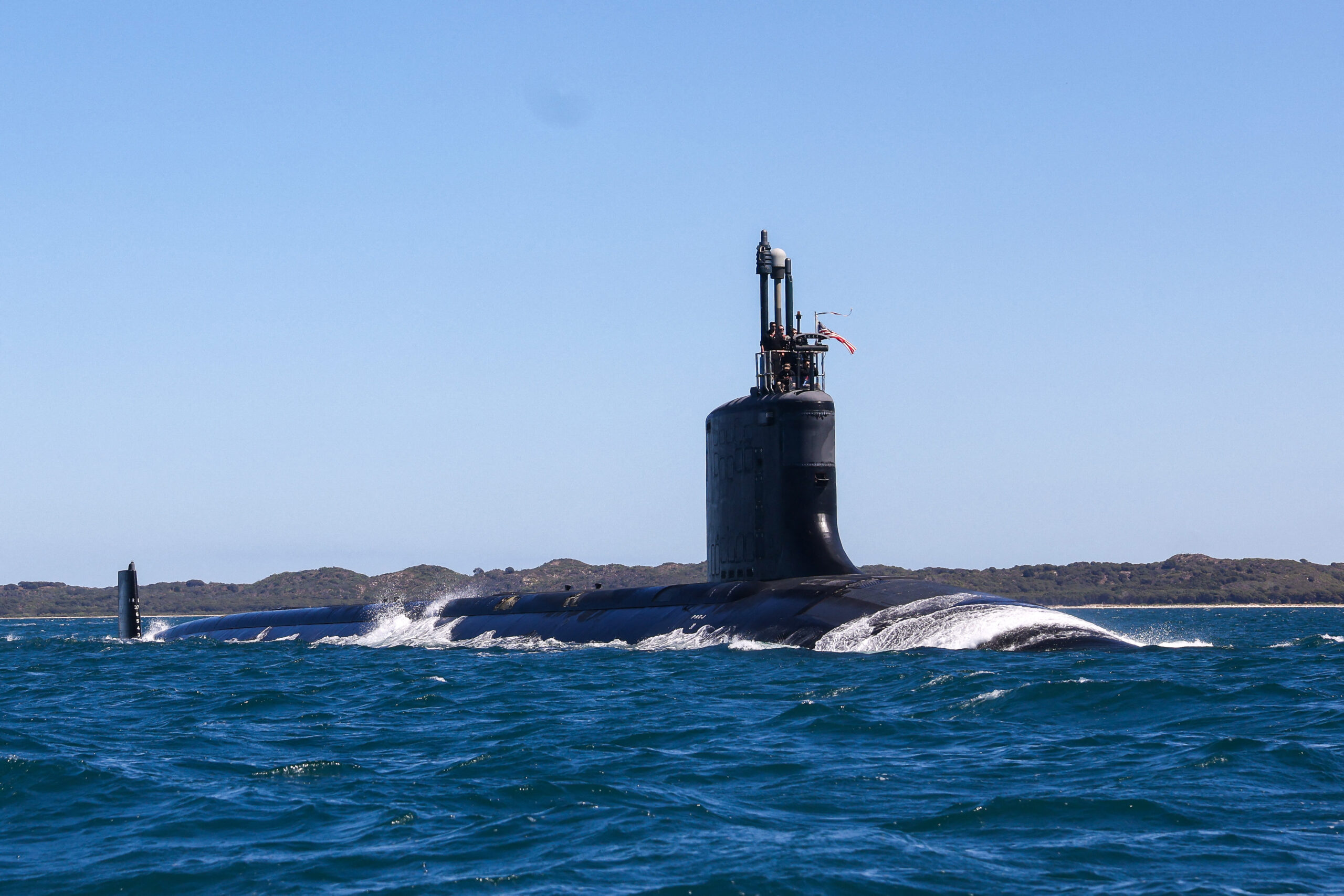
In recent discussions within Washington, a growing openness has emerged among experts—including a U.S. Navy official—regarding Japan’s potential acquisition of nuclear submarines. They argue that such a move could enhance Japan’s self-defense capabilities and serve as a stronger deterrent against the Chinese Communist Party (CCP).
A report released on November 3 highlighted statements made by Japan’s Defense Minister Shinjiro Koizumi during a hearing in the National Diet on October 23. He emphasized the importance of considering various options while exploring power systems for the next generation of submarines, signaling a favorable attitude toward the possibility of nuclear-powered submarines.
Japan is set to revise three key security documents by the end of this year, and any policy adjustments could be incorporated into these revisions.
When comparing nuclear submarines to the conventional diesel submarines currently operated by Japan’s Maritime Self-Defense Force, the advantages are clear. Nuclear submarines possess significantly longer endurance, which not only reduces the risk of being detected by adversaries but also allows for higher sustained speeds. Koizumi further noted that nuclear submarines could enhance the safety of their crews—a sentiment echoed by some members of the ruling coalition, particularly those from the Japan Innovation Party.
In the U.S., some individuals believe that Japan’s possession of nuclear submarines would contribute positively to security in the Indo-Pacific region. In September, a U.S. Navy official expressed during interviews with the Nikkei and other media outlets that the Japanese government should seriously consider equipping its fleet with nuclear capabilities.
Japan’s security policy primarily addresses threats from the CCP, aligning closely with the assessments of U.S. military intelligence. This convergence creates favorable conditions for deeper collaboration between Japan and the U.S. Armed Forces, allowing both nations to monitor CCP activities more effectively across Asia.
A report by the American Enterprise Institute (AEI) noted that nuclear submarines would enable Japan to play a more significant role in countering the expansion and modernization of the CCP’s naval forces. The report stressed that as the Chinese navy is expected to transition toward a fleet predominantly composed of nuclear-powered submarines over the next decade, the importance of Japan acquiring its own nuclear capabilities will likewise increase.
The CCP has been persistently expanding its submarine activities outside the First Island Chain—which stretches from Taiwan and Okinawa to the Philippines. Some of these submarines are capable of launching submarine-launched ballistic missiles that could target U.S. territories. Enhanced cooperation between U.S. and Japanese forces in monitoring the CCP’s submarine operations in the western Pacific could prove to be a effective strategy.
The Japan Innovation Party’s support for the initiative is also rooted in the growing military presence of the CCP in the western Pacific. A policy proposal released by the party in June argued for a shift in Japan’s strategic thinking toward maintaining a submarine force capable of defending the entire western Pacific. It posited that conventional submarines are inadequate for this mission, asserting that “nuclear-powered submarines are the only viable option.”
Brent Sadler from the Heritage Foundation estimates that, based in Yokosuka, Japan’s nuclear submarines could operate continuously in the Philippine Sea for 85 days—more than twice the endurance of conventional submarines—and could sustain operations in the South China Sea for four times longer than their conventional counterparts.
However, if Japan decides to pursue the development of nuclear submarines, U.S. collaboration will be crucial. Thus far, the United States has shared nuclear submarine technology only with key allies such as the United Kingdom and Australia.
At the same time, challenges remain in achieving Japan’s nuclear submarine goals. The introduction of nuclear-powered submarines would necessitate the establishment of an independent regulatory framework based on nuclear safety standards. Japan would also need to train personnel capable of carrying out these regulatory functions, as well as skilled technicians responsible for the operation, maintenance, and repair of the submarines.
Additionally, the American Enterprise Institute’s report points out that funding issues, including the costs for maintenance and follow-on support, represent a significant challenge.
Japan’s security policy has traditionally rested on the premise of “defensive defense,” focusing on the protection of the territory surrounding Japan. The question of whether limited defense resources should be allocated to nuclear submarines, which are intended for broader operational roles, requires extensive discussion.
Within the Japanese government, some officials have suggested incorporating language in the revised security documents that calls for an “investigation” and “study” into whether Japan should pursue the acquisition of nuclear submarines.
A government official explained, “If we specify ‘research’ into nuclear submarine-related matters in the new documents, it will facilitate concrete discussions, regardless of whether the final decision is to pursue such capabilities.”
A senior ruling party official also noted, “If we write ‘repeated study and discussion,’ we could openly simulate applications and calculate costs.”
The expert council organized by the Japanese government is expected to compile a report by late November at the earliest.
The atmosphere surrounding Japan’s potential pursuit of nuclear submarines continues to evolve, with significant implications for its national security and regional stability in the face of an assertive China.