
A 21-year-old woman named Yao Jiahui from Anhui province has garnered significant attention after taking a job as a sanitation worker in Zhoushan, Zhejiang province, following an unsuccessful job hunt for positions related to her early childhood education degree. This situation has sparked considerable debate across social media platforms.
Yao Jiahui hails from a family of sanitation workers—both of her parents are employed in this line of work in Zhoushan. Throughout her schooling, she assisted her mother with street cleaning during winter and summer vacations, gaining an early understanding of the laborious nature of this profession. After graduating, she sought employment related to her studies in early childhood education. However, facing unsatisfactory salaries and limited opportunities, she ultimately made the decision to follow her parents’ path into the sanitation sector.
In her new role, Yao is responsible for maintaining cleanliness in a segment of the old city, where she works early in the morning to finish her initial sweep before the morning rush hour begins. Rising at 4:30 AM, while most others remain asleep, she dons her sanitation uniform and tirelessly cleans the streets, picking up litter and occasionally attracting curious gazes from passersby.
Yao has expressed that the remuneration for this job is decent. She appreciates not having to navigate complex interpersonal dynamics and receives benefits such as social security and overtime pay. A single shift can earn her around 3,000 yuan, and working double shifts increases her income even further.
Yet, despite the seeming advantages of her job, the situation has led to widespread discussion online. Many netizens have voiced skepticism about her circumstances, questioning the merit of such a career choice. Comments include sentiments like, “What does this really promote?”, and “Is this even a good thing? Who wouldn’t want to work in a field related to their education and earn a fair wage?” They’re concerned that Yao didn’t choose this path willingly; instead, the broader issue lies in the difficulties currently faced in the job market for early childhood educators.
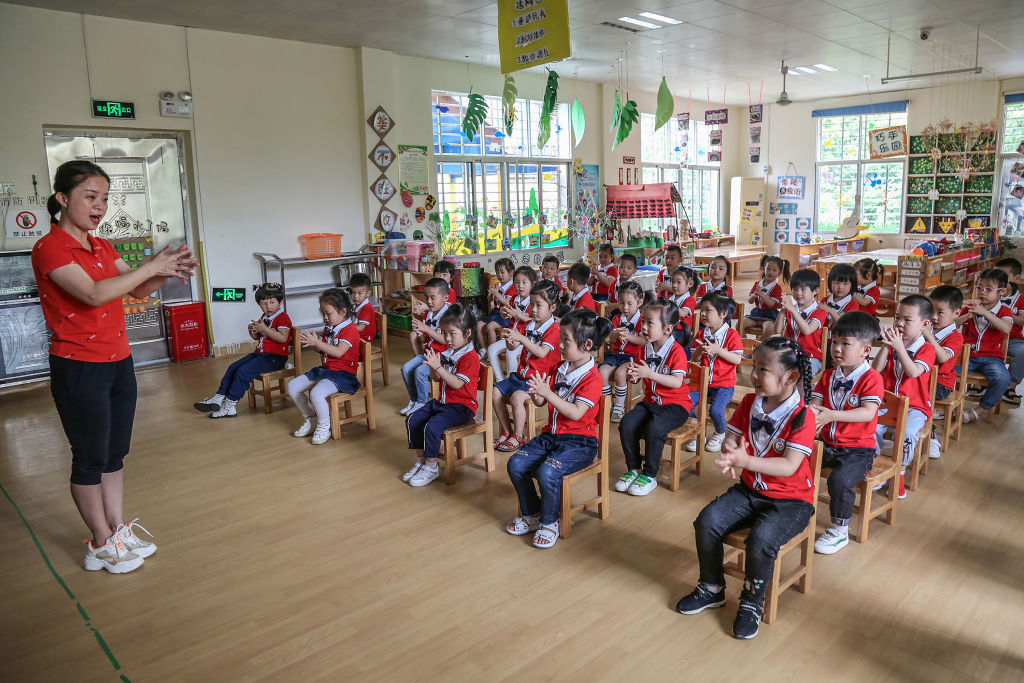
Academic commentator Mei Xinyu highlighted on Weibo that Yao’s transition from a graduate in early childhood education to a sanitation worker is primarily linked to the dramatic decline in birth rates. This demographic shift has led to numerous kindergartens shutting down, resulting in widespread unemployment among educators who are now compelled to seek work in different fields.
Previous reports from Caixin indicate that, as the birth rate continues to dwindle, many regions across China are scaling back their recruitment plans for teachers, with kindergartens being hit the hardest. Data from the Ministry of Education reveals that by 2025, the number of kindergartens in the country is projected to be approximately 231,900, which marks a staggering decline of 21.34% from the peak of 294,800 in 2021—a total drop of 62,900 institutions over four years. In tandem with this, the number of full-time teachers at kindergartens is also decreasing, with figures plummeting from 3.2442 million in 2022 to an estimated 2.6126 million in 2025—a loss of 631,600 teaching positions within three years.
However, this decline may not be the end of the story. Should the trend of declining birth rates persist, the current contraction faced by the early childhood education sector may eventually extend to additional educational levels in the future.
In light of these developments, it becomes increasingly important to consider the implications of China’s declining birth rate on employment opportunities, particularly for young graduates entering the workforce. As the landscape of education and employment evolves, the challenges faced by individuals like Yao Jiahui may become more pronounced, necessitating a deeper examination of the issues at hand.