
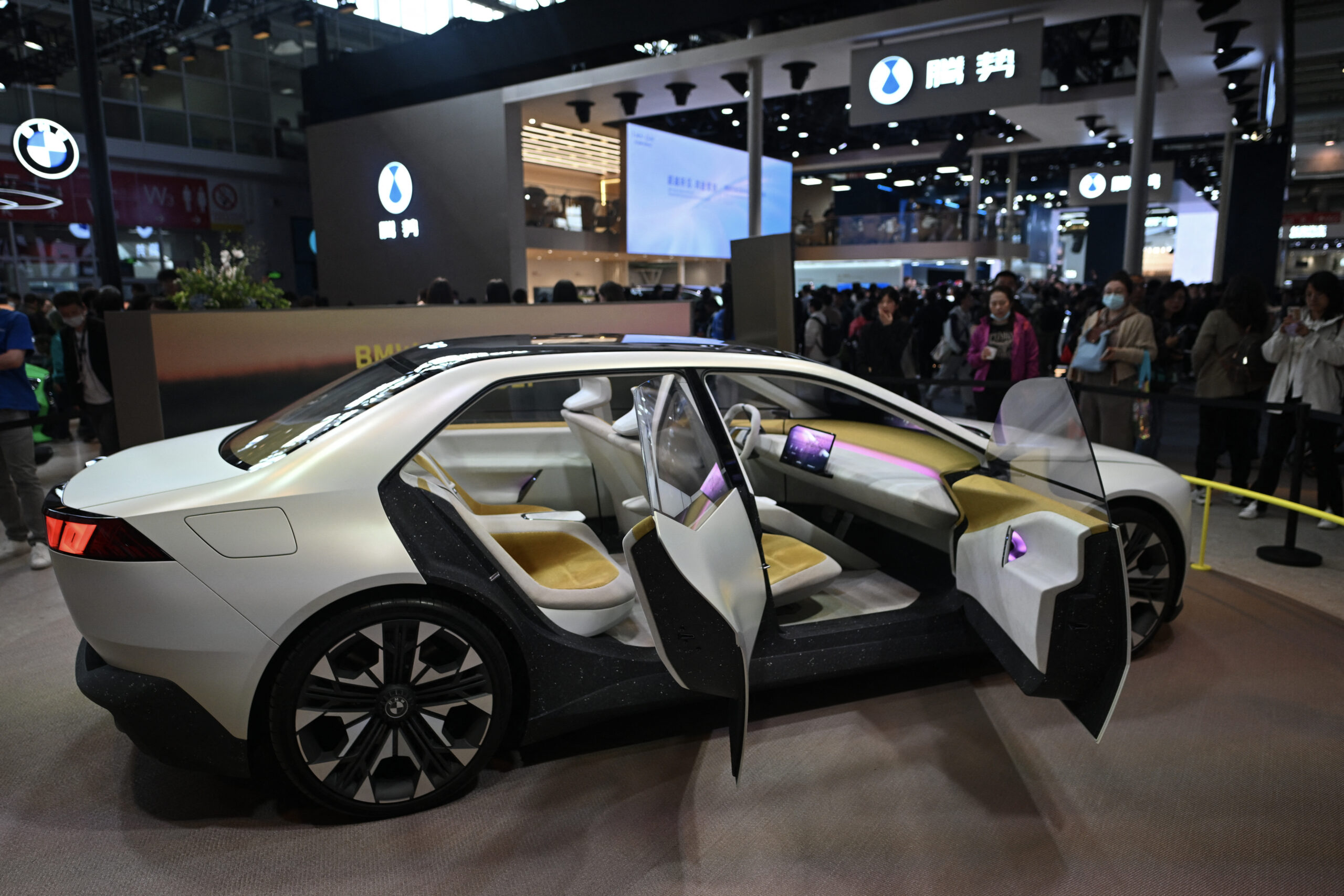
BMW car series prices have once again seen an overall decrease in China, with the price of the BMW 5 Series dropping to 280,000 yuan. Meanwhile, prices of luxury car models such as Mercedes-Benz and Audi are also declining.
Rumors of BMW cars being discounted have been circulating in the market recently. On August 19, Jiupai News reached out to BMW influencer Zhang Zengwei for confirmation. Zhang Zengwei confirmed that the price for the BMW 525Li with installment payment option is around 280,000 yuan and mentioned that the price with installment payment could be even lower than this.
According to Financial First, Wang Yu, a sales manager at a BMW dealership in Beijing, also confirmed the price adjustment. He stated that the official guidance price for the BMW 525Li was 368,000 yuan, but with the installment payment option, the price drops to around 280,000 yuan. Wang further explained that the BMW 3 Series, which used to have a starting price of 400,000 yuan in the past few years, now can be purchased for just over 200,000 yuan due to the overall price reduction. Currently, the starting price for the 3 Series is only 258,000 yuan.
Wang also mentioned that BMW is offering special discounts for large customers. Many major groups in Beijing have partnerships with BMW, where employees of these cooperating companies can receive additional subsidies ranging from thousands to tens of thousands of yuan.
Currently, BMW prices continue to decrease, with the starting prices spanning a wide range. The BMW 5 Series, which used to start at over 400,000 yuan, has now dropped to a price range of 300,000 to 400,000 yuan, while the starting price for the BMW 3 Series is around 200,000 yuan.
Not only BMW, but prices of Audi and Mercedes-Benz luxury cars are also on a downward trend.
On the 18th, Jiupai News reported that many Mercedes-Benz, BMW, and Audi dealerships in Wuhan are experiencing a wave of price cuts. Several popular models are being offered with discounts exceeding one hundred thousand yuan, with some high-end models discounted by over 200,000 yuan. However, these discounts are often tied to policies such as installment loans and trade-in subsidies.
Overall, Mercedes-Benz E-Class and Audi A6L, which used to start at over 400,000 yuan, now have prices ranging from 300,000 to 400,000 yuan, while the starting prices for Mercedes-Benz C-Class and Audi A4 are in the 200,000 yuan price range.
Earlier this year, BMW, Mercedes-Benz, and Audi had already adjusted their prices. BMW China had announced a direct price reduction on its official website for 31 models, with the highest reduction reaching 301,000 yuan. Subsequently, Mercedes-Benz adjusted the prices of its entire range of models on its website, with an overall reduction of around 10%. Although Audi did not directly reduce prices through official announcements, it lowered prices by introducing new models with starting prices significantly lower than the previous generation. For example, the new Audi A6L, launched in March 2026, has a starting price of 322,900 yuan, which is 100,000 yuan lower than its predecessor.
When asked about the reason for the price cuts, Wang explained that it was mainly due to declining sales. The dealership where he works used to sell over 100 cars per month during better market conditions in previous years, but the current monthly sales volume has halved since then. Therefore, price reductions and promotions have become routine.
In the first half of this year, BMW, Audi, and Mercedes-Benz sold 262,000, 233,000, and 210,000 vehicles, respectively, in mainland China, with a year-on-year decline of around 20% for each.
Not only imported luxury cars, but also local Chinese brands like NIO and Li Xiang, face market pressure, with prices of some models also moving lower. For instance, the prices of the Li Xiang L7 and Li Xiang L8 have dropped from the 300,000 to 400,000 yuan range to an average selling price of 283,900 yuan and 298,900 yuan, respectively.
Overall, in the first half of this year, retail sales of passenger cars in China totaled approximately 8.701 million vehicles, representing a 20.2% year-on-year decrease.