
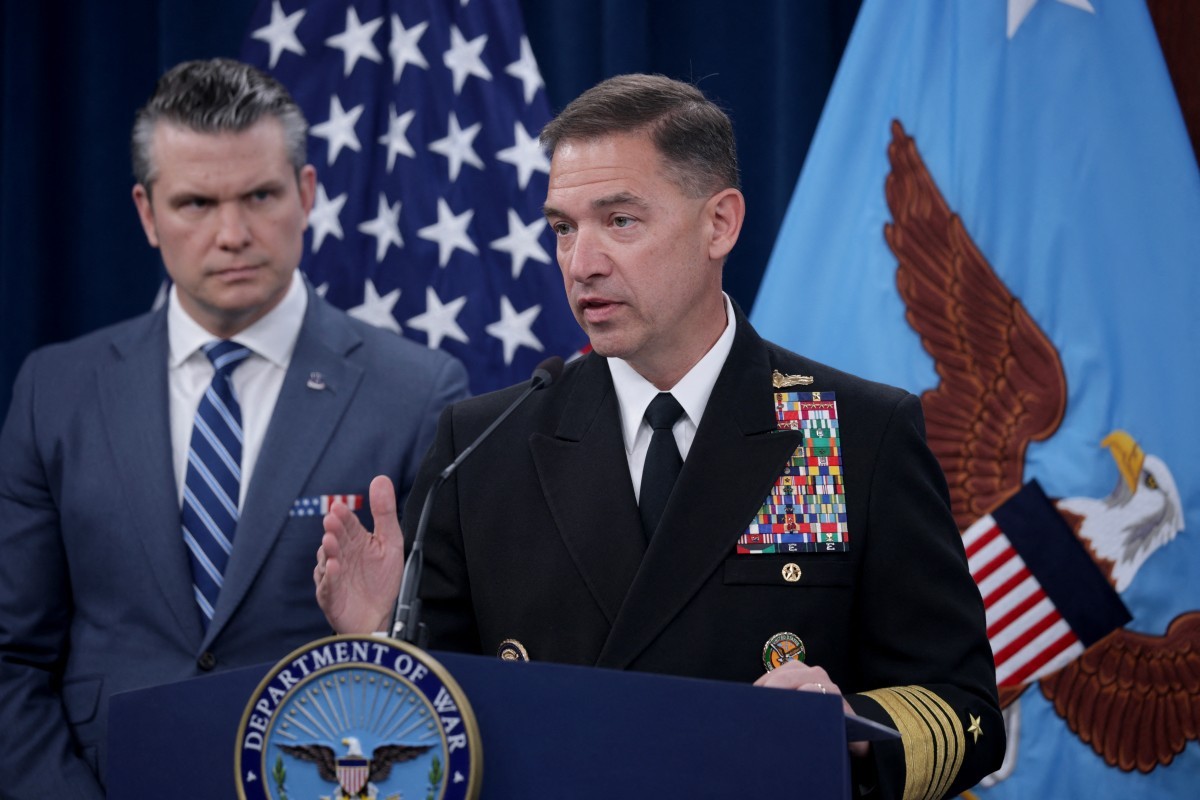
According to the news from the US Central Command (CENTCOM), Admiral Brad Cooper, the commander of the US Central Command responsible for coordinating military operations against Iran, inspected the USS Abraham Lincoln on Saturday, August 15th. The aircraft carrier has been on a mission overseas for over 200 days and is now preparing to return.
This inspection comes at a time when the ship is embroiled in controversies such as poor living conditions and low morale, coinciding with reports that the USS George Washington will replace the Abraham Lincoln.
The US Central Command stated that Admiral Cooper’s inspection concluded his 10-day trip, during which he visited Bahrain, Iraq, Israel, Jordan, Saudi Arabia, and the United Arab Emirates.
During the visit, Admiral Cooper met with sailors and Navy Marines on the aircraft carrier, delivering a speech to the entire Lincoln team, expressing gratitude for their tremendous dedication and courage.
In his statement, Admiral Cooper described the USS Abraham Lincoln Strike Group as a strong team, with the troops feeling “immensely proud” of their achievements. He believed that history would mark this deployment as “one of the most impactful ones.”
Amidst Admiral Cooper’s inspection, several media outlets reported on the dire living conditions aboard the Lincoln, including not having docked for supplies in about 200 days and concerns about crew members’ mental health.
Following these negative reports, several lawmakers have begun to inquire about whether the soldiers on the Lincoln lack fresh food, personal items, face plumbing issues, and experience mental health challenges.
In a recent letter, Senator Richard Blumenthal expressed concern that the conditions onboard the aircraft carrier have deteriorated to a point that may jeopardize the safety and well-being of the crew, urging Secretary of Defense Pete Hegseth to provide an explanation.
Prior to this, the Central Command issued a statement refuting rumors circulating online about incidents such as “seven deaths due to brawls on board” and a drastic increase in suicide thoughts among personnel.
Acting Navy Secretary Hung Cao stated on Friday, August 14th, that the USS Lincoln played a critical role in US bombing operations against Iran and continued to participate in the blockade of Iranian ports. The deployment has been successfully completed, and as planned, the ship will return to its homeport for rotation, with specific details to be announced later.
Cao emphasized that portraying the soldiers on the Lincoln as “victims” is misleading, highlighting the ship’s significant activities during the 266-day deployment, including 200 days in the conflict zone, over 10,000 flight missions, and the delivery of 1.5 million pounds of ordnance.
Acknowledging the challenges faced by the personnel, Cao mentioned that while a few individuals encountered mental health issues, they received proper treatment without any casualties. He also noted adjustments in the sailors’ diet due to replenishment issues and restrictions on communication with families during heightened operational threats.
He recognized the immense pressure placed on young servicemen during extended deployments, urging the public to give the soldiers a hero’s welcome upon the Lincoln’s return.
Secretary of Defense Hegseth publicly refuted media reports regarding incidents like soldiers attempting to jump overboard from the Lincoln, stating that such reports were completely distorted. He indicated that the US may ‘indefinitely’ maintain the blockade against Iran, rotating ships as needed, emphasizing a commitment to the mission as long as necessary.
Multiple media reports suggest that the US is preparing to dispatch the USS George Washington to Japan to replace the Lincoln as part of a pre-established rotation plan.
While officials have confirmed the movement of the USS George Washington to the region, its ultimate destination as a replacement for the Lincoln remains undisclosed due to operational security considerations.