
After years of cozying up to Beijing through various policies, Solomon Islands’ new Prime Minister, Matthew Wale, has taken office and embarked on a series of intensive diplomatic actions to restore relations with traditional partners such as the United States and Australia.
On Friday, August 7th, during the Pacific Islands Forum Foreign Ministers Meeting in Suva, the capital of Fiji, Solomon Islands’ Foreign Minister Rick Houenipwela told Reuters that some long-term partners have felt “neglected” in recent years. The Solomon Islands government is now working to mend relations with the U.S., Australia, and other traditional partners, aiming to establish closer interactions with them.
“We must restore relationships,” Houenipwela expressed.
Since Wale’s election as Prime Minister in May, there has been a noticeable shift in the country’s foreign policy. While actively seeking diplomatic breakthroughs, Wale’s government has moved away from the previous administration’s continual deepening of ties with Beijing.
The previous leadership had signed a secret security agreement with the Chinese Communist Party, triggering strong alerts from the U.S. and its allies regarding Beijing’s military expansion in the Pacific region. The recent stance of Wale’s administration signifies Solomon Islands adopting a broader and more balanced foreign policy approach.
In just a few months in office, Wale has carried out a series of high-profile overseas visits:
Visit to Australia:
In early June, Wale made his first visit to Canberra, reaching a consensus with the Australian government on enhancing strategic partnership and promoting the signing of a new strategic treaty to address escalating strategic competition in the Oceania region.
According to Reuters, after meeting with Australian Prime Minister Anthony Albanese in Canberra, Wale stated that Solomon Islands would review the security agreement signed with China in 2022 and “reset” its comprehensive strategic bilateral relationship with Australia.
“Solomon Islands is a friend of Australia, it was in the past, and will be in the future,” he pointed out, expressing Solomon Islands’ desire to enhance security and economic cooperation with Australia.
Visit to the U.S. and Japan:
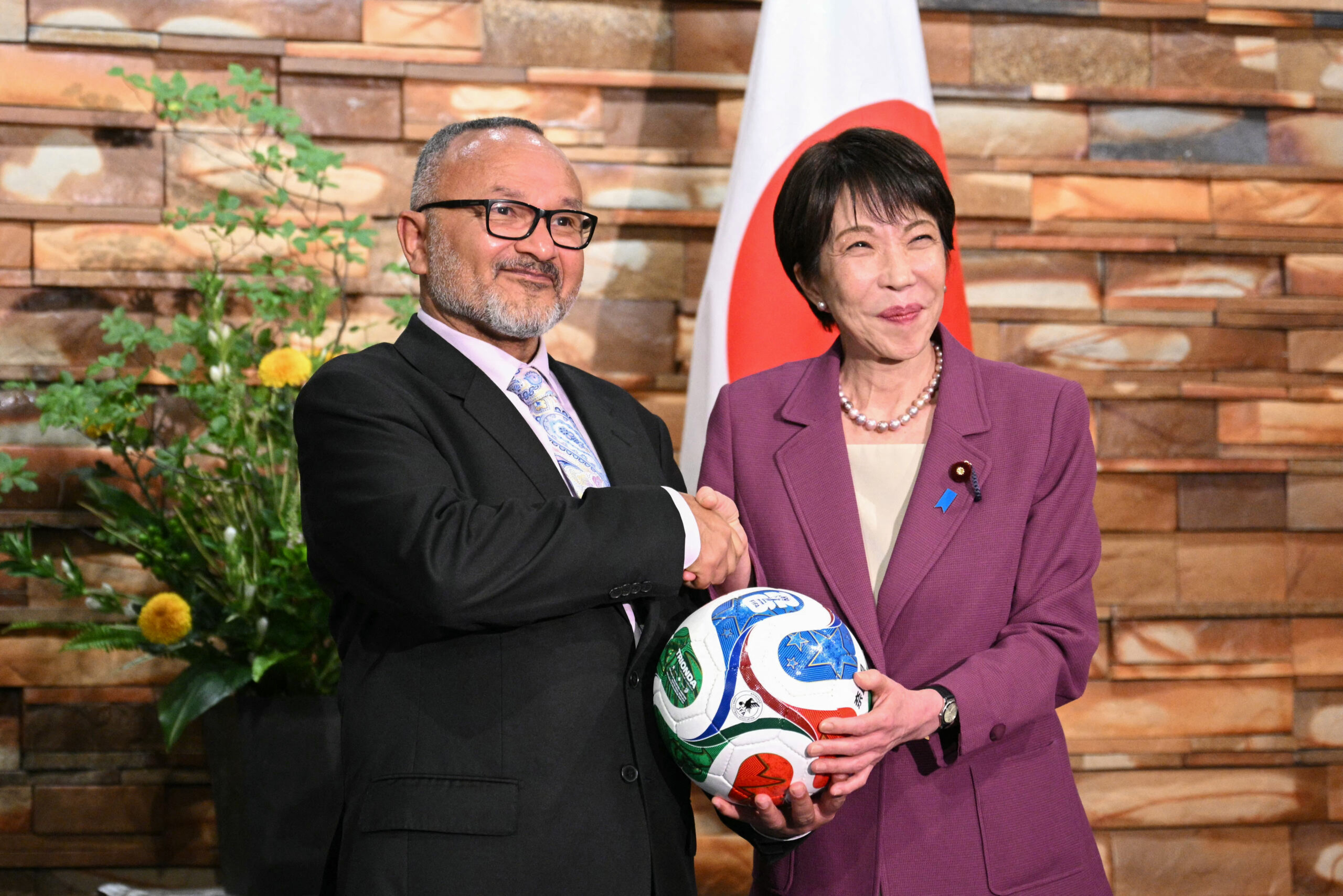
At the end of July, Wale traveled to Washington to discuss deepening U.S.-Solomon Islands relations and signed a memorandum of understanding to restart the Peace Corps program in the local area with the U.S. Houenipwela described Wale’s visit to the U.S. as “extremely productive”. During the same period, Wale also visited Tokyo, Japan.
Signing of Maritime Security Agreement:
At the end of July, the Solomon Islands government discreetly signed a highly anticipated maritime security cooperation agreement with the U.S. on board a U.S. Coast Guard patrol ship in the port of Honiara, the capital of the Solomon Islands.
Despite actively bridging the gap with Western camps, the Solomon Islands government officials emphasized that this series of diplomatic moves does not mean abandoning diplomatic neutrality. Foreign Minister Houenipwela pointed out that re-establishing connections with traditional partners does not change the country’s core diplomatic policy principle of “being friends with all, not enemies.”
The Pacific Islands Forum (PIF) Foreign Ministers Meeting in Suva is focusing on regional leadership and related geopolitical issues. Houenipwela stated that consensus has been reached on the conference agenda so far. He reiterated that the government’s efforts to reconnect with traditional partners are not a deviation from its overall diplomatic policy principle but are geared towards securing the country’s interests in an increasingly intense strategic competition environment.