
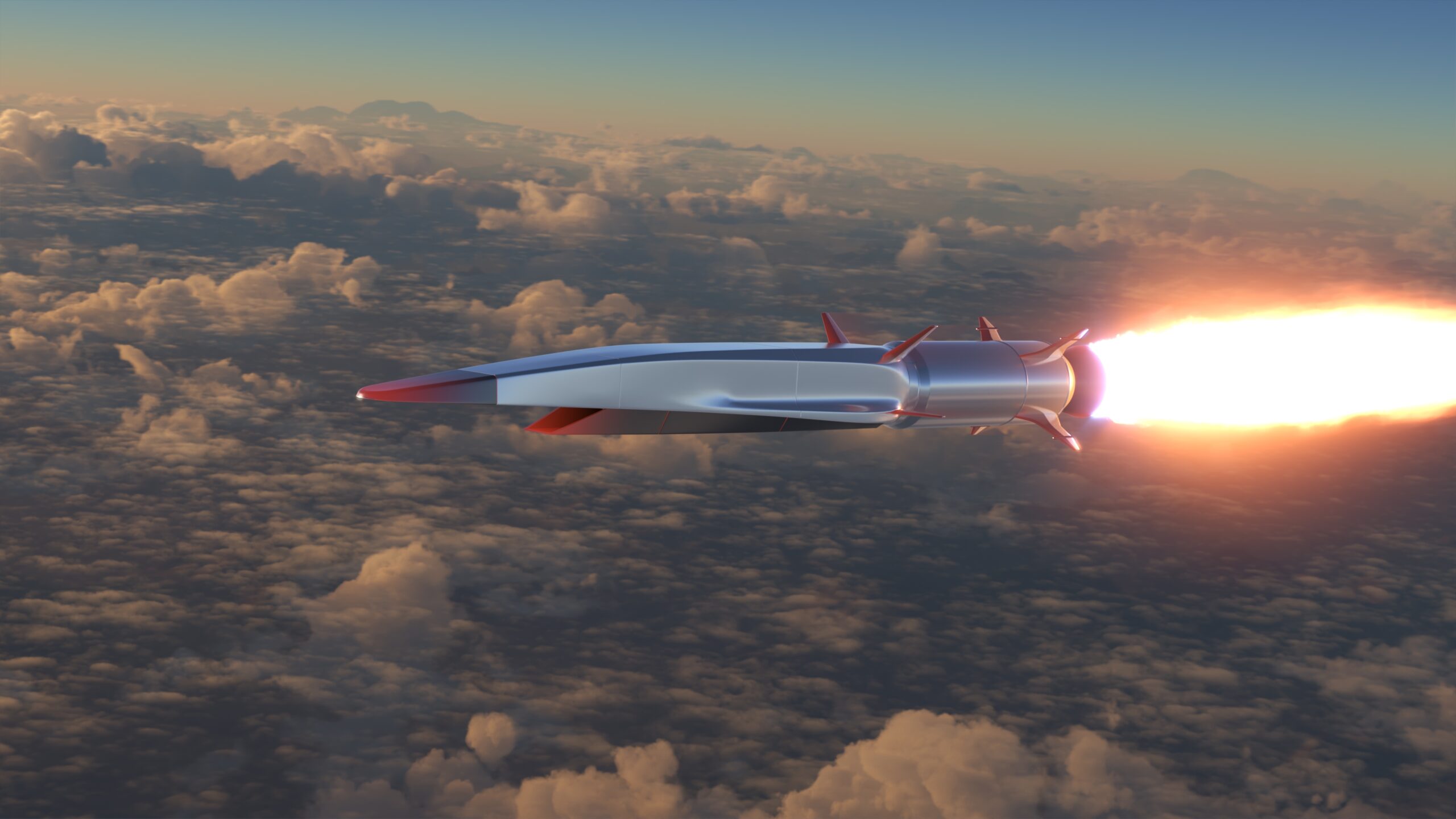
With the escalation of the war between Ukraine and Russia and conflicts in the Middle East, the consumption rate of missiles has far exceeded previous levels. Defense manufacturers are facing a critical challenge: how to significantly increase production quantities while maintaining weapon performance?
According to military technology expert Travis Butson, the focus of high-tech weapon design has traditionally been on improving performance, including range, maneuverability, and more precise guidance technology, with production speed not being a top priority. However, as battlefield usage intensifies, the defense industry now places more emphasis on how to rapidly produce an adequate quantity of weapons.
This trend has also brought 3D printing technology to the forefront of the defense industry. Major defense companies are increasingly incorporating “metal 3D printing” technology into specific stages of their production processes to enhance weapon manufacturing speed, simplify supply chains, and reduce reliance on specific suppliers. This technology, previously used primarily for prototyping and testing samples, is now evolving into a practical production tool.
Starting from next year, 3D printing will be used to manufacture parts of the fuselage structure and warhead casing of the Tomahawk cruise missile, and potentially extend to some electronic and guidance components in the future. However, at present, this technology cannot manufacture all components of a missile, particularly critical components made from rare earth materials, so it cannot completely replace traditional manufacturing methods or directly “print out a complete Tomahawk missile.”
Although in terms of technology, 3D printing can produce materials and electronic components containing rare earth elements like samarium-cobalt, neodymium-iron-boron, dysprosium, terbium, gallium, germanium, and tantalum, these technologies have yet to be utilized for mass production.
There are also reports suggesting that in the future, 3D printing equipment with silicon photonics technology may be further utilized to manufacture computer parts for avionics systems and control missile flight directions and navigation.
Butson points out that the real challenge in missile production is not manufacturing the parts but the certification and verification process for these parts, which must demonstrate their ability to operate safely in harsh combat environments.
A cruise missile might be stored on a warship or military base for several years before launch. After launch, each structural component of the missile must withstand intense vibrations, pressure changes, airflow impacts, and extreme temperature differences during high-speed flight. Any tiny flaw could lead to mission failure.
He notes that parts used by defense contractors typically require multiple rare earth materials, precise processing, heat treatment, precise surface treatment, and rigorous testing before being approved for use. As these weapons may operate over civilian or allied territories, absolute safety and reliability must be ensured.
Butson emphasizes that the greatest impact brought by 3D printing technology is not just increasing the production quantity of existing missiles but enabling the development of a new generation of weapons with rapid, large-scale production as the goal from the initial design phase. At the same time, defense developers are beginning to realize that the advantage in future wars may come more from the quantity of weapons rather than just technological advancement.
While precision strike weapons remain important, missiles with high costs, reliance on rare earth materials, and limited production speeds, once the war consumption rate exceeds production capacity, are difficult to replenish in a timely manner. Therefore, the defense industry is shifting towards a “low-cost mass production mode” to rapidly produce more weapons to meet the future battlefield’s requirements for quantity and replenishment capabilities.
He indicates that 3D printing technology allows engineers to integrate structures composed of multiple parts into a single component, reducing material consumption, shortening manufacturing time, and simplifying the supply chain complexity. By combining commercial manufacturing technology with modular design in the future, the defense industry can develop a new generation of weapons better suited for large-scale production and reduce reliance on overseas raw materials.
(This article referenced a report from the technology media outlet SlashGear)