
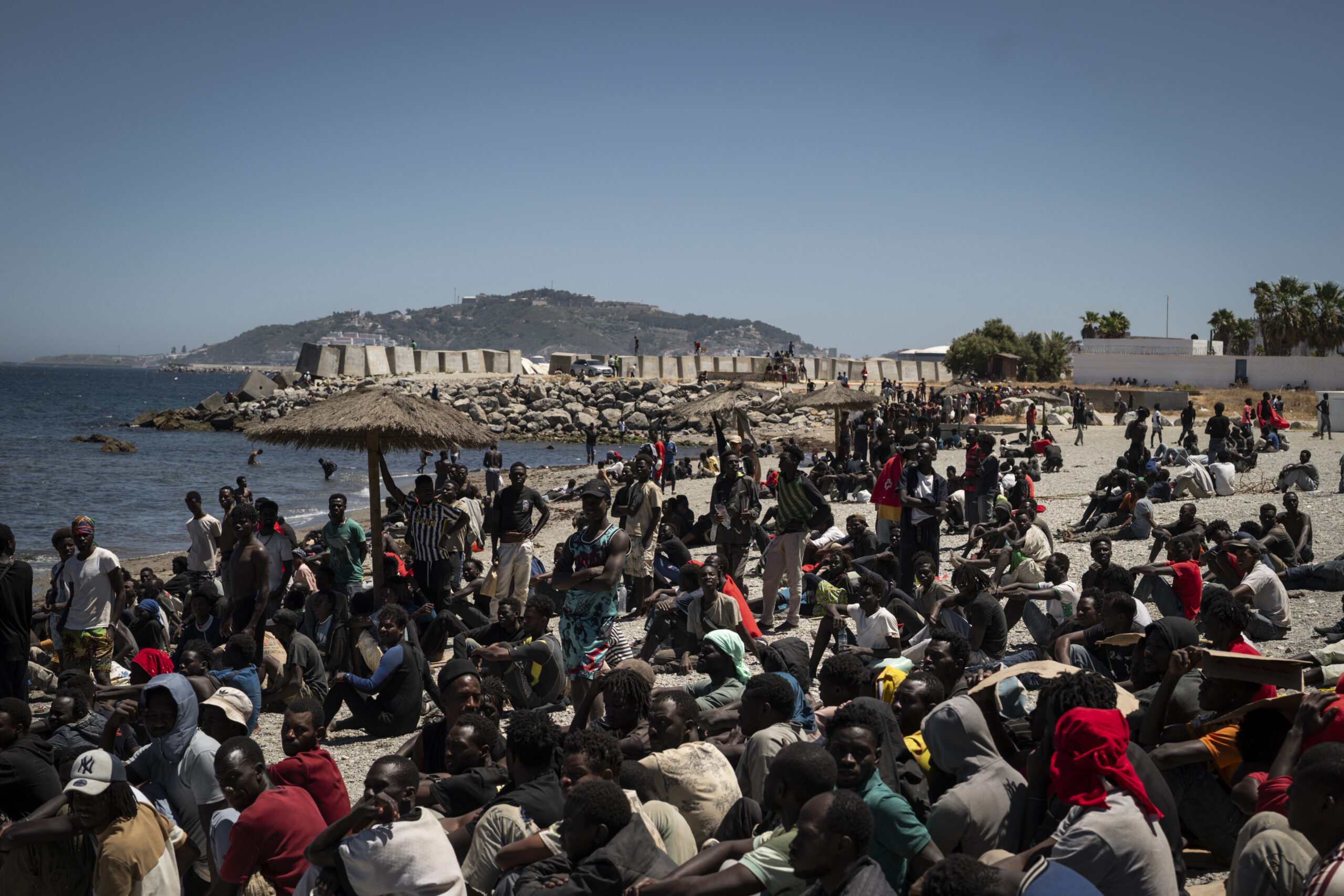
The immigration crisis in the Spanish enclave of Ceuta on the North African coast continues, with thousands of migrants camping on the beach overnight on Monday, August 3rd. Local government authorities are still struggling to accommodate so many detainees on this small piece of land. This large-scale border crossing event has led to at least 83 deaths and sparked a new round of controversy over EU diplomacy and border policies.
According to Reuters, the Spanish government stated that approximately 69,500 migrants have been returned to Morocco in the past four days, exceeding the previous estimate of 60,000 border crossings. Many cited leaving due to closures of shops which left them without food, faced hostility from locals, and were unable to reach mainland Spain.
Official statistics show that 72 people have died on the Spanish side of the crisis, and 11 on the Moroccan side.
Currently, there are still an estimated 3,000 to 5,000 migrants remaining in Ceuta, and local reception facilities are nearing collapse.
Videos provided by Reuters show crowded migrants from sub-Saharan Africa on El Trampolin beach in Ceuta, many wrapped in towels to shield from the sea breeze, while military and police continue to patrol the area.
Ceuta Mayor Juan Jesús Vivas stated that the two migrant reception centers in Ceuta, one for adults and one for minors, are overwhelmed.
Local government officials noted that 862 minor migrants are currently housed. Under Spanish law, minors are entitled to special protection and cannot be immediately deported, adding pressure to local authorities for accommodation.
Spanish Foreign Minister José Manuel Albares expressed on Monday that Spain has previously assisted other EU countries during migrant crises and now hopes to receive similar support from partner countries.
The EU has scheduled an emergency video conference of interior ministers on Tuesday to discuss how to address this border crisis.
Albares praised Morocco for immediately providing police support without any conditions, enabling most border crossers to return promptly.
However, Ceuta Mayor Vivas criticized Morocco for at least allowing this large-scale border crossing, even suspecting deliberate orchestration, stating, “Morocco has already proven to us that it is not a reliable partner, and we must take all necessary measures to prevent a similar event from happening again.”
However, the Moroccan government denied deliberately creating the crisis. The Moroccan Interior Ministry stated that this wave of migration was primarily influenced by misinformation on social media, human trafficking groups, and misunderstandings related to a Spanish court decision prohibiting immediate deportation of intercepted migrant boats, and reiterated Morocco’s continued cooperation with the international community to combat illegal migration and human trafficking.
On the other hand, Spanish newspaper El País and Cadena SER radio quoted informed officials reporting that the Spanish intelligence services believe Morocco did not directly plan this large-scale border crossing but did gradually relax border controls, ultimately allowing a large number of migrants to enter Ceuta.
Reports indicated that Morocco gradually eased border controls in July and during Throne Day in Morocco, crowds were allowed to flood the Tarajal border crossing point with border controls being completely lifted.
The Moroccan Interior Ministry has yet to comment on this.
The event has also prompted an internal review within the Spanish government. Interior Minister Fernando Grande-Marlaska stated that the National Intelligence Center (CNI), responsible for foreign intelligence, did not issue a warning in advance regarding this large-scale border crossing.
Media reports have highlighted tension between the Ministry of Interior and the Ministry of Defense. However, the Ministry of Interior downplayed these claims.
Defense Minister Margarita Robles refused to disclose whether the intelligence department had prior information, only stating that intelligence work is confidential and simultaneously praised the “excellent” work of Spanish security personnel.