
The geopolitical conflicts between China and the Philippines in the South China Sea sovereignty disputes have further spread to the academic and cultural education field. On July 30, Chinese state media criticized the Philippines for allegedly “overly securitizing” Chinese education. The next day, the Philippine Department of National Defense (DND) retaliated by announcing strict scrutiny of foreign government-supported academic and cultural exchanges. They emphasized that public supervision and institutional transparency of foreign government support for local educational institutions are basic responsibilities of national governance and necessary measures to uphold academic integrity and national security.
Ateneo de Manila University Philippine Studies Center director Dai Fan criticized the recent scrutiny on Chinese education, Confucius Institutes, and Chinese students by Philippine society in an article published in China’s state-run Global Times on July 30. The criticism claimed that Manila’s authorities are excessively securitizing normal academic and language education, which is detrimental to long-term people-to-people exchanges between the two countries.
The Philippine Department of National Defense issued a stern statement on July 31 countering the accusations. The statement emphasized that any academic and cultural projects funded or supported by foreign governments that pose national security risks will face strict qualification reviews. The Philippines stated that this measure aims to prevent potential “cognitive warfare” and infiltration, safeguarding the country’s national sovereignty.
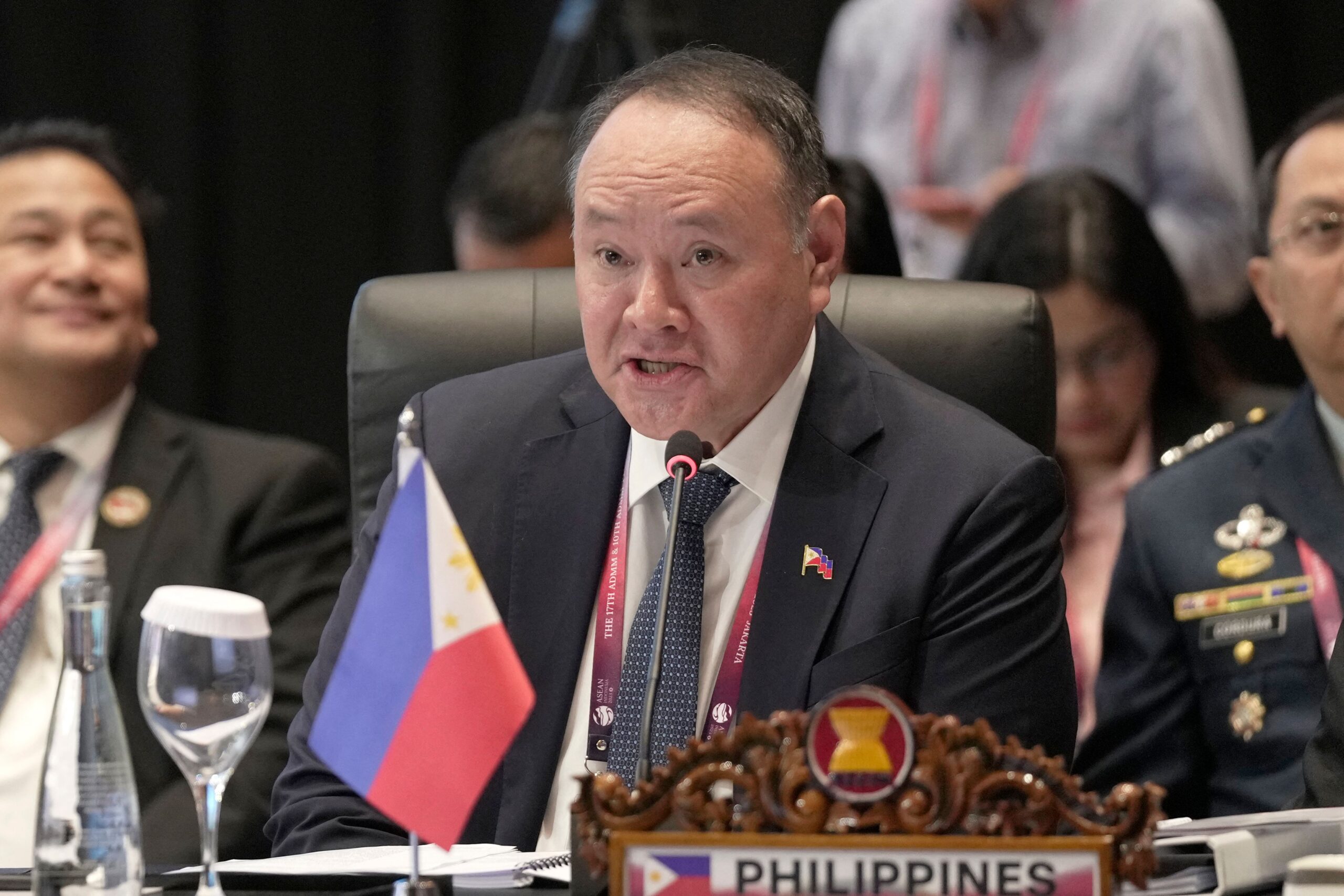
Philippine Defense Secretary Gilberto C. Teodoro Jr. pointed out in the statement that institutions controlled by the Chinese Communist Party, such as Ateneo de Manila University, advocate for “academic fairness” and “academic freedom” on one hand, but their actions contradict these principles. The statement noted that true academic freedom cannot exist within state-controlled propaganda systems, where freedom of speech is suppressed, differing opinions are immediately criminalized if they deviate from the party’s line, and history undergoes strict censorship, citing the violent crackdown on students and civilians in Tiananmen Square in 1989.
The statement further highlighted the Chinese Communist Party’s unilateral stance in international affairs, reflecting their position in the West Philippine Sea (Philippine official name for parts of the South China Sea). The Philippines accused China of demanding full control while refusing to respect equal treatment under international law.
Recently, ship collisions and military standoffs between China and the Philippines in areas like the Ren’ai Reef have escalated. The Philippine security sector and some members of Congress suspect that Confucius Institutes and areas where Chinese students congregate, such as the province of Cagayan, may harbor concerns of intelligence-gathering on Philippine-American military bases or manipulation of public opinion.
Current Philippine Defense Secretary Teodoro consistently maintains a tough stance against China, advocating for expanding national security defenses from limited military defense to comprehensive security reviews across all sectors.
The SeaLight maritime transparency project under the Gordian Knot Center for National Security Innovation at Stanford University revealed in its report around July 27 that China has intensified its United Front work infiltration into the Philippine education system this year, demonstrating more organization and systematization.
On April 21, Chinese Ambassador to the Philippines Jing Quan presided over a signing ceremony at the Manila Embassy with about 100 delegates present, including representatives from five Confucius Institutes, ten Chinese educational institutions, 40 Chinese-state-owned enterprises, various Filipino-Chinese organizations, and the Philippines-China Alumni Association of Chinese universities. They signed 31 cooperation agreements covering employment placement, internships, scholarships, teacher training, and digital services.
James Wang, chairman of the Philippine Chinese Education Research Center (PCERC), advocated during the ceremony for creating an ecosystem for Philippine Chinese education coordinated by the Chinese embassy and consulates in the Philippines with the participation of various parties. Ambassador Jing mentioned that the goal is to integrate resources and establish an effective platform for information sharing and resource exchange among Confucius Institutes, Chinese enterprises, educational institutions, and university alumni associations.
PCERC, a legally registered non-profit organization in the Philippines responsible for coordinating Chinese language education since 1991, has entered into a cooperation agreement with China Unicom (Philippines) to participate in the digital infrastructure construction in the K-12 basic education sector (kindergarten to high school) in the Philippines.
Three weeks later, a Fujian delegation arrived at Chiang Kai Shek College in the Philippines, and on May 12 signed two five-year cooperation memoranda, including joint talent cultivation, student and teacher exchanges, curriculum development, and overseas internships.
A seemingly newly established organization in Manila called the Philippines-China International Education Exchange Center (PCIEEC) signed related agreements as a cooperative partner, though SeaLight could not confirm its specific background through multiple inquiries.
The SeaLight project utilizes open-source technology to expose “gray zone” activities at sea, particularly focusing on China’s actions in the South China Sea, including the Nine-Dash Line claims and joint deployment of maritime militia and coast guard aimed at sidelining neighboring countries from their legally entitled maritime areas.
The Philippine Department of National Defense emphasized that the security assessments aim to counteract “foreign malicious influence, recruitment, and covert interference,” not targeting the Chinese community.