
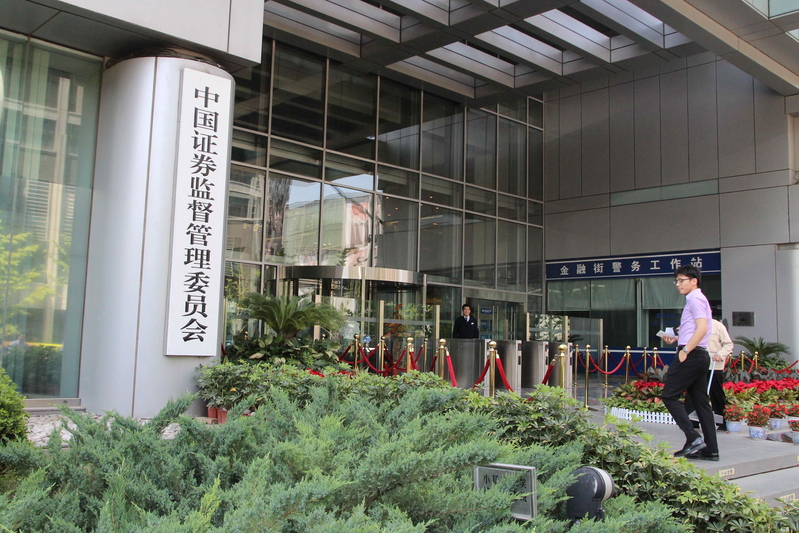
The central bank of China, alongside various financial sectors, recently announced a series of measures aimed at stabilizing the stock market. However, despite these interventions, the mainland Chinese stock market has continued to decline significantly. Reports from international media indicate that the China Securities Regulatory Commission (CSRC) has put a stop to initial public offerings (IPOs) and has also prohibited major shareholders from selling large amounts of their shares.
Since May, the total market value of the mainland stock market has diminished by approximately 25 trillion yuan. Currently, the CSI 300 index has entered a technical bear market. On November 2, the People’s Bank of China, in conjunction with the National Financial Regulatory Administration and the CSRC, convened a meeting to implement “swap facilities” and “stock repurchase financing” measures in an effort to stabilize the market.
Despite these so-called rescue measures, there has been little positive impact on the A-shares. On November 3, the market experienced a day of fluctuations. By the end of trading, the Shanghai Composite Index had dropped by 0.82%, the Shenzhen Component Index fell by 1.21%, and the ChiNext Board Index was down by 2.73%. Out of 5,417 stocks, 2,108 saw gains, while 3,309 suffered losses. Notably, stocks associated with computing power hardware experienced collective declines, with companies such as Cambricon Technologies and MuXi Co., Ltd. each dropping more than 10%.
The involvement of state-backed investment teams, often referred to as the “national team,” has also proven to be relatively ineffective. Data revealed that around 14:30 local time, as the market neared closing, substantial funds began to flow into Exchange-Traded Funds (ETFs).
According to reports from the Financial Times and The Wall Street Journal on November 3, insiders disclosed that the CSRC had engaged in discussions with multiple investment banks over the past few days. During these meetings, the CSRC reportedly issued informal administrative orders demanding a pause on new IPOs. Additionally, the actions of shareholders selling off large portions of their holdings have also been halted until the market shows signs of recovery.
Regulators have introduced further guidance designed to stabilize the market, which includes encouraging accelerated stock buybacks and requiring investors to limit share sales.
A report from Reuters highlighted that Chen Jiande, the general manager of Fuzhou Tianlang Private Equity Fund Management Co., remarked that the recently introduced market rescue measures fell short of market expectations. One significant issue identified is that the government is pushing market participants to invest their own funds in purchasing stocks rather than directly providing financial assistance.
Thomas Mathews, Market Head for Asia-Pacific at Cato Macro, believes these measures are unlikely to lead to a sustained reversal unless more direct actions are taken to address structural challenges. He pointed out that improving earnings growth is essential, which in the short term, could mean requiring monetary or fiscal support.
Conversely, Sam Konrad, an investment manager at Jupiter Asset Management, noted that the recent measures reflect the Chinese stock market’s dependence on government support. This dependency is one reason for the institution’s lack of optimism regarding the market’s long-term outlook. Historically, the Chinese stock market has been one of the poorest performers globally, with economic growth failing to translate into corporate profit increases.
In previous periods of stock market downturns, the CSRC had also temporarily halted IPOs as a way to maintain market liquidity. Historical data indicates that from 1994 to 2015, the A-shares experienced a total of nine IPO stoppages, accumulating around four and a half years of inactivity. Following the resumption of IPOs, only in the third instance did stocks see a slight increase of 3% over two months; the other eight times resulted in losses or stability, with an average decline of 5.4%.
Recent rumors of a “comprehensive suspension of IPOs” occurred in July 2023, but ultimately, the CSRC officially mandated a phased tightening of the IPO process on August 27, aiming to improve the counter-cyclical adjustment mechanism between primary and secondary markets while promoting harmony in investment and financing.
Despite these initiatives, public reports indicate that the pause on IPOs could slow down the recently recovering financing activities within the stock market. Data shows that since September, the IPO review process has significantly slowed. From early September to the end of October, only 13 companies were scheduled for reviews across the three domestic stock exchanges, while in October alone, there were only four. Notably, semiconductor manufacturer Yangtze Memory Technologies had anticipated an IPO this year, but as of now, this has not materialized.