
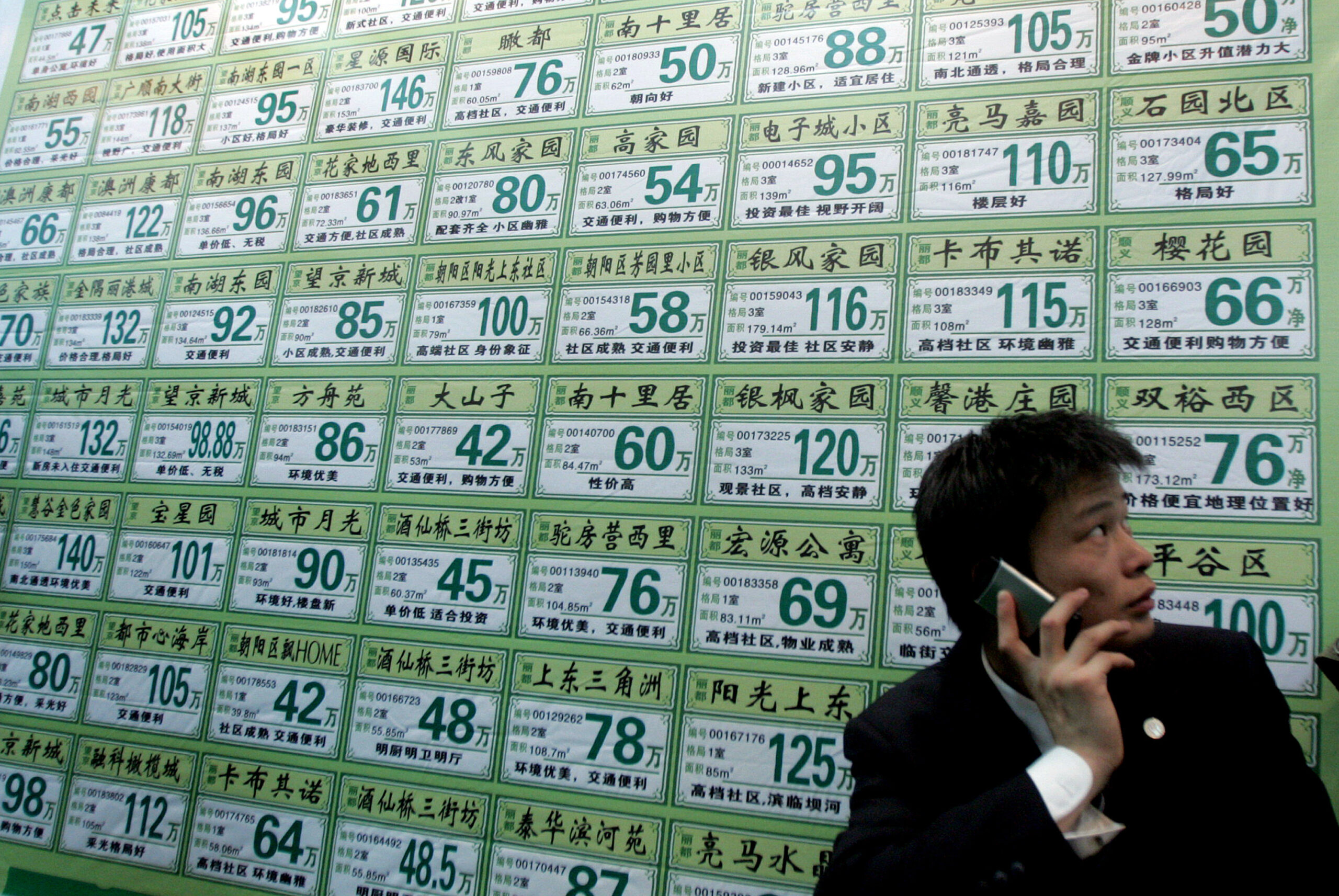
In light of the ongoing sluggishness in China’s real estate investment and transaction markets, the Chinese government has introduced a new policy allowing individuals to apply for home loans with a term of up to 40 years. Despite this measure aimed at boosting property sales, banking sources report that the progress in loan applications has fallen short of expectations over the past two months.
On August 28, the People’s Bank of China in collaboration with the Financial Supervision and Administration Bureau issued a notification extending the maximum term for personal housing loans from 30 to 40 years. This adjustment marks the first change in loan duration since 1999, when the terms were increased from 20 years to 30 years, signifying a considerable shift in policy after 27 years.
Reports from Caixin on November 2 indicate that multiple banking professionals have noted that the percentage of applicants seeking 40-year loans in September and October has not met anticipated levels. Overall, while there seems to be some interest from borrowers regarding the extended loan term, many remain hesitant and are holding back on making decisions.
A representative from a major state-owned bank commented that, during the typically bustling “Golden September and Silver October” period, while there were some clients applying for 40-year loans, the actual amount granted from the new applications constituted a very small percentage of total new mortgage releases.
Furthermore, officials from a national commercial bank’s credit department revealed that initial estimates show approximately 800 personal loans with a 40-year term have been disbursed nationwide over the past two months.
In certain local banks, staff observed a significant influx of inquiries about the specifics of the new loan policy in its first month of rollout. However, by October, the number of inquiries about related services had decreased markedly. Overall, it can be inferred that many clients remain in a cautious wait-and-see mode regarding the 40-year loan option.
According to the latest statistics from the banking sector, since the introduction of the 40-year loan policy, the number of clients opting for loans with terms around 30 years actually exceeds those seeking the 40-year loans by more than twofold.
Meanwhile, the broader real estate market in China continues to experience considerable downturns in investment and trading activities. The most recent data from the National Bureau of Statistics indicates that from January to September 2026, national real estate development investments amounted to 5.3364 trillion yuan, representing a year-on-year decline of 20.6%.
In addition, a report released by CITIC Securities on November 2 highlights that the proportion of publicly listed real estate assets in China has plummeted from nearly 6.2% to the current 1.4% of total market capitalization, falling below the 1.7% share seen in U.S. real estate.
The research emphasizes that compared to the United States, the variety of both development enterprises and real estate investment trusts (REITs) in China shows significantly lower market capitalization shares, with a notably sparse representation of operationally productive equity assets.
Kenneth Rogoff, a former chief economist of the International Monetary Fund (IMF), has articulated in an article for Project Syndicate that the real estate sector is indeed in distress, accompanied by weak consumer demand and stark regional developmental disparities. With the bursting of the real estate bubble, he foresees that the Chinese economy could face a prolonged period of adjustment pain. The real estate sector and its associated industries account for nearly one-third of China’s total demand. Finding new drivers for economic growth to bridge the gaps left by the downturn in real estate and infrastructure will prove to be a formidable challenge, even in the most favorable circumstances.