
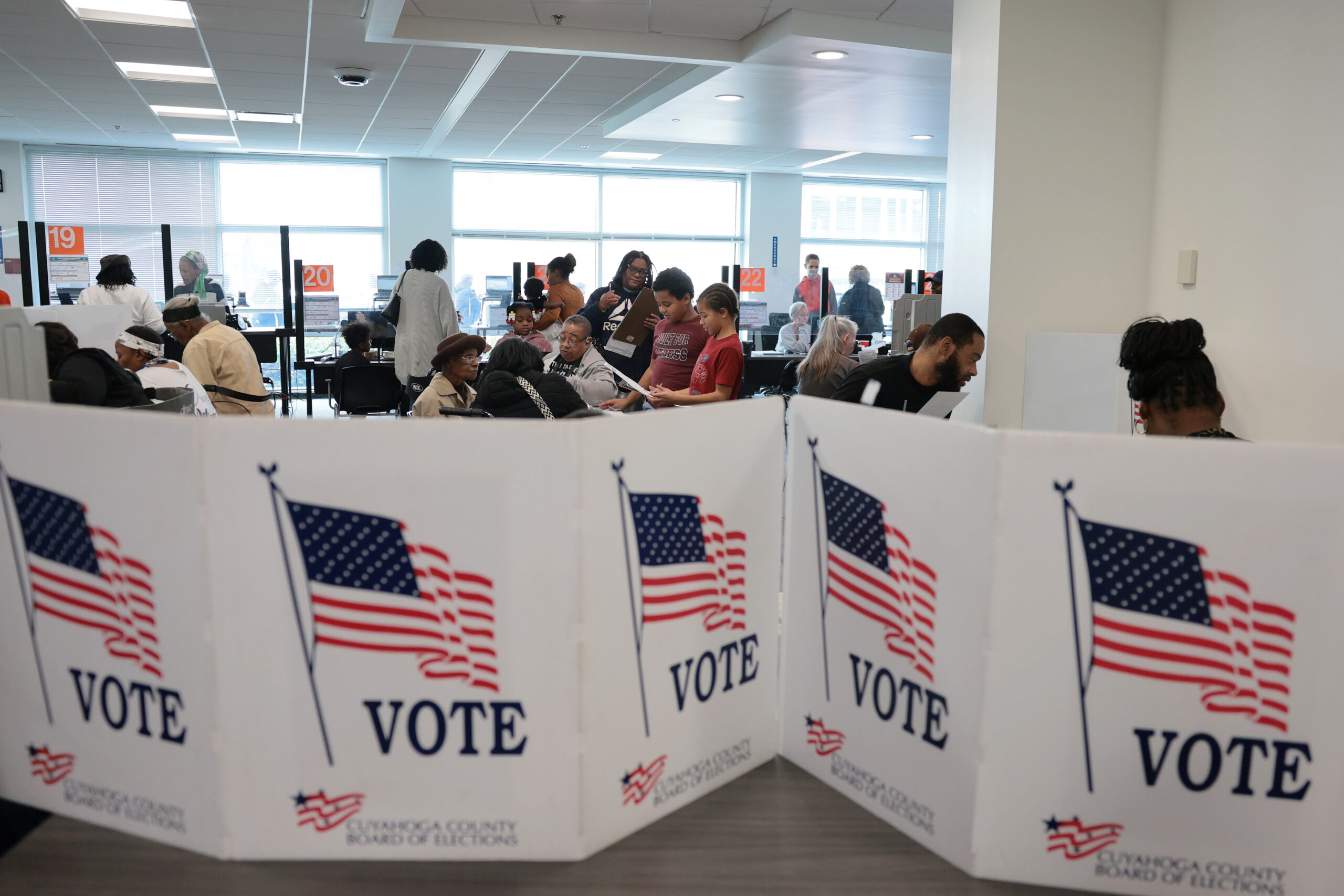
In the context of the upcoming midterm elections in the United States, there is a new factor at play: the widespread emergence of artificial intelligence (AI) chatbots. A significant number of Chinese Americans are utilizing WeChat, a popular messaging application. Recent expert analyses from various think tanks suggest that the Chinese Communist Party (CCP) may exploit AI technologies and WeChat to potentially influence the electoral outcomes in the midterms.
A recent survey revealed that approximately one in five Americans intends to use AI tools to familiarize themselves with candidates or to assist in making their voting decisions.
While most Americans are likely to utilize AI models developed by large U.S. companies such as ChatGPT, Claude, Grok, or Perplexity, there is a growing trend of American developers adopting Chinese AI technologies like DeepSeek and Qwen. This trend allows for an gradual infiltration of Chinese AI systems into the American information dissemination ecosystem.
However, there are serious concerns about the implications of using Chinese AI models. These models are under the influence of the CCP’s political and human rights stances, which can potentially skew the information presented to users. Research indicates that when users inquire about matters such as press freedom in America and electoral issues, responses from Chinese AI models may reflect CCP censorship and propaganda bias.
A study conducted in Europe, which surveyed both American models and Chinese counterparts, indicated a distinct left-leaning bias when users were asked about preferred party candidates and which party should control Congress. Despite both models favoring the Democratic Party, the reaction was markedly different when evaluating CCP leader Xi Jinping. The Chinese AI either declined to respond or offered flattering comments about him.
As of now, there is no concrete evidence definitively linking the CCP’s actions to influence the midterm elections in the United States. Nevertheless, the CCP may exploit platforms like WeChat and utilize Chinese AI technologies like DeepSeek to sway political discussions within America.
Sarah Cook, a noted expert on Chinese media and human rights at the Center for European Policy Analysis (CEPA), recently expressed in a comprehensive article that while current research hasn’t found that CCP propaganda or misinformation plays a critical role in the midterm elections, significant gaps in monitoring exist. She warns that the CCP could potentially affect electoral dynamics through WeChat and Chinese AI models.
Cook hypothesized that the CCP’s objective may not be to change the balance of power in Congress but rather to eliminate or weaken anti-Communist sentiments within the U.S. legislature and government. This is particularly true concerning the election prospects of Congress members involved in the Congressional-Executive Commission on China (CECC), including notable figures such as former Ohio Senator Sherrod Brown, current Alaska committee chair Dan Sullivan, and representatives Zach Nunn from Iowa and Jen Kiggans from Virginia.
Moreover, Ashley Hinson, a current U.S. congressional representative from Iowa and a member of the House China Committee, is also running for reelection.
The article outlines that WeChat is estimated to have around 1.5 million users in the United States, predominantly concentrated in states with substantial Chinese populations, such as Texas. In Texas, approximately 1% of the overall population is of Chinese descent. A 2025 study by the University of Texas highlighted that the WeChat platform is rife with political misinformation originating from the CCP.
One young female respondent shared her experience of her father seeing a viral message on WeChat months before the last election claiming that an Asian American woman had been elected mayor of Boston. She noted that her father tends to believe whatever he sees online and then shares it, and her grandmother follows suit.
The article further emphasizes that cultural and social pressures within the Chinese community in the U.S. deter young Chinese Americans from correcting inaccurate information in conversations with friends and family. One 19-year-old respondent explained that criticizing elders directly, especially in group chats, feels inappropriate.
Another Chinese American respondent pointed out that many individuals are uncertain about whom to vote for and can easily be swayed. WeChat has transformed into a vast political platform, where users often conform to popular discourse and follow others blindly.
In conclusion, the article highlights that there remains a substantial knowledge gap regarding the channels and methods by which CCP-affiliated entities might influence U.S. elections. Researchers, electoral watchdogs, and stakeholders concerned about electoral integrity are urged to address these gaps, particularly in the lead-up to the 2028 presidential elections in the United States.