
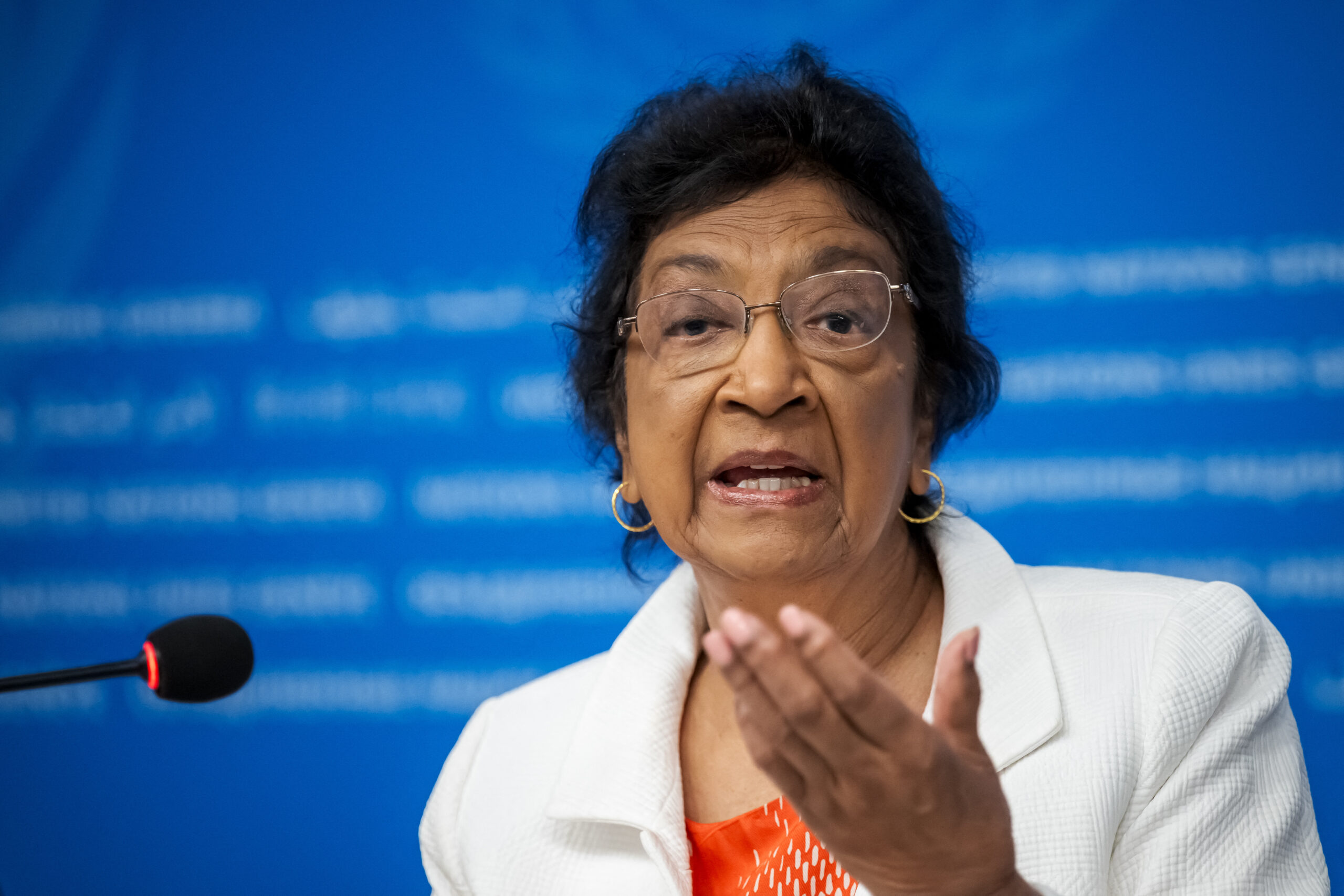
The Nobel Committee in Norway announced on Friday, October 9, that South African jurist Navanethem “Navi” Pillay has been awarded the 2026 Nobel Peace Prize for her efforts in promoting peace and international law.
Amid ongoing global conflicts, the Committee emphasized the importance of international law in maintaining peace. Committee Chairman Jørgen Watne Frydnes stated that the international legal system is under immense pressure, with related institutions being attacked.
“Whenever power overrides justice, it disrupts stability, erodes trust, and jeopardizes peaceful coexistence,” he emphasized. “Peace requires justice.”
Born in Durban, South Africa to an Indian Tamil family, the 85-year-old Pillay grew up under apartheid. She started her career as a lawyer, defending anti-apartheid figures like Nelson Mandela and later transitioned to the international judicial stage.
Pillay has served as a judge in the South African High Court, the International Criminal Tribunal for Rwanda, and the International Criminal Court (ICC), as well as the United Nations High Commissioner for Human Rights.
One of her significant judicial contributions was her involvement in the trial of the genocide in Rwanda, where the court established legal principles that rape and sexual violence could constitute crimes against humanity and genocide.
The Nobel Committee highlighted Pillay’s pivotal role in this judicial breakthrough.
Additionally, she is currently serving as a special judge in the International Court of Justice (ICJ) in the case where The Gambia accuses Myanmar of genocide.
The Nobel Committee commended Pillay for her independence, expertise, and steadfast spirit, naming her one of the most respected international jurists of our time.
Pillay has also been involved in human rights investigations in the Middle East. She previously chaired the United Nations Independent International Commission of Inquiry on the occupied Palestinian territories and Israel issues. The committee’s report in 2025 concluded that Israel had committed acts of genocide in Gaza.
Israel denied the allegations and condemned the report as “outrageous.”
During the award announcement press conference on Friday, Frydnes stated that lasting peace must be built on legal principles rather than the will of the strong or fragile power balances.
He said that while the international legal system is imperfect and powerful nations often evade responsibility, law remains a crucial foundation for peace.
When asked why the emphasis on international law this year, Frydnes responded that institutions upholding international law are facing immense pressure, sanctions, and attacks. In a world where conflicts are increasingly frequent, supporting, strengthening, and expanding the work of these institutions is key to building a more peaceful world.
Another journalist inquired about the impact of awarding a judge when many brutal regimes do not respect international law. Frydnes acknowledged that international law cannot prevent all conflicts but establishes standards to follow, and legal measures indeed help prevent wars and violence.
After announcing the recipient, the Committee was asked if they had informed Pillay.
Frydnes mentioned that the Committee had not been able to contact Pillay yet. He then made an announcement through the media, calling out to the laureate: “If you see a Norwegian phone number calling, please answer.”
“I look forward to speaking with you very soon,” he added.
This year, there were 287 candidates for the Nobel Peace Prize, including 208 individuals and 79 organizations. The prize money amounts to 12 million Swedish Kronor, approximately 1.2 million dollars.
The official award ceremony is scheduled for December 10 in Oslo, the capital of Norway, also the anniversary of the death of Nobel Prize founder Alfred Nobel.