
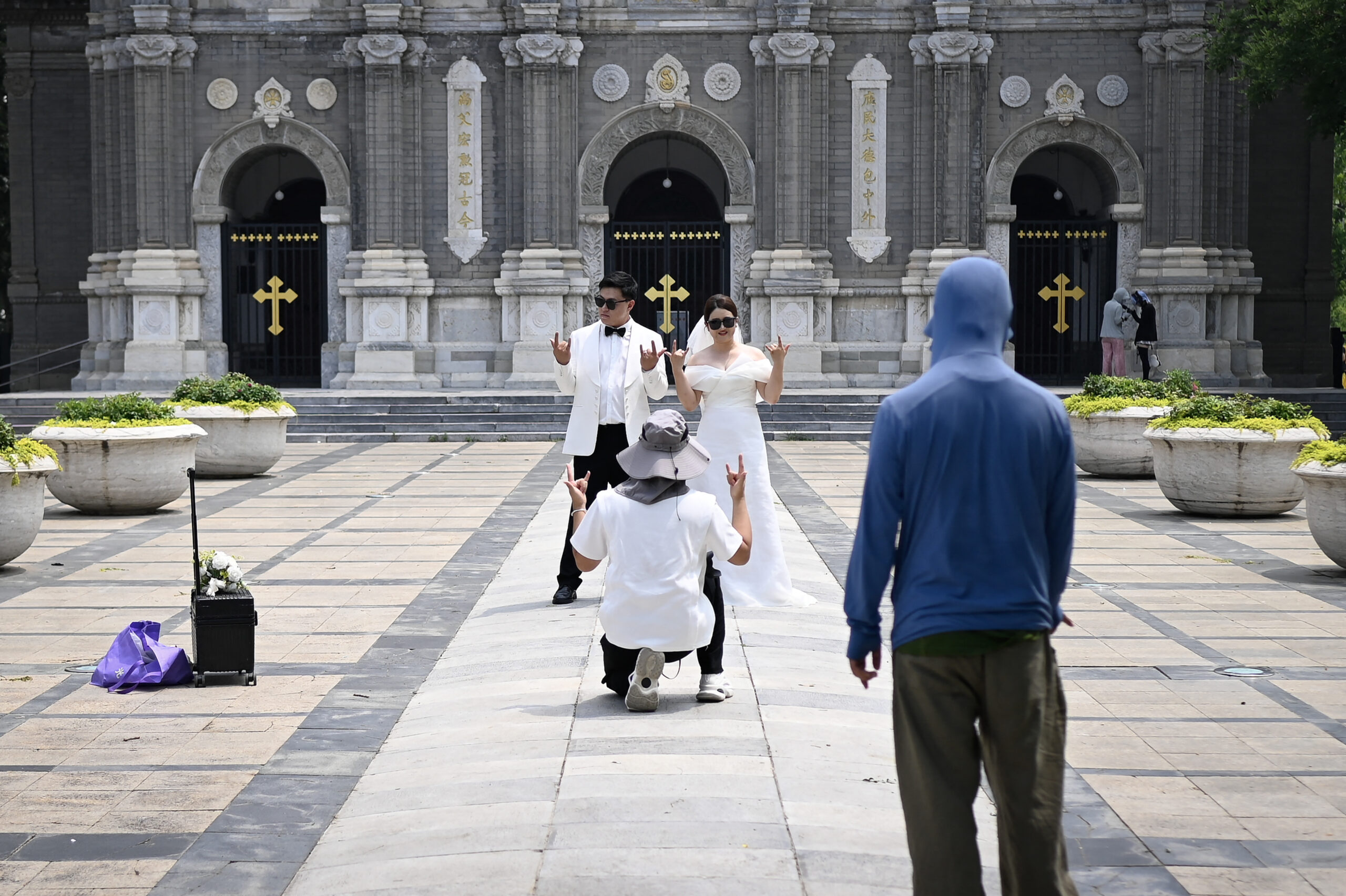
In China’s county towns, wedding banquets are experiencing a lackluster “Golden Week” celebration this year. Some hotels that used to be fully booked for wedding banquets in previous years are facing vacancies this year. Simultaneously, some young couples are choosing to have destination weddings or downsizing their banquet scale.
Traditionally, the “Golden Week” is a peak season for wedding banquets in county towns, but this year, some hotels have seen a notable decrease in wedding banquet orders. A report by Sina Finance quoted a salesperson from a county-level hotel saying that in previous years, the period before the “Golden Week” was always filled with bookings, sometimes hosting two to three banquets in a day. However, this year, discounts are being offered for banquet halls before the long holiday, and even after the holidays, there are empty days.
An article on the mainland website “Huxiu” cited insights from Su Su, an industry insider who has been involved in wedding banquet sales at county town hotels for about 10 years. Su Su mentioned that in previous years, the “Golden Week” was usually a peak season for wedding banquets, with preparations starting as early as 3 months in advance. However, this year, the hotel’s banquet hall is only booked for two days out of the 7-day holiday, and all dates after October 6th are available, a situation that has not been seen in the past seven to eight years. Her direct observation was: “No one is getting married.”
The subdued atmosphere in wedding banquets has also affected related industries. MCs, photographers, makeup artists, and even real estate salespeople are inquiring with Su Su if there are any new bookings. Despite hotels offering discounts on beverages and free wedding planning, the banquet halls remain underutilized.
Su Su noted a change in the wedding styles of young people. While some are still sharing wedding photos and invitations on social media, the choice of banquet venues is shifting towards outdoor campsites in suburban areas. Even Su Su’s own niece opted for a “destination wedding” last year, heading to western Sichuan for wedding photos.
Furthermore, wedding banquet sizes are shrinking. It was common in the past for both sets of parents to organize a 30-table banquet, but nowadays, some couples are reevaluating their guest lists, not necessarily inviting long-lost relatives, leading to banquets with 20 tables or even just over 10 tables.
This shift is impacting the “social economy” behind traditional wedding banquets. In county towns, weddings often involve not only the couple but also mutual obligations between parents, relatives, and acquaintances. The downsizing or change in the format of wedding banquets will also have a ripple effect on hotels, wedding planners, photographers, beverages, and other related consumables.
On the other hand, data from China’s Ministry of Civil Affairs shows that in the first half of 2026, there were 3.275 million marriages registered nationwide, a decrease of 264,000 compared to the same period in 2025, representing a decline of about 7.5%.
A survey on the choices of young people in dating and marriage revealed that economic and work pressures are influencing some young individuals’ decisions. According to a 2026 survey on youth dating perspectives conducted by Beijing Normal University and Xiaohongshu, 62.1% of young interviewees believed they were “completely unprepared” or “insufficiently prepared and need long-term accumulation.” Economic pressures such as housing purchases or rentals, childcare or education, and dowry costs were cited as the main stressors, while 79.4% stated that job hunting or work pressures had a significant impact on their dating and marriage enthusiasm.
A specialized survey conducted by the Population and Development Research Center at Renmin University of China also found that among those who choose not to marry, marry late, remain childless, have children late, or have few children, the majority still have the intention to marry and have children. However, a significant reason for the disparity between intention and practice is the rising costs associated with marriage and child-rearing, including economic and time expenses.