
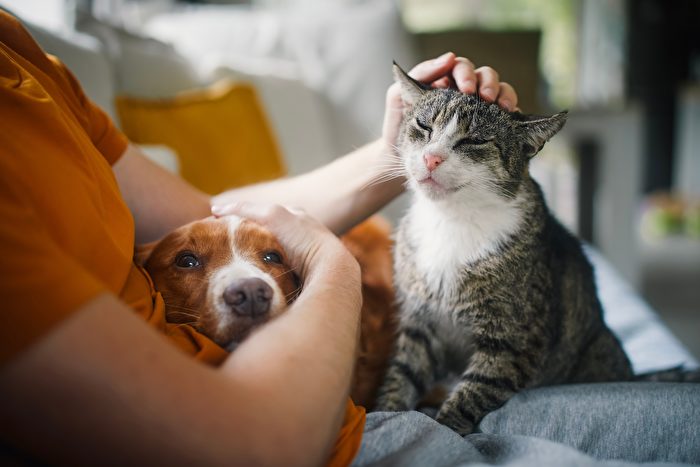
In the past few decades, in any area of the United States, there have been far more dog lovers than cat lovers. On sidewalks, in parks, and on beaches, you can see people walking dogs and chasing after them. However, in recent years, there have been subtle changes in the living environment and status of dogs.
According to statistics from the research company Packaged Facts, this year, the number of new pet cats in American households has exceeded the number of new pet dogs for the first time. In 2014, for every household that adopted a cat under one year old, there were 1.8 households that adopted a puppy under one year old. This ratio reached a balance in 2025. By 2026, the ratio had crossed over, with currently every adoption of a young cat corresponding to only 0.94 adoptions of young dogs.
The data shows that while the number of cats being kept as pets has not seen a significant increase, the number of dogs being kept has been decreasing.
Since 2019, the number of households in the U.S. with dogs has decreased by 5%, while the ownership of cats has remained relatively stable. Dogs still dominate in the U.S., with approximately 71 million households owning dogs in 2025, compared to only 53 million households owning cats.
However, this situation is rapidly changing. According to Packaged Facts, in states like Maine, Vermont, New Hampshire, Connecticut, and Idaho, there are more households with cats than with dogs.
This doesn’t necessarily mean that cats are gaining higher status. Cat owners have expressed that businesses still see cats as secondary pets.
According to a survey conducted by Packaged Facts in 2026, about half of cat owners have found that pet product marketers and retailers do not truly focus on the needs of cats. Most pet stores still offer a wide range of food, snacks, toys, puzzle products, travel supplies, clothing, training equipment, and seasonal items primarily for dogs.
Grooming, boarding, training, and other pet services are also mostly focused on dogs. There are dog parks, dog beaches, pet-friendly hotels, pet bakeries, and even pet-friendly airlines.
Cats, on the other hand, are largely excluded, with their necessities only available through Amazon delivery.
Pet companies treat dogs as they treat Barbie, while treating cats like Ken (Barbie’s boyfriend, a supporting character).
However, how did Americans slowly distance themselves from dogs now?
The objective reason is the practicality of cats. Cats are naturally quiet, prefer solitude, are content to have their own space, and even don’t mind when their owners go on trips, unlike dogs that require a logistical battle before traveling.
The more fundamental reason lies in changes in economic conditions.
Homeownership – which is usually the starting point for families to get dogs – has been suppressed by factors such as high house prices, slow growth in real wages, and rising mortgage interest rates. The decline in homeownership has weakened the vitality of the dog ownership market. Data from Packaged Facts shows that homeowners are nearly twice as likely to have dogs compared to renters.
Changes in demographics also put downward pressure on the overall pet ownership rate. According to the Joint Center for Housing Studies at Harvard University, household growth in the United States is expected to concentrate in the elderly and minority groups – who historically have had lower pet ownership rates.
Furthermore, the decrease in the number of dog owners is also a result of changes in people’s lifestyles and work patterns after the pandemic.
American households are shrinking in size, the proportion of apartment dwellers is increasing, travel frequencies are rising, and the cost of living is also higher. In the tightening economic situation in the U.S., owning a dog might become a heavy burden. According to Packaged Facts estimates, dog owners spend an average of $1,300 per year on their dogs, while cat ownership costs around $750.
The current trend of change may reduce the future revenue of the pet industry.
According to Packaged Facts data, dogs account for two-thirds of the pet industry sales. For many years, stable price increases and more expensive product choices have supported the growth of this industry. Now, consumers are increasingly opting for lower-cost alternatives or simply giving up on owning pets.
(Reference: The Washington Post)