
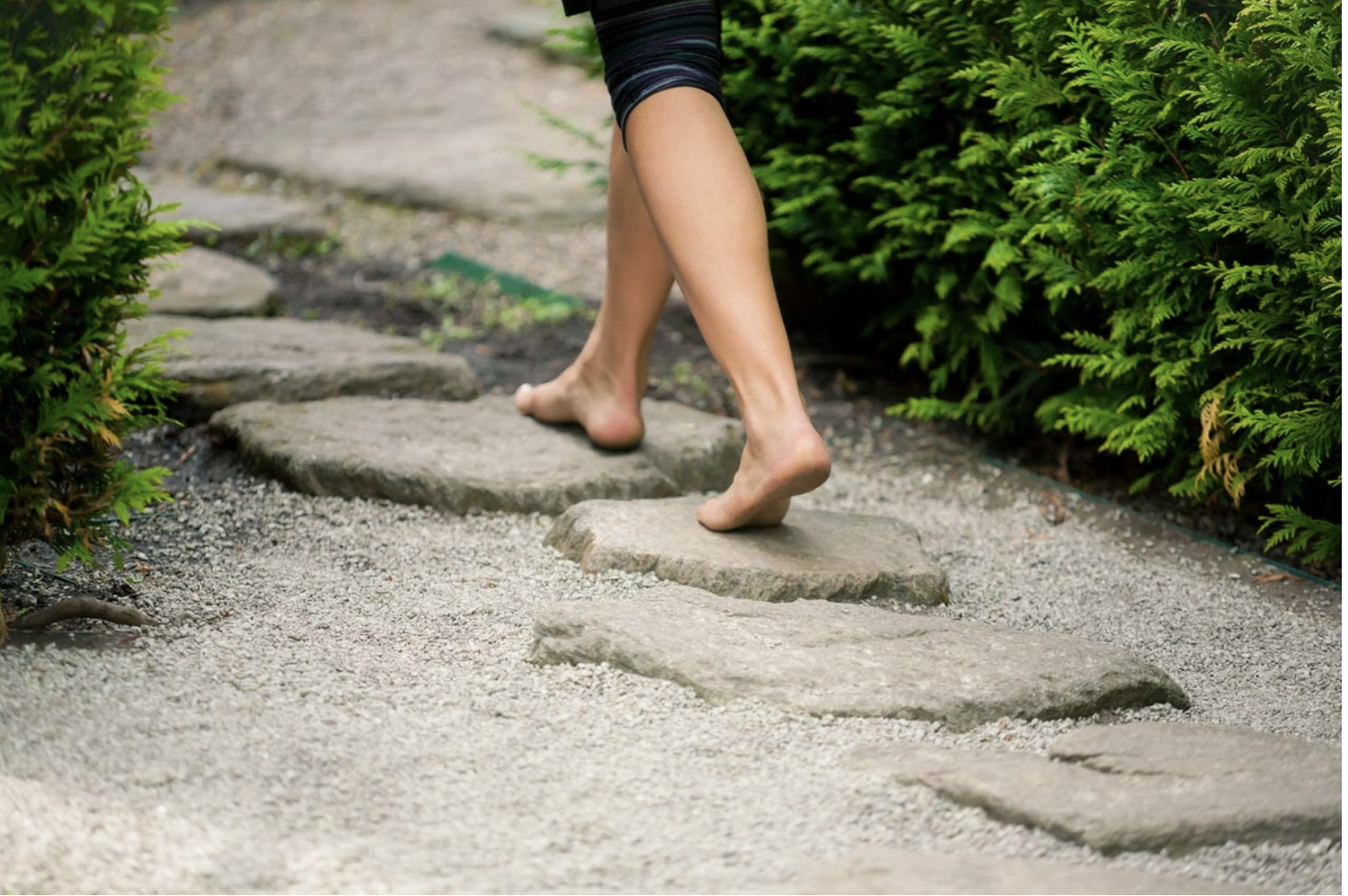
Nowadays, sports shoe design is becoming more and more advanced, but research shows that walking barefoot can bring various benefits from head to toe.
“The feet are our primary interface with the ground and an important source of information for the nervous system,” said chiropractor Mark Morningstar in an interview with The Epoch Times.
The most noticeable benefits of walking barefoot are first reflected in the feet and our way of walking. People who frequently walk barefoot from a young age often have different foot structures and movement patterns; studies have shown that children can develop better jumping and body balance skills.
Similar situations also appear in athletes, for example, gymnasts who undergo barefoot training exhibit better neuromuscular control, stability, and stronger foot muscles.
Morningstar stated, “Walking barefoot allows the intrinsic foot muscles to function fully.” These intrinsic muscles located within the feet are crucial for maintaining body balance and executing fine movements.
Modern shoes reduce the activity demand of the intrinsic foot muscles; shoes often decrease the load that the intrinsic muscles need to support the foot arch. Over time, this may limit muscle development and lead to a decrease in muscle strength due to lack of use.
As the feet are the foundation of human movement, weak foot muscles may also affect spinal health.
Morningstar mentioned that walking barefoot can be a valuable tool to promote healthier movement patterns and improve posture.
The benefits of walking barefoot are not limited to just the feet. Walking barefoot may also have an impact on the brain and nervous system.
One study compared the effects of barefoot walking and walking in sports shoes on cognitive function in teenagers. Both groups underwent 40-minute walking sessions four times a week for 12 weeks. Researchers tracked their brain activity using electroencephalography (EEG) scans before and after the training.
At the end of the study, the barefoot group showed a significant decrease in brain waves related to stress and overactivity, while brain waves related to a calm, relaxed yet alert mental state increased.
Additionally, the barefoot group showed significant improvements in cognitive speed and attention, with an overall decrease in brain stress. The group wearing sports shoes did not show the same changes in brain waves.
Morningstar remarked, “The feet are a component of the integrated nervous system.”
One explanation is that being barefoot can receive more sensory information than when wearing shoes. The feet are covered with numerous nerve receptors constantly sending feedback to the brain; toe movement can also increase the supply of blood and oxygen to the brain.
The sensory input from walking barefoot can also affect the autonomic nervous system. The autonomic nervous system mostly operates automatically, controlling body functions such as heart rate and stress response.
Research has shown that direct contact of bare feet with natural ground can promote relaxation and support the body in recovering from a stressed state.
Sandra Nathan, an integrative mental health counselor and nervous system regulation expert, stated, “This provides an opportunity for the nervous system to experience a sense of safety, presence, and connection.”
When walking barefoot, people are less likely to dwell on past anxieties or future worries, naturally bringing their attention back to the present—feeling the earth beneath their feet.
Nathan expressed, “This shift is essential because the nervous system responds not only to our thoughts but also to what our bodies are experiencing.”
Walking barefoot may also help reduce inflammation through two mechanisms: reflex therapy, where pressure on the soles stimulates nerve endings; and earthing, where the soles directly touch the ground.
Studies have also shown that barefoot contact with the ground can increase serotonin levels.
Different types of ground yield different body responses.
Grass
provides gentle stimulation, as the skin’s nerve endings can perceive light touches. When walking barefoot on grass, these receptors continuously send information to the brain, aiding feet muscles in making subtle adjustments to improve posture and balance.
This may explain why research has found that walking barefoot on grass can enhance balance.
Sand
helps strengthen the lower limbs. With each step, the heel sinks into the sand, requiring the muscles of the feet and legs to exert more force to propel the body forward.
Paths covered in mud, bark, or small stones
offer a different challenge. Uneven surfaces create an effect similar to acupressure massage, increasing sensory information sent from the feet to the central nervous system, thus enhancing balance and posture control.
Nathan suggested starting slowly and not rushing. She said, “You don’t need to walk barefoot for hours to reap the potential benefits. Even walking for 5 to 10 minutes on a safe, clean grass or sandy surface can be a wonderful opportunity to slow down and reconnect with yourself.”
Rather than worrying about whether they are doing it “correctly,” she encourages people to remain curious: pay attention to the sensations in the soles of their feet, focus on breathing, and notice if their shoulders are starting to relax or if their thoughts are gradually slowing down.
However, Morningstar pointed out that walking barefoot is not suitable for everyone. He stated, “Someone who has been walking in very stiff, highly cushioned shoes for many years cannot suddenly start walking long distances barefoot. Gradual foot strengthening takes time.”
He mentioned that people with certain conditions are usually better off wearing supportive shoes, including those with diabetic neuropathy, severe foot deformities, severe arthritis, osteoporosis with a high risk of fractures, and some balance disorder patients.
Nathan noted that one of the biggest misconceptions about nervous system regulation is expecting a single event to completely change one’s life overnight. In reality, healing is often a gentler process.
She said, “Our nervous system learns through experience. Every time we experience moments of safety, connection, calm, or joy, we are teaching our nervous system something new.”
For some people, this experience may come from walking barefoot, while for others, it may be through gardening, spending time in nature, practicing mindful breathing, or being with people who make them feel safe. She added, “Healing comes from repeatedly experiencing these moments of safety.”