
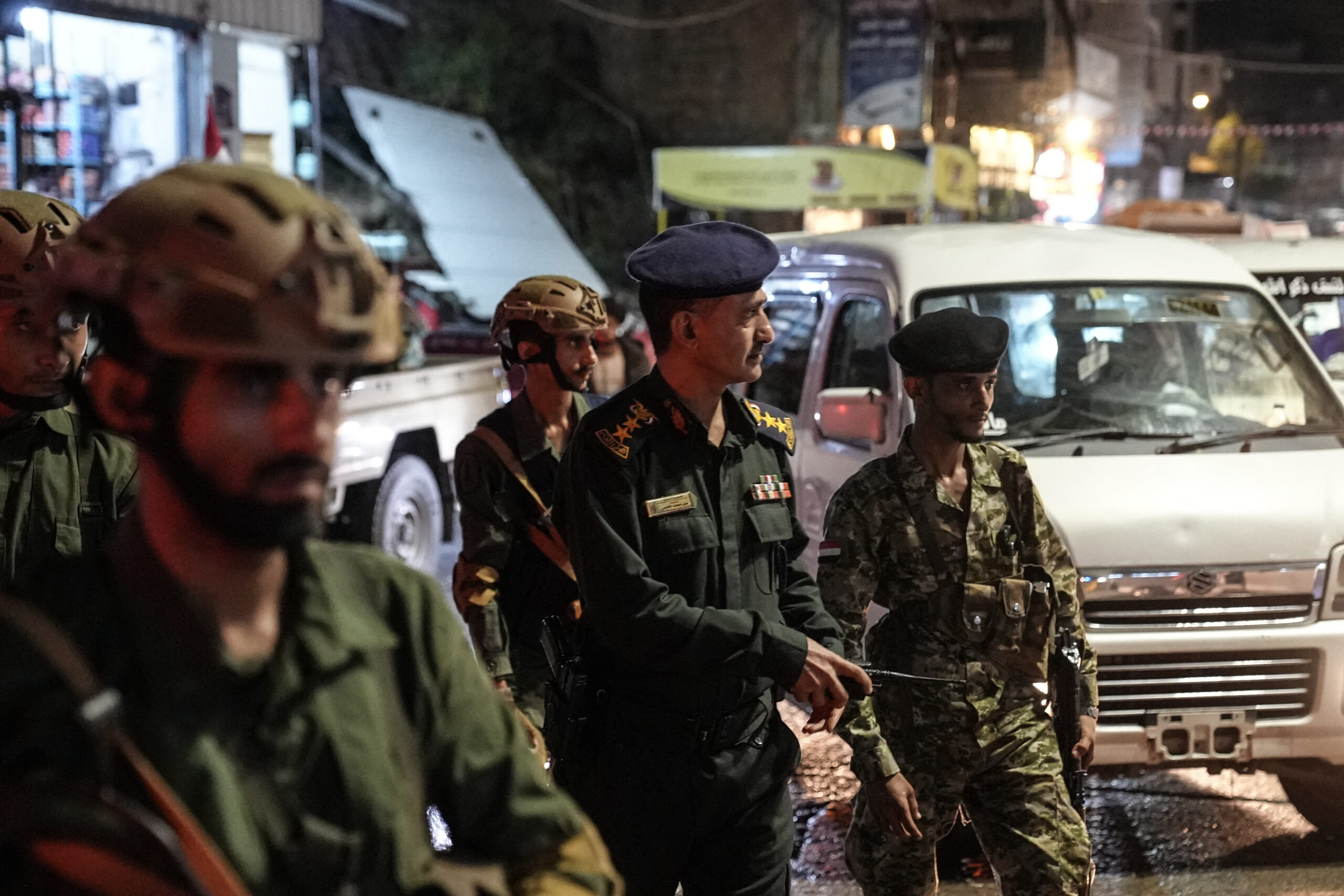
Saudi Arabia is planning a new offensive against Houthi rebels in Yemen, with ground operations potentially led by Yemeni forces and air support provided by Saudi Arabia. One of the main objectives is to recapture the Bab el-Mandeb Strait and restore security to Red Sea shipping.
According to a report from Reuters on Friday, Saudi Arabia is considering two attack plans. One focuses on the Bab el-Mandeb Strait and its surrounding areas, while the other, larger scale plan involves offensives in Al-Bayda, Marib, Taiz, and Al-Jawf. Depending on the size of the operation, over 100,000 Yemeni troops could be mobilized.
The Bab el-Mandeb Strait, positioned at the southern end of the Red Sea, serves as a crucial shipping route connecting the Mediterranean and the Arabian Sea. With the disruptions in shipping through the Strait of Hormuz due to the Iran conflict, the importance of the Red Sea route has increased significantly.
After the Houthi rebels advanced along the coast and seized control of the Bab el-Mandeb Strait last month, Saudi Arabia believes that peace talks cannot resume as long as the rebels control this vital shipping chokepoint.
The operation is expected to be carried out by Yemeni forces under Riyadh’s supervision for ground combat, with air support from Saudi Arabia. The United States has provided military advisers and intelligence, including target information, to support Saudi Arabia’s aerial operations in Yemen. Other regional and European countries are mainly providing defensive military assistance to Saudi Arabia.
It is anticipated that these allied countries will not directly engage in combat operations.
Pakistan dispatched four cargo planes to Aden last month, delivering equipment including air defense systems, light artillery, drones, and anti-drone systems. Additionally, Pakistani military advisers are supporting Yemeni forces alongside Saudi personnel. France has announced the deployment of defense systems and troops to assist in protecting the Saudi Red Sea port city of Yanbu.
The timing of the offensive launch remains uncertain. Six sources estimate that it could range from within a week to early November after the US midterm elections.
Former US ambassador to Saudi Arabia, Michael Ratney, believes that the scope of the new offensive may be more limited and on a smaller scale compared to the Saudi-led military operation in 2015.
He stated, “While the goal is to decisively defeat the Houthi rebels, they also need to restore the situation to what it was before the rebels controlled the coastline of the Bab el-Mandeb Strait.”
Ratney added, “Ideally, this would be a relatively limited operation with the objective of recapturing coastal areas to normalize maritime traffic.”
Meanwhile, the Houthi rebels continue their missile and drone attacks against Saudi Arabia.
According to the Saudi Press Agency (SPA), a ballistic missile fired by the Houthis late Friday night was intercepted, causing debris to fall in the Asir region of southwestern Saudi Arabia, injuring one resident and damaging a prayer room and several vehicles.
Earlier, the Saudi air defense system also intercepted three ballistic missiles targeting Khamis Mushayt, with reports of four Houthi drones being intercepted.
The conflict within Yemen continues to escalate. A spokesperson for the Yemeni government’s military forces stated that on Friday, fighter jets carried out 20 airstrikes in Taiz province within three hours, targeting Houthi military operations, personnel, vehicles, and equipment.
Six military sources informed Reuters that widespread fighting erupted in various parts of Taiz, with authorities closing approximately 19 roads entering the province, designating it as a military operation area.
Taiz, situated in southwestern Yemen, holds significant strategic importance.
Reuters noted that if the Houthi rebels were to occupy Taiz unimpeded, it would allow them to control the entirety of northern Yemen, further consolidating their grip on the Red Sea coastline and providing easier access to advance southward towards the port city of Aden.
Furthermore, Saudi Arabia, Turkey, and Pakistan are prepared to discuss political engagement with the Houthi rebels.
On Friday, Pakistani Foreign Minister Ishaq Dar disclosed that the Iranian Foreign Minister suggested political engagement with the Houthi rebels. Saudi Arabia, Turkey, and Pakistan will convene an emergency meeting next week in Riyadh to discuss this proposition and potential next steps.
However, Dar emphasized that there is currently no formal proposal in place.
He stated, “There are no written, concrete proposals at the moment. This is just brainstorming between two foreign ministers.”
Dar clarified that this political approach is a goodwill suggestion, and the three countries will discuss it as an alternative to using force.
Saudi Arabia, Turkey, and Pakistan signed the Mecca Joint Defense Agreement on August 7, which stipulates that any attack on one country will be seen as an attack on all three. During a meeting on September 25 in Riyadh, military leaders from the three nations jointly condemned the Houthi rebel attacks.