
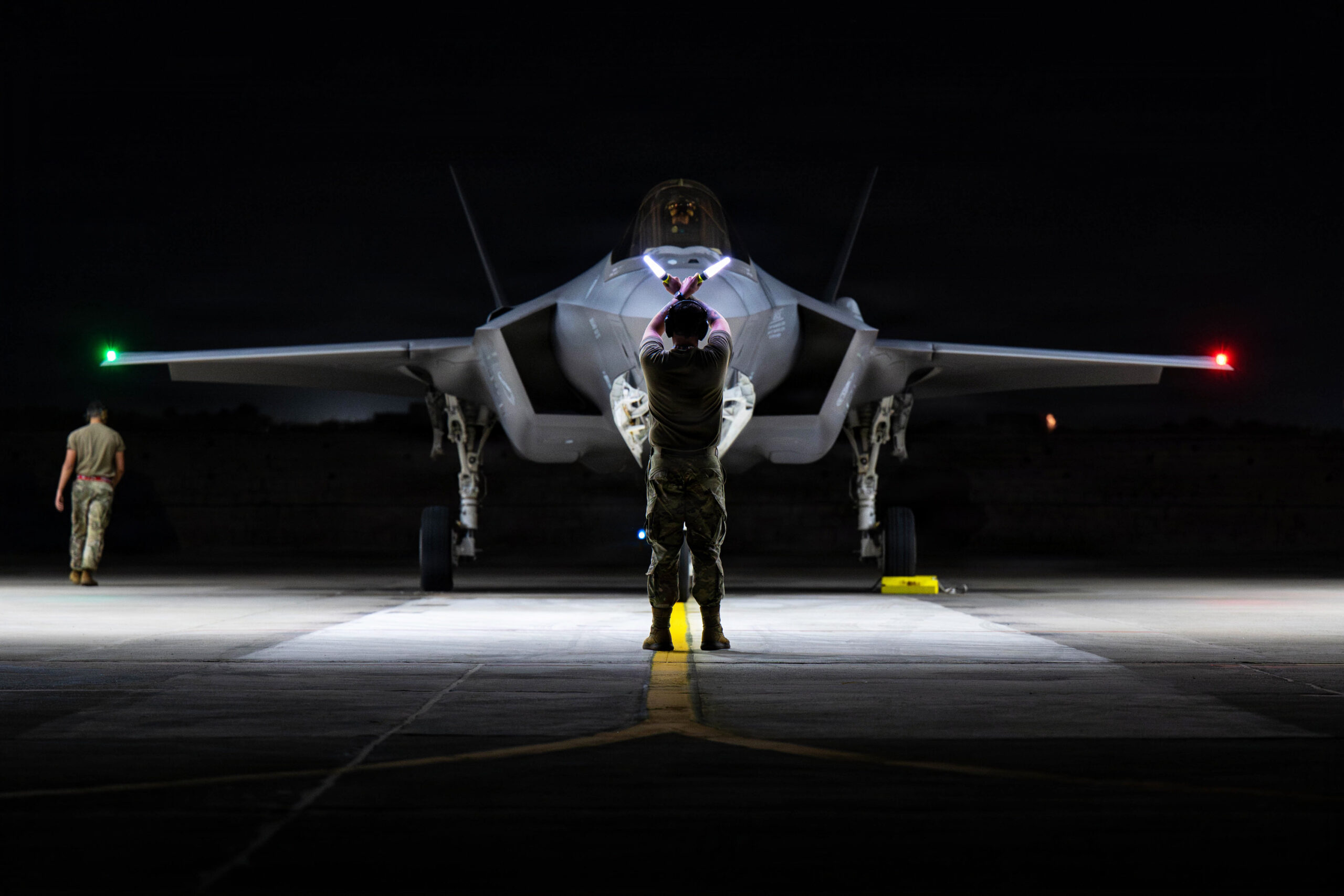
The US Navy has finally announced the bidding outcome for the sixth-generation carrier-based attack fighter F/A-XX, a highly anticipated defense procurement decision since the Pentagon temporarily deferred the plan in 2025.
On September 29, 2026, the US Department of Defense in Washington announced that the US Navy had selected Boeing to lead the F/A-XX sixth-generation carrier-based fighter program. The contract is valued at over $20 billion, covering the entire research and development phase, including manufacturing multiple prototype aircraft for ground testing, airworthiness verification, and system and weapon integration testing.
The procurement plan for F/A-XX has undergone twists and turns. In March 2025, after the US Air Force awarded the development contract for the next-generation fighter F-47 to Boeing, the Pentagon raised concerns about whether the company could handle two major military branch advanced fighter development tasks simultaneously.
Dale White, the Director of Major Weapons Systems of the US Air Force, expressed concerns in multiple official occasions about supply chain bottlenecks, shortage of senior engineers, and overload of production lines. These concerns directly led to a temporary stall of the program, triggering heated debates even at the defense budget hearings.
In June 2025, when the Pentagon released the 2026 fiscal year defense budget, the F-47 was prioritized, and the progression of F/A-XX was temporarily stalled. Officials stated that the current US defense industrial base could only bear one sixth-generation fighter program, thus, they were concerned that rapid development of both F/A-XX and F-47 simultaneously would overload the industrial base.
By early July 2025, reports further described F/A-XX as put on hold by the government but left open the possibility for future resumption.
However, the strong intervention of the US Congressional Armed Services Committee eventually changed this trajectory. On August 19, 2025, in the report of the 2026 National Defense Authorization Act, the US House Armed Services Committee expressed support for the Navy to develop F/A-XX and expressed dissatisfaction with the Department of Defense’s pause or delay of the program. The committee recommended $9.7158 billion for F/A-XX in the 2026 fiscal year and urged the Department of Defense to use the annual funds to accelerate design, system integration, and risk control work to achieve initial operational capability of F/A-XX earlier. Legislators pressured based on the National Defense Authorization Act, allowing this core plan related to the future of naval aviation to enter a normal development track.
Faced with apparent uncertainty with the F/A-XX program, Boeing has adopted a steady progress strategy. After receiving the contract, Steve Parker, President of Boeing Defense, Space & Security Group, stated that delivering two advanced fighter jets simultaneously “has always been our plan,” and Boeing has made corresponding investments for this. Parker emphasized that with decades of military aircraft design experience and digital engineering innovation, especially in facilities with next-generation capabilities, the company is fully prepared to carry out this critical program.
In fact, Boeing has recently carried out large-scale factory expansions and automation upgrades around its production facilities in Missouri. This significant infrastructure investment is primarily to support the system final assembly needs of the F-47 program and also has strong forward-looking attributes, reserving space and technological reserves for full-size prototype and subsequent mass production assembly lines for the US Navy F/A-XX.
Parker stressed that upgrading physical facilities is only a part of the overall layout, continuous investment in core system algorithm development, breakthroughs in material science, and recruitment of top aviation engineering talent are the fundamental guarantees for the company to simultaneously and efficiently carry out multiple future combat aircraft programs.
With both F/A-XX and F-47 in its possession, Boeing has staged a “return of the king”. Beating Northrop Grumman to secure the Navy F/A-XX contract is the company’s second major success after winning the US Air Force F-47 contract in March 2025.
In early 2025, Boeing’s fighter jet business was still struggling, with orders for the F/A-18E/F Super Hornet and F-15EX Eagle II gradually declining, leading the company to face the risk of completely exiting the fighter jet production line in the coming years.
In contrast, Lockheed Martin, as the main contractor for the fifth-generation fighter F-22 Raptor and with huge orders for the F-35 Lightning II, firmly held the dominant position among fifth-generation fighter manufacturers.
In just about a year, Boeing continuously outperformed Northrop Grumman and Lockheed Martin, securing the US Air Force’s F-47 and the Navy’s F/A-XX. This remarkable turnaround has positioned Boeing as the sole prime contractor for the US sixth-generation fighter, establishing its dominance in air superiority equipment for the next several decades.
The insistence of the US Navy on accelerating the F/A-XX program reflects the Navy’s growing concerns about the rapidly deteriorating modern naval warfare environment and the rapid enhancement of adversaries’ Anti-Access/Area Denial (A2/AD) capabilities.
On January 27, 2026, at a defense summit in Washington, Navy Secretary Daryl Caudle warned that with the development of military cooperation among China, Russia, Iran, and North Korea, and terrorist organizations obtaining relevant weapons through “secret channels,” the US Navy’s ability to operate unhindered in threatened airspace with existing aviation platforms is rapidly diminishing.
He pointed out that countries previously thought to be manageable without deploying stealth fighters, like Iran, are gradually acquiring anti-air capabilities that can challenge today’s F/A-18s. He used Iran as an example, warning that in ten years, Iran may possess sufficient air defense capabilities to counter the current F/A-18 fighters. These reasons make the urgency of F/A-XX apparent.
He stated that the Navy’s next-generation carrier-based fighter needs to integrate stealth, range, electronic warfare, and the ability to operate in conjunction with loyal wingmen to carry out penetrative missions in increasingly hostile airspace.
Currently, the US Navy relies mainly on the F/A-18E/F Super Hornet for multi-role strike capabilities, and the F-35C Lightning II for penetrating air defense networks. The Navy urgently needs a heavy fighter aircraft capable of carrying larger payloads and executing deep strike missions without frequent aerial refueling. F/A-XX is designed to fill this gap.
Deputy Navy Secretary Hung Cao stated that this achievement marks a new era for the US Navy. The sixth-generation fighter represents a generational leap in air dominance, providing unparalleled capabilities for the world’s best pilots to succeed in combat and return safely. F/A-XX will provide advanced carrier-based power projection capabilities, extending the operational radius of the US Navy’s aircraft carriers. He said, “We are excited to partner with Boeing to ensure our warfighters continue to dominate the skies, defeat the enemies of the nation.”
According to procurement requirements released by the Department of Defense and official statements from Navy senior officials, the primary tactical technological requirements of F/A-XX can be summarized in several aspects: significantly increased operational radius and effective payload, all-aspect broadband stealth capabilities, a hub for autonomous drone swarm command, enhanced electronic warfare and sensor capabilities, dedicated carrier-based fighter, and an open system layout.
Michael Donnelly, Director of Aviation Operations at the Navy’s Office of Naval Operations, revealed that the in-flight fuel range of F/A-XX will exceed 125% of the current Navy fighter aircraft, an increase of about 25%. Using the F-35C’s operational radius of approximately 1,240 kilometers as a reference, the operational radius of F/A-XX may be around 1,550 kilometers.
Regarding effective payload, there are no official figures available presently. During an interview at the 2026 Sea-Air-Space exhibition on April 20, 2026, Secretary Caudle stated that due to confidentiality, he could not disclose detailed design and payload specifics of F/A-XX. However, he emphasized that in the face of growing opponent air defense and air-to-air capabilities, future carrier aviation squadrons need to possess higher levels of stealth and technological abilities, indicating that stealth performance will be highly prioritized in F/A-XX.
As an airborne command and information center for an autonomous drone swarm, closely related to the Pentagon’s vigorous promotion of the Cooperative Combat Aircraft (CCA) program, aiming to collaborate with low-cost highly autonomous unmanned drones in combat. These unmanned combat platforms will accompany manned aircraft to perform reconnaissance, electronic jamming, decoy, air-to-air, and air-to-sea combat missions. This highly networked and information-fused mode of warfare will enhance the survival capabilities and mission success rates of the US Navy in high-threat environments.
In the development process of fifth-generation fighters, the Pentagon adopted a “Joint Strike Fighter” strategy. This involved developing a base fighter jet and deriving specialized versions for the Air Force and Navy, such as the conventional takeoff Air Force F-35A, the short takeoff and vertical landing Marine Corps F-35B, and the carrier-based catapult launch and arrestment Navy F-35C.
This pursuit of structural commonality has proven to have technical issues that are difficult to reconcile, leaving both the Air Force’s and Navy’s needs inadequately met. Based on lessons learned from the F-35 program, the Pentagon decisively abandoned the controversial cross-branch joint development model in planning the development path for sixth-generation fighters.
The Navy’s design requirements for F/A-XX are highly focused on carrier-based operational environments. Data shows that this sixth-generation carrier-based fighter needs to adapt to requirements for catapult launches and arrested landings, balancing range, weapon carriage, stealth, and mission system integration while meeting the operational demands of carrier operations in confined spaces.
F/A-XX has entered a comprehensive research and development phase and is expected to gradually replace the F/A-18E/F Super Hornet and EA-18G Growler by the 2030s, entering operational deployment and forming the core combat capabilities of future US Navy carrier air wings together with the F-35C.