
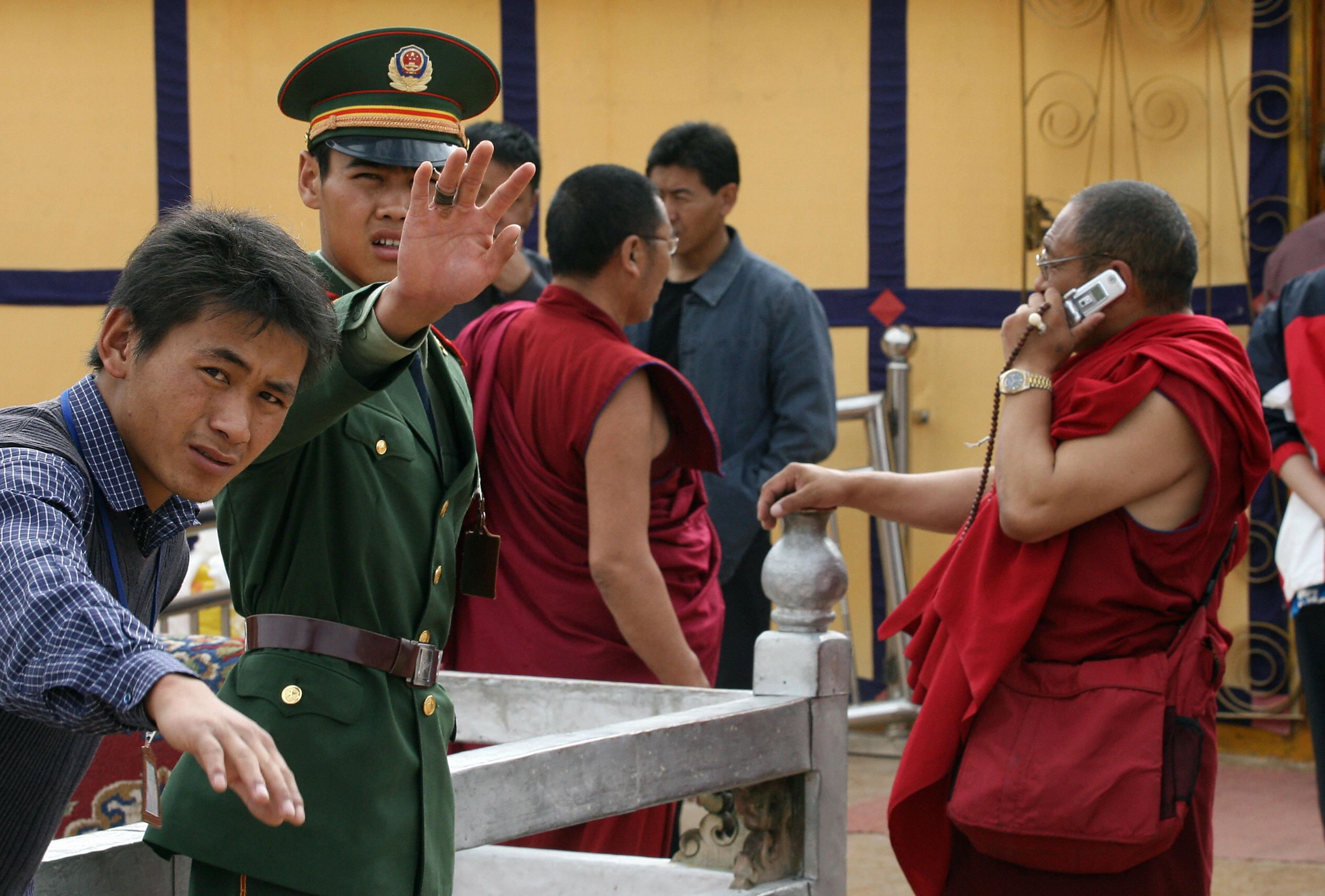
On Friday, September 4th, the Foreign Correspondents’ Club of China issued a statement regarding the flood disaster in Nepal-Tibet. The statement revealed that over a dozen foreign journalists had applied to enter the Tibet Autonomous Region for reporting purposes but none were granted permission by the Chinese authorities.
According to the regulations of the Chinese government, foreign journalists and officials are not allowed to travel to Tibet without obtaining prior approval.
The Foreign Correspondents’ Club of China called on the relevant Chinese authorities to permit foreign journalists to access the Tibet region.
The statement emphasized, “The recent flood disaster is one of the most severe natural calamities in the modern history of the region. However, journalists are unable to conduct independent reporting in the border areas on the Chinese side.”
Last Wednesday, on August 26th, a massive mudslide and flash flood occurred near the China-Tibet and Nepal border, resulting in significant casualties. Due to the remote location in a high-altitude valley, rescue operations have posed considerable challenges, and a large number of individuals remain missing.
The shocking footage and videos captured by surveillance cameras quickly circulated on social media platforms abroad and were broadcasted on television screens worldwide, but not in China. To date, no domestic Chinese television station has aired footage of the Tibet-Nepal mudslide. In the tightly controlled domestic network of the Chinese authorities, relevant videos and discussions have been swiftly removed.
For years, the Chinese government has suppressed protests by Tibetans, sometimes resorting to violence, leading to severe violations of the human rights of local Tibetans.
The name “Tibet” itself is on the sensitive list of the Chinese government. Following the flood disaster event, Beijing became even more vigilant.
BBC journalist Laura Bicker remarked that it was easier to contact interviewees in Pyongyang than those in the Tibetan capital of Lhasa.
According to Tibetan human rights activists, if Tibetans accept interviews from foreign media or share content online deemed contradictory to the official Chinese narrative, they could face detention or arrest by the authorities.