
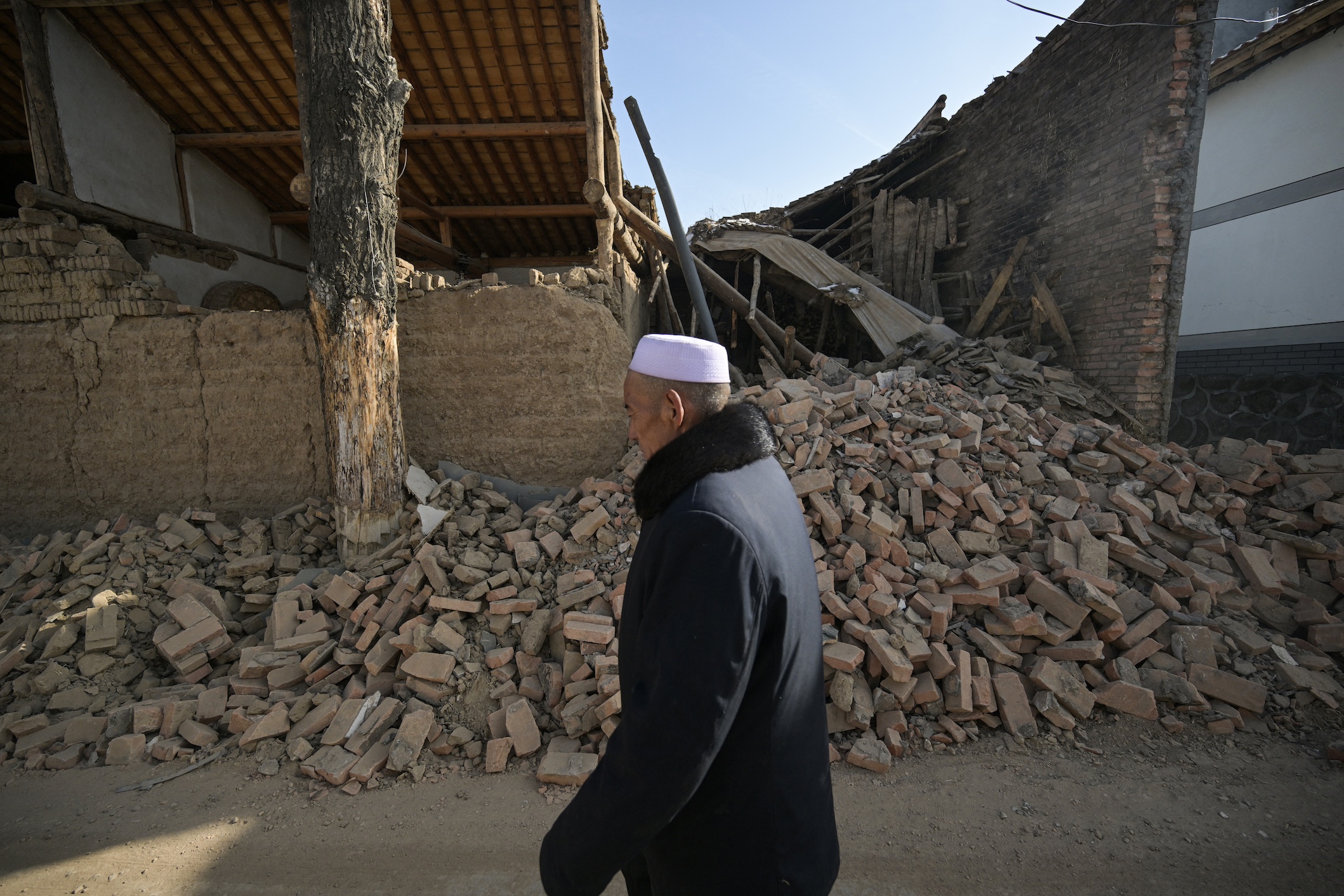
On the early morning of September 4, 2026, a magnitude 5.1 earthquake struck the Haixi Prefecture in Qinghai Province, causing tremors in Qinghai, Gansu, Shaanxi, and Sichuan provinces. Just the day before, on September 3, Sichuan, Tibet, and Xinjiang experienced five earthquakes in one day, three of which were above magnitude 4.
Over the span of a month from August 4 to September 4, 2026, mainland China experienced at least 69 earthquakes with a magnitude of 3 or higher across provinces including Sichuan, Xinjiang, and Qinghai. Among these, there were 15 earthquakes of magnitude 4 or higher, and three earthquakes with a magnitude of 5 or above.
According to the China Earthquake Networks Center, the earthquake on September 4, 2026, at 1:04 AM in Haixi Prefecture, Qinghai Province, had a magnitude of 5.1 and occurred at a depth of 10 kilometers with the epicenter located at 37.84 degrees north latitude and 95.59 degrees east longitude.
Residents in Qinghai, Gansu, Shaanxi, and Sichuan provinces reported feeling the tremors, waking up to the shaking late at night. A netizen from Qinghai expressed, “The shaking was so strong that I couldn’t sleep, I was too scared.”
The earthquake affected villages within 5 kilometers such as Xigou and towns within 50 kilometers like Dachaidan. The epicenter was located 20 kilometers from Dachaidan Administrative Committee, 165 kilometers from Delingha City, 170 kilometers from Golmud City, 196 kilometers from Subei Mongolian Autonomous County in Gansu, 227 kilometers from Akto Kazakh Autonomous County in Gansu, and 163 kilometers from Haixi Mongolian and Tibetan Autonomous Prefecture, as well as 565 kilometers from Xining City.
In the surrounding 200-kilometer radius of the epicenter, there have been a total of 120 earthquakes with a magnitude of 3 or higher in the past five years. The largest of these was a 6.3 magnitude earthquake that occurred on June 16, 2026, in Haixi Prefecture, Qinghai Province, just 5 kilometers away from the recent epicenter.
The recent earthquake on September 4, 2026, follows a series of seismic activities in the region. On September 3, 2026, Sichuan, Tibet, and Xinjiang experienced a total of five earthquakes, with three reaching magnitudes of 4 or above.
On September 3, 2026, at 7:39 PM, Beichuan County in Mianyang City, Sichuan, experienced a 4.8 magnitude earthquake. The quake was strongly felt in Beichuan County, with residents in Mianyang, Deyang, Guangyuan, and Chengdu also reporting tremors. Images shared by residents in Mianyang showed significant ceiling and wall cracks in homes, while surveillance in Beichuan captured noticeable swaying. The Sichuan Provincial Seismological Bureau stated that this earthquake occurred in the aftershock zone of the 2008 Wenchuan earthquake.
Additionally, within a span of four hours on the same day, Xinjiang experienced three earthquakes in different regions. On September 3, 2026, at 10:45 AM, a 4.0 magnitude earthquake struck Shayar County in Aksu, Xinjiang; at 12:40 PM, Hotan County in Bayingolin Mongol Autonomous Prefecture had a 3.0 magnitude quake; and at 2:18 PM, Changji City in Changji, Xinjiang, experienced a 3.8 magnitude tremor.
Furthermore, on September 3, 2026, at 4:16 PM, Gêrzê County in Ngari Prefecture, Tibet, was hit by a 4.5 magnitude earthquake.
Based on reports from the China Earthquake Networks Center, from August 4 to September 4, 2026, mainland China witnessed at least 69 earthquakes with a magnitude of 3 or higher. Among these, Sichuan had 22 earthquakes, Xinjiang 22, Qinghai 13, Tibet 4, Ningxia 2, Gansu 2, Guizhou 1, Guangxi 1, Inner Mongolia 1, and Henan 1. There were 15 earthquakes of magnitude 4 or above and 3 earthquakes with a magnitude of 5 or higher.
The frequency of earthquakes in mainland China has raised concerns among the population, especially in regions prone to seismic activities. The ongoing seismic events have attracted attention not only locally but also nationally and internationally, with experts closely monitoring the situation and advising on precautionary measures to mitigate risks posed by future seismic activities.