
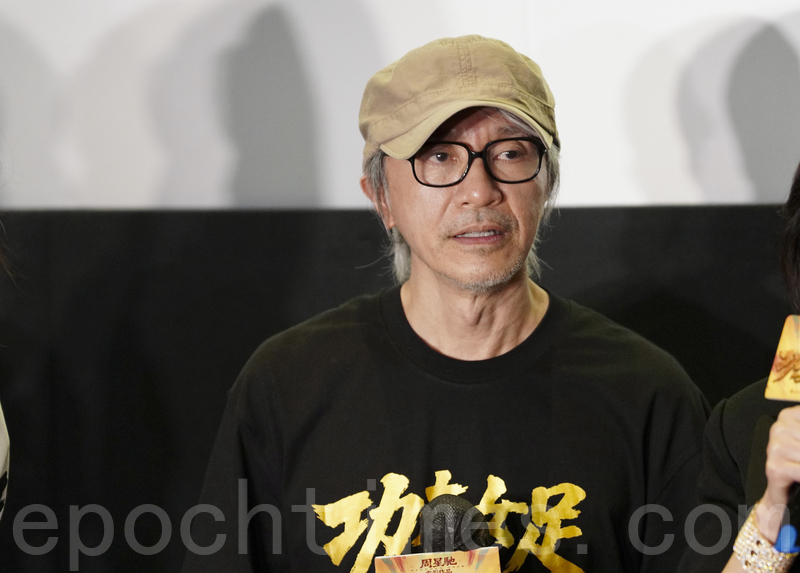
On September 2nd, the 80-year-old action superstar from Hong Kong, Chen Guantai, passed away due to a cerebral hemorrhage. Stephen Chow (the “King of Comedy”) posted a black and white photo of Chen Guantai on social media, writing, “A generation’s Ma Yongzhen, Master Chen Guantai, rest in peace on your journey!” This expresses his deep mourning and profound gratitude to this former “master” who had discovered many talents in the industry.
According to veteran media professionals Wang Manling and old friends from Shaw Brothers, Chen Guantai suffered a cerebral hemorrhage leading to a second sudden cardiac arrest, and passed away at 5 am on September 2, 2026, in Zhongshan, Guangdong.
Born in Guangdong, Chen Guantai was the third-generation descendant of the Great Sage Piguangmen. After winning the Southeast Asian National Martial Arts Championship in the lightweight heavyweight division in 1969, he was discovered by director Chang Cheh and entered Shaw Brothers film company. In 1972, he rose to fame with the film “Ma Yongzhen” directed by Chang Cheh, ushering in a glorious era of Hong Kong kung fu films and Shanghai Bund gangster themes. Alongside actors like Ti Lung and David Chiang, they formed the “Iron Triangle” under Chang Cheh’s guidance, renowned as having the “legs of Bruce Lee and the fists of Chen Guantai.”
Chen Guantai and Stephen Chow had a relationship akin to a “discoverer and a talented horse.” Even before Stephen Chow achieved fame and was still hosting children’s programs on TVB like “430 Shuttle Machine,” Chen Guantai keenly noticed his immense potential. In 1990, Chen Guantai established the Weikai Film Company and invested in the comedy film “King of Thieves.” With no lead actor confirmed at the time, he saw the unique talent in Stephen Chow.
At that time, Stephen Chow’s film contract was under the control of director Lee Siu-hung. Leveraging his position as Lee’s senior brother in the industry, Chen Guantai personally intervened to “borrow the contract,” inviting Stephen Chow to play the male lead in “King of Thieves.” Chen Guantai produced the film and personally played an undercover police officer, engaging in numerous scenes with Stephen Chow.
Chen Guantai and Stephen Chow also collaborated on the classic Hong Kong film “Fight Back to School.” He played a gang leader in the movie, while Stephen Chow portrayed his henchman. Both on and off-screen, they carried the inheritance of respect between senior and junior artists.
According to Hong Kong media reports, Stephen Chow was known on set for his many ideas and could sometimes appear stubborn. Chen Guantai recalled that Stephen Chow continuously suggested new ideas and innovative dialogues during filming, which, while to some extent “disrupted the progress of work,” he greatly appreciated Stephen Chow’s creative passion. Instead of suppressing it, he gave him ample room to express himself.
After Stephen Chow became famous, there were numerous negative evaluations about his being “difficult to work with” or “having a strange temper.” However, as a senior figure, Chen Guantai displayed understanding and magnanimity. In interviews, he openly supported Stephen Chow, stating, “People who understand him will appreciate his creativity, while those who don’t will find him bothersome. It’s just a matter of different perspectives and interests,” thus defending Stephen Chow’s reputation.
Not long before his passing, Chen Guantai exhibited no signs of ill health. However, in the days leading up to his death, he urgently went to the hospital due to hydrocephalus, which rapidly deteriorated into a fatal cerebral hemorrhage. Upon receiving the tragic news, Stephen Chow promptly posted on social media, deeply mourning this benefactor from years past. Netizens also praised Stephen Chow, remembering “the gratitude for his recognition back then” and acknowledging him as “a truly righteous person.”
For Stephen Chow and the vast number of movie fans, the departure of Chen Guantai signifies not only the loss of an excellent mentor and senior figure but also symbolizes the rapid conclusion of the golden era of Hong Kong real kung fu films that were made without special effects or stunt doubles, but with the actors putting their bodies on the line.