
On Tuesday, September 1, the German government officially acknowledged that the attempted drone attack on Leipzig-Halle Airport on August 4 was orchestrated by Russia. In response, Germany announced the closure of the Russian consulate in Bonn, termination of the contract with the Russian House in Berlin, and increased measures such as enhancing checks on Russian citizens entering the country and countering the “shadow fleet.”
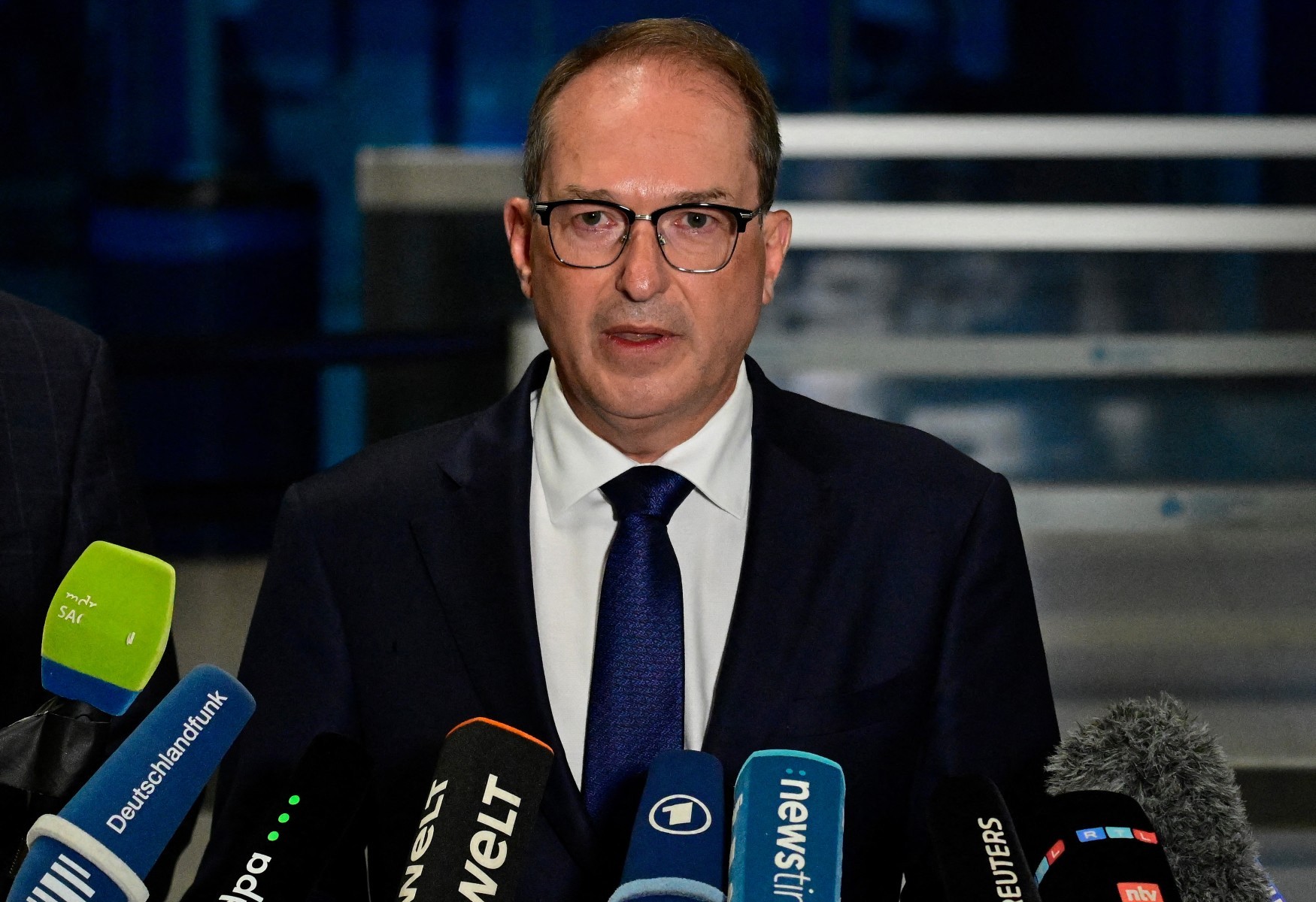
Interior Minister Alexander Dobrindt and Foreign Minister Johann Wadephul held a press conference together to announce Germany’s investigation results and subsequent actions.
Dobrindt stated that based on police investigations, criminal patterns, and intelligence assessments, it was confirmed that the “low-level agents” involved in the attack were acting on behalf of Russian state agencies, holding Russia responsible for the incident.
He mentioned that the methods used in the Leipzig incident, including drone configuration, components, explosives, and detonation techniques, closely resembled those used in Russia’s past hybrid operations and the Russo-Ukrainian war.
Wadephul announced that Germany plans to close the Russian consulate in Bonn on September 18, terminate the contract with the Russian cultural institution “Russian House” in Berlin, intensify checks on Russian citizens entering the country, and step up efforts to combat Russia’s “shadow fleet.”
Furthermore, Germany will push at the EU level to include Russian individuals involved in hybrid attacks on the sanction list. Wadephul also mentioned that an order has been issued to summon the Russian ambassador to Germany to explain the situation.
According to reports by the international media agency Interfax, Russian Foreign Ministry spokesperson Maria Zakharova vowed retaliation against Germany in response to the statements but did not disclose specific details.
As reported by the Russian state-owned agency RIA, Kremlin spokesperson Dmitry Peskov claimed that if Germany makes such severe accusations, they should present evidence.
Wadephul highlighted that Russia has long been undermining European stability through disinformation, threats, sabotage, and aggression, with the Russian leadership now openly displaying hostility towards Germany.
He emphasized that although Germany is not currently at war, the Leipzig incident demonstrates that Germany has become a target of Russia’s hybrid warfare. “This aligns with Russia’s broader pattern of conducting hybrid operations in Europe.”
Wadephul stated, “Germany will defend its own security and resist any attempts to create insecurity from hostile parties. We will not allow Russia to undermine our social cohesion through intimidation and divisive attacks.”
In June of this year, the German government elevated the threat level from “abstract” to “highly critical,” established a Joint Centre for Hybrid Threats Defense, set up a police drone defense unit, and bolstered the countermeasures of intelligence agencies.
Polish Prime Minister Donald Tusk, Italian Prime Minister Giorgia Meloni, British Prime Minister Andy Burnham, and Swedish Prime Minister Ulf Kristersson, among others, have expressed support for Germany and criticized Russia.
European Commission President Ursula von der Leyen stated that she will discuss the attack with NATO Secretary-General Mark Rutte on Wednesday, September 2, while EU foreign ministers will prepare joint response measures.
Polish Foreign Minister Radoslaw Sikorski expressed on the X platform that he looks forward to discussing collective countermeasures against Russia at the informal foreign ministers’ meeting in Ireland in the coming days. He affirmed full solidarity with Germany.
Kristersson noted that Russia’s hybrid attacks against European countries have increased in recent years, with Poland, Estonia, Latvia, Lithuania, and Romania all experiencing different forms of hostile actions.
British Prime Minister Andy Burnham condemned the Russian actions in a statement, making it clear that any Russian attempts to undermine support for Ukraine will ultimately “end in failure.”
Leipzig-Halle Airport is a strategic location for Western allies to transfer goods to Ukraine and holds high political sensitivity. On the evening of August 4, airport staff found an unmanned drone with explosives near several Ukrainian cargo planes.
The investigation revealed that a half-kilogram plastic explosive container accidentally fell from the drone, causing the attack to fail. On August 14, German authorities found other related drones in nearby farmland.