
In various parts of California, more and more families are facing a dilemma: the level of care needed for elderly parents has exceeded what relatives can safely provide. The next steps may involve high costs and significant decisions, and many families have little time to prepare.
This pressure starts long before the elderly move into long-term care facilities. When dementia alters daily family life, relatives may find themselves with very limited caregiving options.
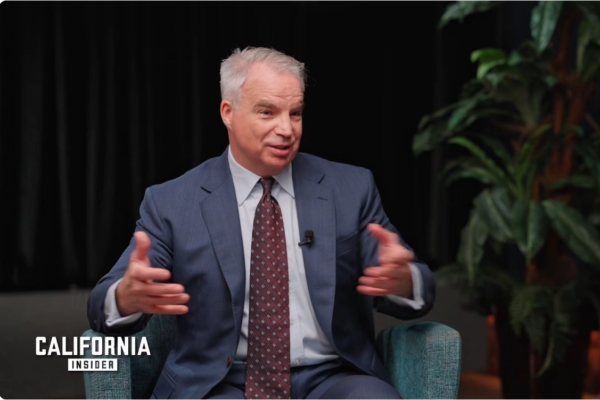
Dr. Dayan Goodenowe, an expert in dementia and longevity research and the founder of Prodrome Science, recently appeared on EpochTV’s “California Insider” interview program to explain why so many families reach this point and what measures should be taken before health deterioration turns into a crisis.
Dr. Goodenowe observed, “All our healthcare systems are based on disease symptoms and how to diagnose them. Our only definition of health is the absence of disease. If you have no symptoms, you’re considered fine. This is absurd.” Compared to other societal areas, he said, “Preventive maintenance is everywhere, whether in electronics, automobiles, or all the amazing technologies today, but we haven’t applied this concept to human medicine at all.”
Dr. Goodenowe has invented a biochemical technology called Non-targeted Metabolomics, utilizing ion cyclotron mass spectrometry to simultaneously measure thousands of molecules, providing biochemical readings about the body’s functioning. This has become a powerful diagnostic tool.
His real epiphany in his career came during his research on colon cancer when he realized that they were measuring the persons with cancer, not the cancer itself.
The concept of “Prodrome” emerged – deviations in health status. Dr. Goodenowe explained that there is a healthy state and once it deviates, it leads to subsequent outcomes. The prodrome concept applies to all diseases – pancreatic cancer, colon cancer, ovarian cancer, breast cancer, dementia, Parkinson’s, autism; all these diseases have clearly definable health deviations present before the onset.
He illustrated, “It’s like driving with a leaking tire, not knowing when you’ll hit a nail; if you get the tire refurbished, the chance of a blowout decreases.”
In the early 2000s, Dr. Goodenowe made a significant discovery that the primary determinant for future dementia is the decreased level of plasma plasmalogens in the blood. Plasma plasmalogens are synthesized by the body and cannot be obtained through diet except through breast milk. He designed a series of oral plasma plasmalogen precursor molecules that convert into plasma plasmalogens in the body, now developed into natural dietary supplements.
Human research testing indicates that plasma plasmalogen supplements, or precursors, can improve cognitive function in participants. Animal studies show that it can restore myelination and prevent Parkinson’s disease.
US Secretary of Health Robert Kennedy emphasizes the need to offer nutritional therapy training for doctors. Dr. Goodenowe agrees, stating, “The clinical effects of these ‘nutrient intermediaries’ are at least on par with ‘first-line therapies,’ if not superior.”
The technology Dr. Goodenowe developed to measure deviations in health is non-targeted towards diseases, it’s non-medical in nature. He said, “The human body has a set of ‘factory settings.’ Our job is to restore the ‘factory settings,’ ensuring it functions normally.”
Using brain MRI technology, patients with dementia, post-concussion syndrome, multiple sclerosis, and Parkinson’s can see their brains regenerating.
In Musco, Dr. Goodenowe’s team is providing free services to 35,000 patients through five institutions to explore incorporating restorative health initiatives into communities, promoting community health. The program will also be fully implemented in Temecula County.
Dr. Goodenowe drew inspiration from the concept of “will to live.” He expressed, “People need to overcome certain barriers psychologically, they need to see the future.” He said, “We have the luxury to focus on the spiritual level because we are building a biochemical basis that ultimately leads to longevity, even immortality.”
“How do you plan to spend your remaining years? You must have a goal, you’ll start reconsidering those milestones in life that were once seen as negative – the stress of studying, the first love, finding a job, and even the stress of children going to school. Faced with all these pressures, you’ll think: Oh, I wish these pressures would disappear quickly; I wish I could retire soon and relax. But, these pressures are actually important, they are milestones in life… Now we face ’empty nest syndrome’ – as people age, they lose their sense of belonging in society.”
He mentioned that the elderly are actually “very healthy.” Dr. Goodenowe led a post-mortem brain tissue study examining the relationship between plasma antibody levels in the brain and cognitive function, revealing that individuals with higher plasma antibody levels at age 88 had significantly better average cognitive function than the general population, showing that “even in later years, we can maintain extremely strong cognitive abilities.”
He advocates for establishing a longevity perspective, allowing the elderly to re-enter the labor market and make contributions. “This is one of the reasons why I am passionate about longevity research,” he said.
The cost of caring for dementia is considerable and can deplete most of the elderly’s assets, so what about the cost of preventive measures?
“From a recovery perspective, people must be housed in our facilities, but they are actually cheaper than regular long-term care facilities,” Dr. Goodenowe further stated, “If we achieve ‘home care’ through insurance, the cost-effectiveness becomes even more pronounced; we believe overall medical expenses could be reduced by nearly 50%.”
On the mental level, Dr. Goodenowe shared his rehabilitation concept, “The focus is really on the uniqueness of each individual. Just as we must restore the sanctity of life, just as we must restore the preciousness of life.” He warned, “If we don’t grasp the preciousness of life, we will begin dehumanizing our people, and with euthanasia becoming increasingly common, you can already see this phenomenon.”
Discussing this controversial topic, Dr. Goodenowe said, “Most people don’t realize that euthanasia is an economic solution to healthcare problems; they package it as ‘Oh, you’re not compassionate enough.'”
He analyzed, “As this practice permeates deeper, once people start accepting death as a medical choice, the economic incentives become very difficult to resist. You’ll find that the average annual medical costs for a late-stage cancer or dementia patient could be as high as $50,000 or $100,000; whereas if that person chooses euthanasia, the cost might only be a few thousand, saving the government a substantial amount.”
Considering the extremely high prices of drugs for certain diseases, the government is somewhat forced to foot the bill, and the economic logic of euthanasia is quietly seeping in. “You’ll find that this practice is quietly spreading.” Dr. Goodenowe believes this is extremely dangerous.
“We must focus on the meaning of life. The meaning of life lies not only in self-preservation but also in caring for others. This sense of meaning comes entirely from the preciousness of life itself,” he said, “Life is a gift from God. We really don’t know how caring for an elderly person will change people’s lives. You must truly embrace life, fight for it; once you realize the preciousness of life, you’ll start seeking the meaning of life. For the elderly population, meaning comes from this.”
From the spiritual drive of dementia recovery, Dr. Goodenowe further delves into medical ethics, “A sense of purpose in life is part of the preciousness of life, just as you must desire to live, contribute, make a difference; as a society, we need to work harder to create these opportunities for people. Once you embrace the preciousness of life, this concept will extend, it will change your approach to dementia patients.” ◇
(The content herein is for health information reference only and cannot replace the diagnosis and treatment by medical professionals. Before using any nutritional supplements, please consult with healthcare professionals.)