
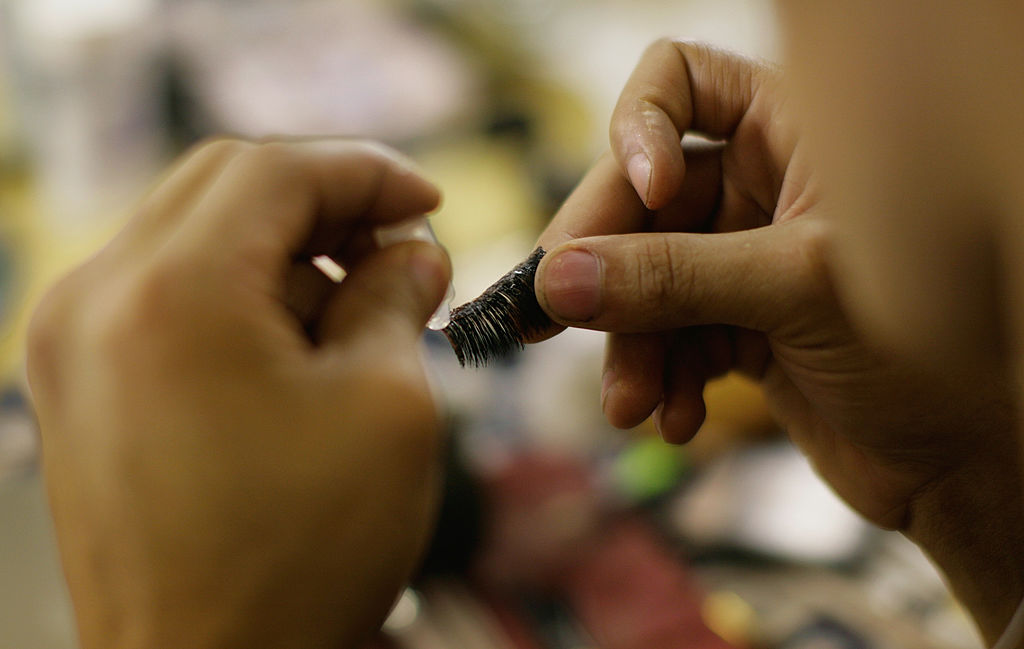
Recently, a consumer testing conducted in Shanghai revealed concerning findings regarding 28 popular eyelash glues in the mainland Chinese market. Among these products, 20 were found to contain formaldehyde, 24 contained the cosmetic banned substance hydroquinone, and 22 were found to contain chemical components typically used in industrial adhesives. Some beauty salons specializing in eyelash services were unable to provide information on the brand, origin, or registration details of the glue they used.
According to Chinese media reports on August 9th, samples of these 28 products purchased from mainstream e-commerce platforms and offline eyelash salons showed that 20 of them contained formaldehyde, accounting for about 70% of the samples; 24 contained hydroquinone, representing over 80% of the samples; and 9 samples tested positive for toluene.
Formaldehyde is classified as a Group 1 carcinogen by the International Agency for Research on Cancer, while toluene is categorized as a Group 3 substance. Hydroquinone possesses genetic toxicity and potential carcinogenic risks, leading to its ban in cosmetics in mainland China.
Among the 28 samples tested, 22 were found to contain methyl methacrylate and cyanoacrylate, which are core raw materials of the industrial adhesive “502” glue.
Of all the samples, only 5 products were labeled as complying with cosmetic standards, while the majority of the products were only marked with business standards that were not publicly accessible. Additionally, 2 products adhered to industrial adhesive standards.
Some salon staff members regarded strong odors and eye irritation during use as indicators of the effectiveness of the glue, yet they were unable to provide specific information about the source of the glue.
Shandong Pingdu is home to numerous manufacturers of fake eyelashes and glue. An employee of one manufacturer mentioned that the higher the content of cyanoacrylate, the stronger the glue, but it also increases the likelihood of eye irritation and tearing. As long as beauty salons receive few complaints, they are reluctant to switch to alternative glues.
Some manufacturers pointed out that eyelash glues are not clearly classified as cosmetics and lack specific product standards. When consumers experience allergies, manufacturers typically offer minimal compensation. Some manufacturers stated that obtaining quality inspection reports and complying with standards could be achieved for around 600 yuan.
A consumer with seven to eight years of eyelash extension experience shared that her eyes would sting and burn after each procedure, requiring a lengthy period of fan use to alleviate the discomfort. Another consumer mentioned experiencing itching, burning eyelids, and teary eyes after her initial eyelash extension, believing it was due to personal sensitivity.
Dr. He Qin, Deputy Director of the Dermatology Department at Sun Yat-sen University Eighth Affiliated Hospital, previously stated that excessive use of glue, proximity to the eye surface, or incomplete curing could potentially harm the cornea and conjunctival epithelial cells, leading to corneal epithelial detachment.
Furthermore, the investigation discovered that some salons were neglecting proper sterilization of tools, such as tweezers. When consumers experienced allergies or swelling, the salons lacked appropriate protocols and advised customers to seek medical help on their own.
These findings sparked discussions among internet users. Some mentioned instances of eyelid swelling resembling double eyelids after eyelash extensions, requiring several days of anti-inflammatory medication, ultimately opting for mascara in the future. Others highlighted the importance of consumer vigilance towards the eyelash glue products they choose to use.