
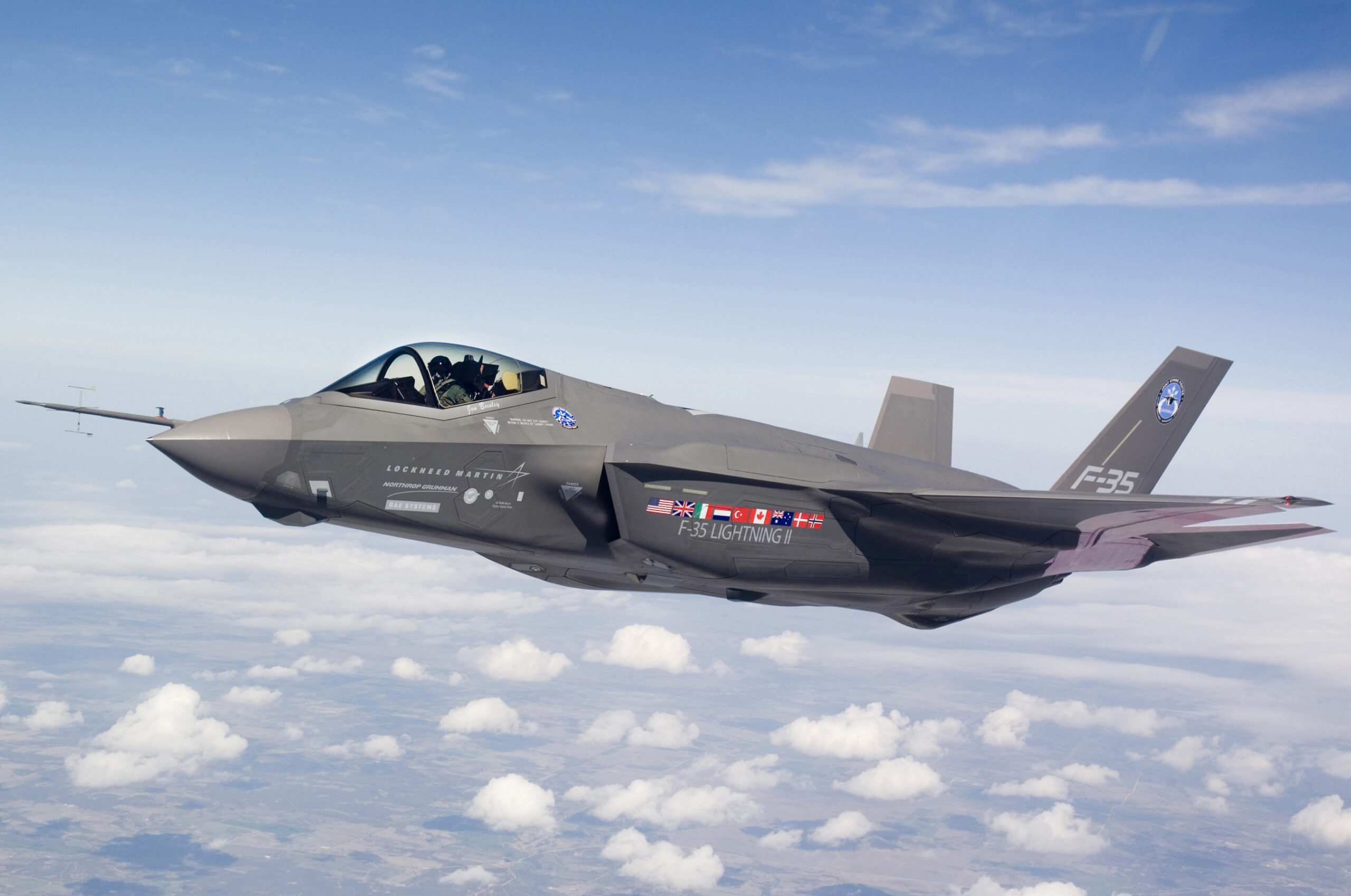
The United States Department of Defense (the Pentagon) and defense contractor Lockheed Martin announced on Thursday, October 22, that they have reached a 10-year framework agreement.
According to the agreement, the two parties will collaborate on the production and maintenance of at least 850 F-35 Lightning II stealth fighter jets, in order to revitalize the U.S. defense industrial base and ensure the military’s long-term and stable supply of high-tech weapons.
This multi-year agreement aims to maintain the production of F-35 at a steady level of 156 aircraft per year. The agreement includes not only the manufacturing of the aircraft itself but also international customer orders, initial spare parts services, and 10 years of retrofit kits and maintenance support.
As a return for the Pentagon’s long-term commitment, Lockheed Martin has pledged to raise at least $7 billion on its own to expand production capacity, improve supply chain efficiency, and drive research and development for F-35-related projects.
The total amount of the contract was not disclosed by both parties, but they noted that the agreement is part of a prearranged long-term framework contract that still needs authorization and budget appropriations from the U.S. Congress. Once approved, thanks to long-term pricing and bulk discounts, it is expected to save the government billions of dollars.
According to Reuters, Lockheed estimates that the agreement will generate between $790 billion to $800 billion in economic activity annually over the next 10 years and support over 317,000 jobs nationwide.
Reported by Agence France-Presse, there are currently over 1,375 F-35 aircraft in service worldwide. International demand remains strong, with the U.S. approving the sale of 48 F-35 jets to Saudi Arabia last month, valued at $24.3 billion.
Michael Duffey, the top procurement official at the Pentagon, stated that the United States has fundamentally changed the way it stabilizes the defense industrial base, ensuring that the military can quickly and substantially acquire the necessary combat capabilities by linking financial incentives with actual performance.
Lockheed CEO Jim Taiclet pointed out that the agreement solidifies the F-35’s position as the “core frontline fighter of the free world,” bringing long-term stability to suppliers, taxpayers, and U.S. allies.