
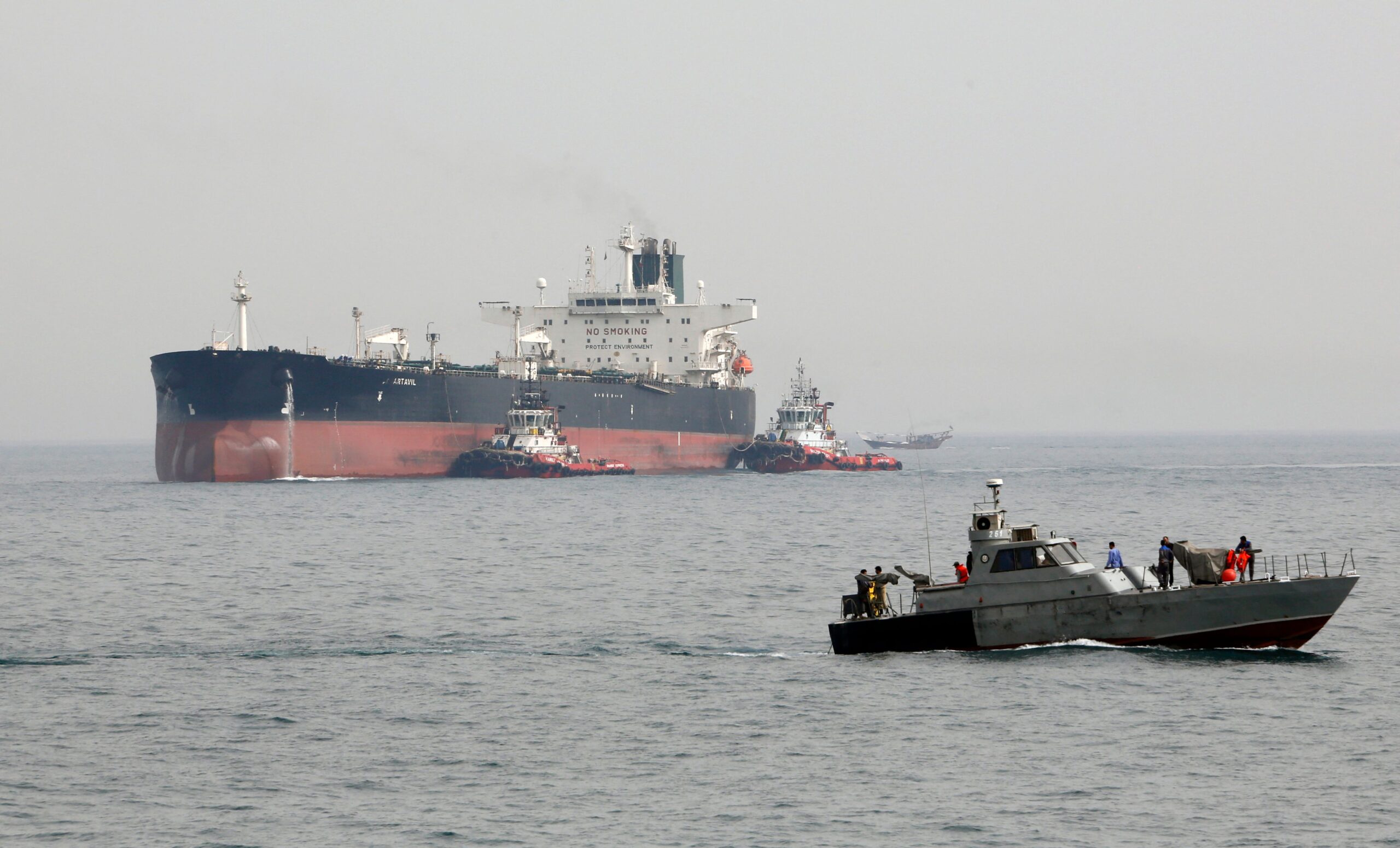
The United States continues to tighten the maritime blockade against Iran, restricting Iran’s oil exports. The floating oil reserves stored on tankers in Asian waters, originally intended for sale to China, were completely depleted by mid-October. Analysts point out that oil revenue is a crucial source of income for the Iranian government, and the depletion of reserves will further escalate its economic pressure.
Data from the energy analysis company Kpler shows that Iran’s floating oil reserves rapidly declined after the US resumed sanctions in mid-July. The peak of these reserves was close to 90 million barrels, but by October 5, it had dropped to less than 1 million barrels before being completely exhausted.
According to a report by The Wall Street Journal on October 21, Kpler’s head of crude oil analysis, Homayoun Falakshahi, stated that Iran has no more oil to deliver to China.
For years, Iran has continued to sell crude oil to China through tankers and maritime transshipments despite US sanctions. Instead of directly sailing to China, these tankers typically first transport the crude oil to waters near Malaysia and Singapore, where it is then transferred to other tankers bound for Chinese refineries. This method complicates the tracking of oil sources and sanctions violations, making the Southeast Asian waters an area for Iran to store its floating oil reserves.
Based on Kpler’s estimates, when the Iran-Iraq War broke out in February this year, Iran had approximately 135 million barrels of oil stored overseas, with the majority located in waters near Malaysia and Singapore. Despite the US sanctions in April, Iran continued to sell this inventory. The sanctions were temporarily lifted in June during peace talks, which led to an acceleration of exports and the replenishment of reserves. However, after the US reenacted sanctions in mid-July, the reserves quickly depleted once again.
Admiral Brad Cooper, the commander of US Central Command, recently stated that the US blockade has cost Iran at least $25 billion in oil revenue, weakening its ability to rebuild damaged factories and military equipment.
The reduction in oil revenue is exacerbating Iran’s financial pressures. Falakshahi mentioned that oil sales typically account for about 30 to 40 percent of the Iranian government’s income and serve as its primary source of foreign exchange.