
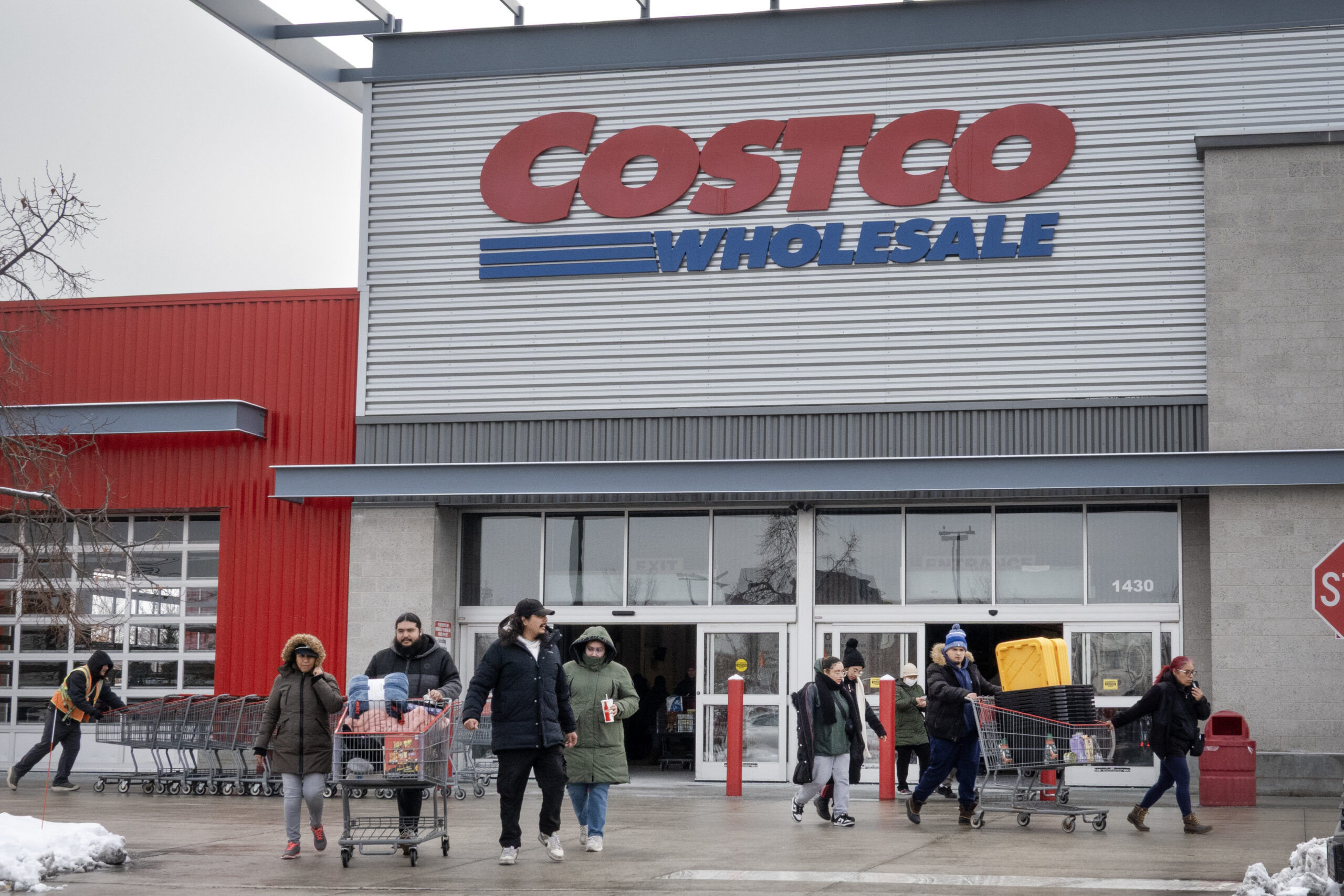
For many Americans, the traditional criteria for choosing an ideal home typically include being in a good school district, having a safe neighborhood, and convenient commute options. However, a “Costco Housing Trend” is quietly emerging across the United States – the proximity to this American warehouse retail giant has become a key consideration for many of its loyal fans when selecting a place to live.
Adam Staley, a Costco enthusiast from Missouri, is a typical example. He told USA TODAY that he visits the store at least four times a week and his wardrobe is filled with Kirkland Signature clothing. When he was looking for a rental property in Kansas City, he immediately chose a house just five blocks away from Costco without hesitation.
“Being able to get there in a three-minute drive as soon as I walk out the door is a huge plus,” Staley said.
This attraction, woven from large packages of paper towels, cheap rotisserie chickens, and discounted gasoline, is referred to as the “Costco Effect” by real estate observers. On the forum Reddit, many buyers openly share their experiences of choosing a home within the “Costco lifestyle circle”; some buyers even create a column in their spreadsheets specifically to record the distance to the nearest store, while developers in Los Angeles are following the trend by directly building hundreds of apartments above Costco stores.
Analysis by the real estate website Zillow shows that in the 606 postal code areas across the U.S. where Costco is located, about 3% of listings specifically highlight the store as a premium lifestyle amenity. In Austin, real estate agent Sean McCormack even offers custom searches on his website, allowing buyers to filter homes based on proximity to Costco within a certain radius.
This grassroots craze is also supported by academic research. A long-term study by the Vancouver School of Economics (VSE) on the opening of Costco stores across the U.S. shows that while the impact of Costco on the average housing prices in the U.S. is limited, in “high-density, high-income” administrative areas, the increase in property values is significant.
Data indicates that in areas with higher population density than the U.S. average, the opening of a Costco can lead to a 7.9% increase in housing prices within a 5-mile radius within 2.5 years, while in high-income areas, surrounding property prices can also rise by 5.2% as a result.
However, mastering the balance of distance is key to enjoying these housing price benefits. Real estate agents point out that the golden distance within the Costco lifestyle circle is typically a 5 to 15-minute drive – allowing for quick trips while avoiding weekend traffic congestion and delivery truck noise. While proximity to the store cannot completely replace core factors such as school districts, it has become an extremely appealing selling point.
While some benefit, others may suffer from “Costco envy” if they live too far away. Kathy Spangler, who resides in a golf community in North Carolina, mentioned to USA TODAY that it takes her over an hour to reach the nearest Costco. Every time she sees local residents easily leaving after just buying a rotisserie chicken while she pushes a full shopping cart, she can’t help but feel envious.
For many families, being close to Costco is not just a lifestyle choice, but a necessity for saving time and money. With dual confirmation from academic data and the consumer market, the “Costco Effect” is continuing to brew, reshaping Americans’ home buying map with this new form of lifestyle circle quietly making its mark.