
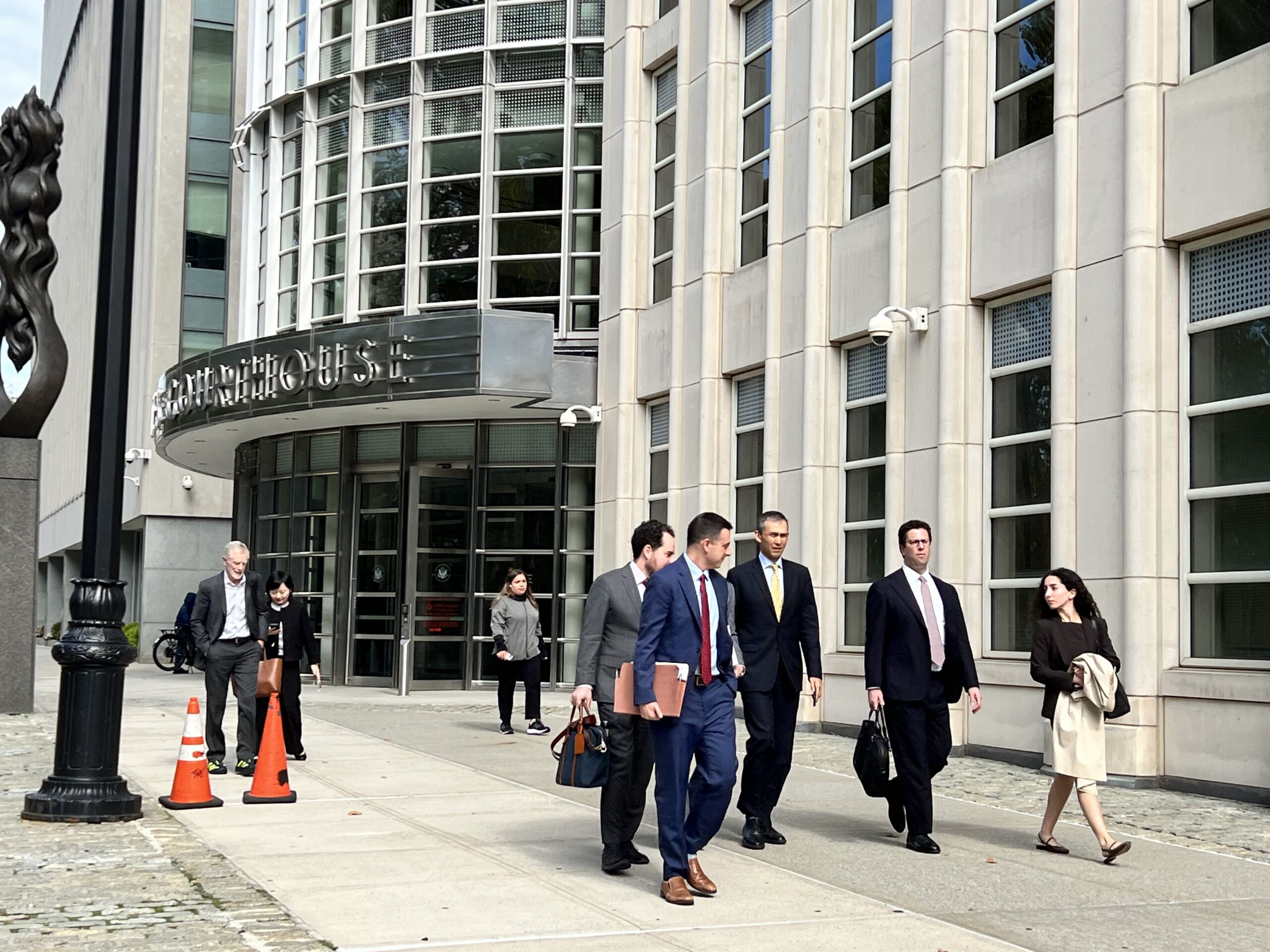
On Tuesday, October 13th, Heather Campbell, who worked as a corporate trainer at Huawei Device Co., testified about an internal Huawei document she came across in July 2013. The document revealed that Huawei headquarters had introduced an internal policy that encouraged and rewarded employees globally for acquiring confidential information from competitors, essentially promoting “rewarded theft.”
According to Campbell’s testimony, she worked at Huawei’s office in Texas from April 2012 to June 2014. During her tenure, she was on the same team as the company’s legal advisor, Charles de Chateauvieux, and they met frequently.
One day in July 2013, Chateauvieux informed her that Huawei headquarters had issued an internal document instructing offices worldwide to upload confidential information obtained from competitors to a specified website. The headquarters also established an incentive mechanism to reward employees based on the value of the information provided. This program was managed by a “Competitive Management Team” responsible for review and evaluation.
Campbell stated that Chateauvieux was “very concerned” about this policy as he viewed it as essentially encouraging employees to “steal.” He believed it was inappropriate and revealed receiving an email from his superior instructing the Huawei US office to not respond to or comply with the headquarters’ policy.
Although Campbell did not directly see the internal email, she hoped to see related internal documents as she found it hard to believe the company had actually formulated such a policy and wanted to understand the situation firsthand.
Her concerns were also linked to a previous incident. By the end of May 2013, an employee of Huawei’s US office entered a T-Mobile lab, secretly placed a robotic arm in a laptop bag, and removed it from the lab. Before the robotic arm was returned to T-Mobile, a Huawei engineer had measured the device and sent photos and measurement data to Huawei and other Huawei terminal company engineers via email.
Campbell was eager to unravel the truth.
Subsequently, legal advisor Chateauvieux handed Campbell printouts of the aforementioned internal document and related emails in the hallway outside the company’s sixth-floor training room. Campbell mentioned that they chose that location for the exchange because it was less crowded and not easily visible to others.
After obtaining the documents, Campbell went to her car and read them in detail.
According to court documents submitted by the prosecution, the core document was titled “Terminal Competitive Information Collection Management Norms,” issued by the Huawei Terminal Customer Group Management Department, signed by Liu Jiangfeng on July 10, 2013. It was addressed to all employees of that department and copied to all supervisors of the second-level department, with the footer indicating it was from the Terminal Market Strategy Analysis Department of Huawei Technologies Co., Ltd.
The document explicitly stated that the norms were formulated to strengthen competitive information collection and management, timely deliver and share various types of competitive information to provide reference for management decisions, enhance the quality and efficiency of competitive work.
The document required all personnel to actively collect competitive information and submit it to headquarters via the “Terminal Competitive Community” platform (huawei.com) or dedicated mailbox for immediate sharing and interaction. Regional terminal business department heads were designated as the primary responsible parties for regional competitive information management, while the sales operation department was responsible for related management tasks.
Incentive principles included graded incentives, real-time incentives (monthly bonuses), and a “rewards-only” policy to encourage frontline employees to actively report competitive information. Every six months, three “outstanding regional department managers for competitive management” would be selected for public display and rewards.
Rewards covered competitive information on competitor product information (e.g., roadmap information CNY 2,000, prototypes CNY 200), sales information (business prices CNY 1,000, channel structure and hierarchy profit distribution CNY 500), customer relationship dynamics, market information, retail data statistics (CNY 200), and organizational structure and decision-making chain salary system (CNY 500). The document also required the dissemination of information through different channels based on information classification, with encrypted documents sent via a dedicated mailbox required for first and second-class information.
On July 12, 2013, two days after the norms were issued, Jennifer Ponder, head of the HR department of Huawei’s US office, on behalf of the management team, sent an email to employees regarding the incentive document from headquarters.
The email pointed out that the rewards document issued by headquarters seemed to encourage employees to collect competitor secrets in exchange for monetary rewards. However, the management team stated that although such instructions might be considered normal business practices in some countries, in the US, “we neither recognize nor engage in such activities.” The company policy of Huawei US clearly prohibited such behavior; any US employee attempting to collect competitor or third-party confidential information would face disciplinary action, up to dismissal.
After sitting in her car and reading through the two documents, Campbell pondered for a few minutes, attempting to gauge the reactions of other supervisors. She first approached the sales department head about the documents, but he appeared indifferent and showed no signs of concern.
Unsatisfied with this response, Campbell then talked to the information department head. He mentioned not having seen the documents, so Campbell showed them to him in the parking lot. According to her recollection, he reacted by saying, “Wow, this is bad,” but did not exhibit enough seriousness.
After contemplating it on her own for a while, Campbell ultimately decided to contact the Federal Bureau of Investigation (FBI) and handed the documents over to FBI agent Leigh Ann Sweeney. Sweeney later became the FBI agent responsible for investigating and prosecuting Huawei-related cases.
Several related articles cover the Huawei case in New York, shedding light on allegations of theft and deception spanning over 20 years, along with testimonies revealing suspicions of technology theft and covert surveillance:
“Huawei Case Goes to Trial in New York: Prosecutors Accuse 20 Years of ‘Theft Lies Cover-Up'”
“Huawei Case Goes to Trial in New York: Witness Exposes Suspicions of Technology Theft and Espionage”
“Huawei Case Goes to Trial: Huawei’s International Corporate Espionage Exposed, Video Footage Revealed”
“Huawei Case Goes to Trial: CNEX Circuit Boards Damaged After Testing Return to China”
“Huawei Case Goes to Trial: Allegations of Operating in Iran Using Skycom”
“Huawei Case Goes to Trial: Ex-HSBC Executive Alleges Misleading by Meng Wanzhou”
“Huawei Case Goes to Trial in New York: Huawei Concealed ‘Being Cut by HSBC'”
“Huawei Case Goes to Trial in New York: Meng Wanzhou’s Notes Reveal Iran Business”
These developments in the Huawei case highlight the intricate details and implications surrounding allegations of corporate espionage and unethical practices.