
According to a public health alert, from January 2019 to June 2026, a total of 592 cases of silicosis were found among workers in California engaged in artificial stone countertop processing, with 31 deaths reported.
Published on August 12 in the “NEJM Evidence” journal, the public health alert report revealed that out of the 592 patients, 65 workers underwent lung transplants. Silicosis is a progressive, incurable lung disease caused by inhaling crystalline silica.
Artificial stone countertops are made by mixing quartz powder with polyester resin and pigments, containing high concentrations of crystalline silica, usually exceeding 90%.
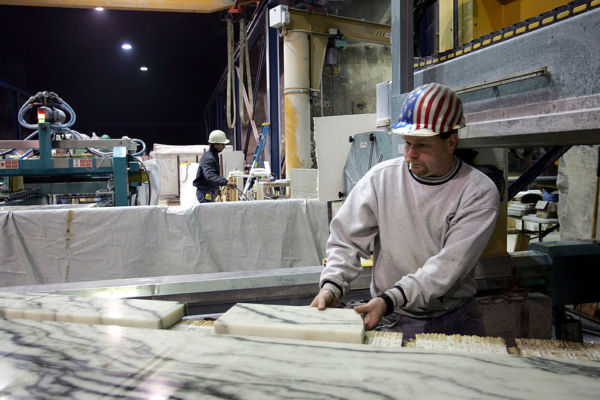
Workers involved in stone slab processing may be exposed to dangerous levels of crystalline silica and other volatile compounds during cutting, grinding, and polishing of the slabs.
The data on silicosis cases come from the California Department of Public Health. The department first identified a case of silicosis in a countertop processing worker in California in 2019.
The report pointed out that among the 592 confirmed cases, significant features included the patients being diagnosed at a younger age, rapid disease progression, and often being accompanied by other silica-related conditions such as tuberculosis and autoimmune diseases.
The median age of silicosis patients was 46, with a median age of 52 for those who died. The median occupational exposure to silica dust for these workers was 22 years, with 591 out of the 592 patients being male.
The report stated: “Although silicosis can be prevented by reducing or eliminating exposure to silica dust, the installation and maintenance costs of water-based tools and ventilation systems required to control silica dust can be high. Even with recommended control measures in place, excessive exposure may still occur.”
According to the latest data released by the American Lung Association on January 30, inhaling silica dust can cause lung inflammation and permanent scarring, especially around the airways and alveoli, leading to breathing difficulties.
It is estimated that approximately 2.3 million workers in the United States are exposed to silica in the workplace, with about 2 million of them in the construction industry alone.
The association stated that common symptoms of silicosis include difficulty breathing, persistent cough, chest or back pain. Other symptoms may include muscle weakness, night sweats, fever, chest pain, fatigue, and unexplained weight loss.
The report from August 12 highlighted that measures have been taken to address the threat of silicosis to workers. However, workers still face risks, and there are challenges in enforcing relevant regulations.
For instance, the report noted that in 2024, the California Department of Occupational Safety and Health only inspected 85 out of over 1,300 countertop processing factories statewide, with 95% of them found to be in violation of safety regulations.
The report recommended establishing or strengthening a silicosis monitoring system and implementing active disease screening programs. These measures can provide policymakers with relevant information to take action in preventing workers from developing silicosis.
In October last year, Governor Gavin Newsom of California signed SB20 into law, aimed at addressing the threat of silicosis faced by workers.
According to a statement released by the office of California State Senator Caroline Menjivar in September 2025, SB20 strengthens the safety of stone processing industry workers through enforcing safety regulations and raising public safety awareness.
The law prohibits dry cutting of stone countertops and categorizes silicosis caused by engineered stone as a serious illness or injury, enhancing enforcement efforts, and requires the California Department of Public Health to conduct advocacy and education activities for relevant employers and workers.
According to a health advisory issued by the California Department of Public Health in November 2025, silicosis is a reportable disease in California. Healthcare providers must report suspected or confirmed cases to local health departments.
The department stated: “Healthcare providers should inquire about a patient’s work situation and conduct silicosis testing for countertop processing workers, including asymptomatic workers.”