
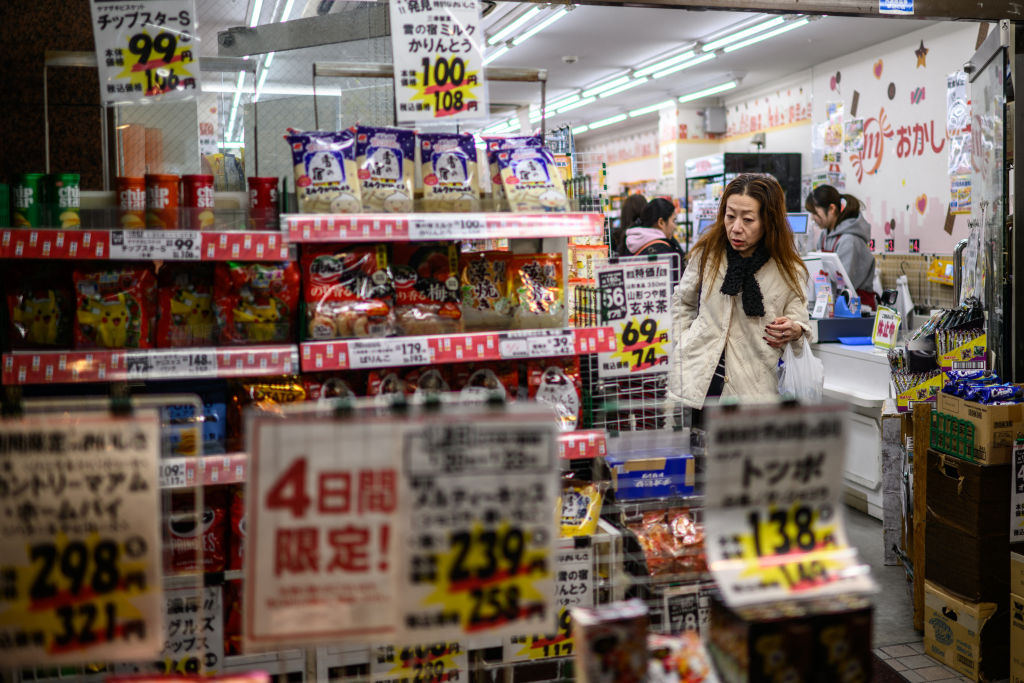
Japan’s economy continued to grow in the second quarter, but at a pace that was only about half of what the market had expected. Data released by the Japanese government on Monday, August 17, revealed that the country’s real Gross Domestic Product (GDP) grew at an annual rate of 1.1% from April to June this year, falling short of the market’s forecast of 2%. Personal consumption stagnated, corporate investments declined, with exports emerging as the main support.
In the second quarter, Japan’s GDP grew by 0.3% compared to the previous quarter, also below the market’s expectation of 0.5%. The annualized growth rate for the first quarter was revised upward to 1.9%.
Personal consumption, which makes up over half of Japan’s economy, saw no growth in the second quarter compared to the previous quarter, in contrast to the market’s expectation of a 0.5% increase. Corporate equipment investment dropped by 1.2%, a significant difference from the market expectation of a 0.4% growth.
According to reports from Reuters, Kazutaka Maeda, Senior Economist at the Meiji Yasuda Research Institute, stated that the economy maintained its growth in the second quarter, albeit slightly weaker than expected. He believed that some factors dragging on growth might be temporary and that the latest data did not imply a weakening economic outlook.
Japan’s exports performed relatively well in the second quarter. Net external demand, that is exports minus imports, contributed 0.5 percentage points to GDP growth, offsetting some of the weakness in domestic demand.
The demand for Japanese hybrid cars in the US market remained strong, coupled with global investments in Artificial Intelligence driving the demand for semiconductor-related equipment and components, providing support for Japan’s exports.
However, domestic demand in Japan still appears weak. Analysts warned that the pressure of rising import costs and upstream prices may gradually be passed on to consumers, putting pressure on household spending later this year.
Yoshiki Shinke, Senior Economist at Dai-ichi Life Research Institute, believed that the somewhat weak performance in the second quarter was influenced by one-time factors, and the overall data still indicated the resilience of the Japanese economy.
This GDP data also attracted market attention, as one reason was that the Bank of Japan is assessing the timing for further interest rate hikes.
Although the second-quarter GDP fell below expectations, Maeda believes it is not sufficient to alter the timing of the Bank of Japan’s next interest rate hike. The central bank will continue to closely monitor trends in consumption, wages, and prices.
However, due to the impact of Middle East conflicts, Japan’s economy may further slow down in the third quarter. A survey conducted in August by the Japan Center for Economic Research among 37 economists revealed an average forecast of just 0.05% for the annualized GDP growth rate for the period from July to September.