
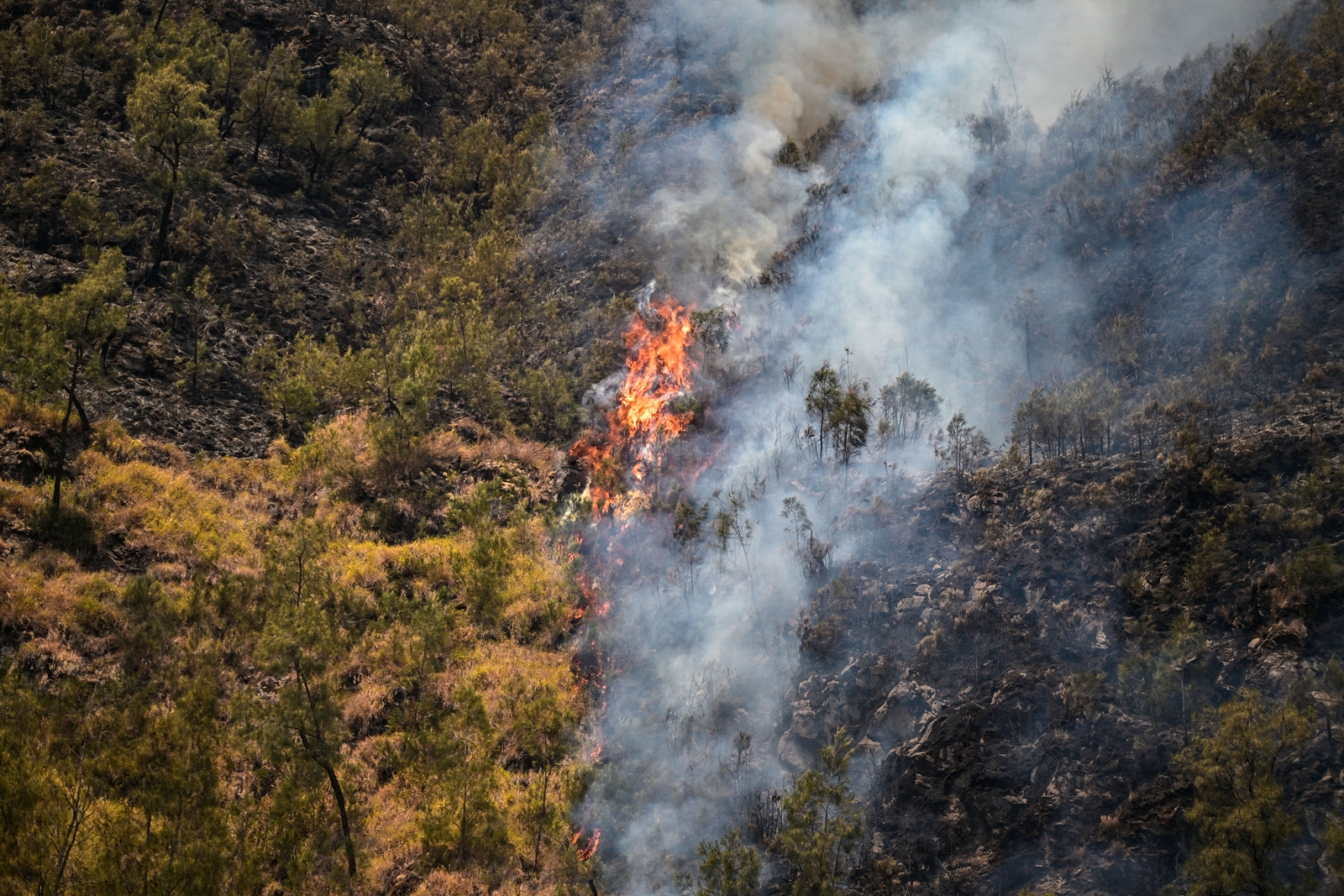
Due to the spreading wildfires, Indonesian authorities announced the closure of Mount Bromo National Park located in East Java on Saturday night, August 8th, and banned all tourism activities.
The wildfires that started burning on Monday have expanded to the volcanic crater zone. The operators of Mount Bromo National Park announced on their Instagram account on Saturday night that the park was closed and the opening hours would be notified later.
Indonesia mobilized hundreds of firefighters, disaster management personnel, police, soldiers, park rangers, and volunteers on Sunday to control the ongoing massive fire that has been burning for several days. Since the eruption on August 3rd, the fire has destroyed approximately 176 hectares (435 acres) of land around Mount Bromo. Officials stated that the affected area on Thursday was about 60 hectares (150 acres) and the fire rapidly spread afterwards.
Mount Bromo is an active volcano known for its “Sea of Sand” caldera and is a popular tourist destination.
The park operators stated in a release, “This closure is a crucial measure to ensure the safety of visitors, staff, and residents in the surrounding areas.” They added that visitors who had purchased tickets could reschedule their visit dates or request a refund.
A video posted by the park operators on social media showed the fire spreading to the slopes overnight. The cause of the fire has not yet been disclosed by the authorities, and there have been no reports of casualties or property damage.
Abdul Muhari, a spokesperson for the National Disaster Management Agency, mentioned that there have been no reports of casualties or property damage so far.
In a statement on Sunday, he mentioned that due to steep terrain and strong winds making it difficult for firefighters to reach certain areas, two “water bomb” helicopters have been deployed for firefighting operations.
“In such circumstances, aerial operations are crucial for areas that are hard to access via land routes,” Muhari said.
The Indonesian Meteorological Agency stated that due to the impact of the El Niño phenomenon, the country’s dry season this year is expected to be more severe and prolonged, increasing the risks of wildfires and drought.
In the first half of this year, over 107,000 hectares of land in Indonesia have already been burned, which is more than twice the burned area in 2023.
(This article references reports from AFP and Reuters)