
In the eyes of outsiders, this land may seem worthless. But for Barry Smith and his granddaughters, Sage and Juniper, the 37-acre plowed field at the Crater of Diamonds State Park is less like a construction site and more like an epic treasure hunt.
The August sun blazed hot as Smith, his wife, and granddaughters set out from the visitor center with their newly rented equipment – a few iron shovels and a small cart. The vast field awaited them to hunt for diamonds, the most renowned treasure of Arkansas Park.
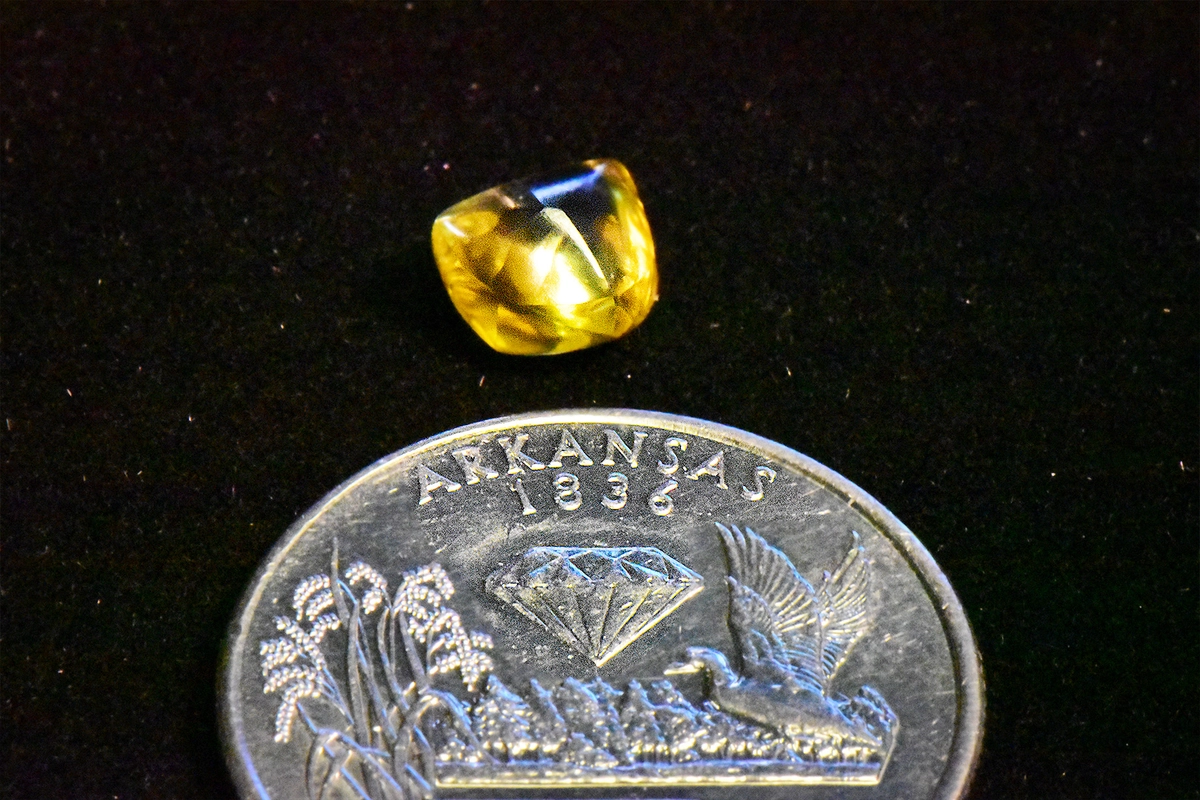
From Germantown, Tennessee, this family managed to unearth a 2.29-carat yellow diamond that shone like a canary on that August day. It marked the third-largest diamond registered in the park for the year. Unaware of their impending fortune, they embarked on a classic American road trip and returned with a substantial haul.
Smith had no expectations of finding any treasures, just hoping for a good time. However, just 30 minutes into the adventure, a bright yellow glint caught his eye. Initially skeptical, he brushed it off as mica or quartz until he noticed its size, carefully tucking the small stone into his shirt pocket. He continued digging until noon.
Later, Smith told the park staff, “The weather was getting hotter, and we couldn’t stand it anymore, so we decided to head back around lunchtime.”
Smith didn’t wait until after lunch to have the small stone appraised. He strode into the Diamond Discovery Center and the staff couldn’t help but gasp at the precious gem. Indeed, it was a 2.29-carat diamond, sparkling in bright yellow, about the size of a black-eyed pea.
Park facilities manager Ralph Hall exclaimed, “When I saw this diamond for the first time, I was simply stunned. Its overall shape and color immediately reminded me of the ‘Pearadin Schumacher American Dream Diamond’ discovered earlier this year.”
Yellow diamonds found here are rarer than white or brown ones. The golden hue is due to the absorption of nitrogen during its crystallization. These impurities absorb blue light, allowing yellow light wavelengths to shine through.
Before packing up the diamond to head home with his family, Smith officially registered and named the gem. The park has a long tradition where finders can name their discovered diamonds. To honor his granddaughters, Smith dubbed the gem the “Sage Juniper Diamond.”
Over the past 120 years, over 75,000 diamonds have been unearthed from this ancient volcanic crater. John Huddleston, the former owner of the park, a farmer, discovered the treasure here in 1906, long before it became a state park in 1972. However, the heyday of the diamond hunts is long gone. Nowadays, visitors can only find one or two diamonds a day.
Now, the “Sage Juniper Diamond” discovered by Smith will be recorded in history as the 351st diamond found in the park in 2026.
Smith shared, “I never expected to find a diamond here. While the possibility of finding diamonds here exists, you never come with the expectation of finding one.”
The article was originally published on the English Epoch Times website.