
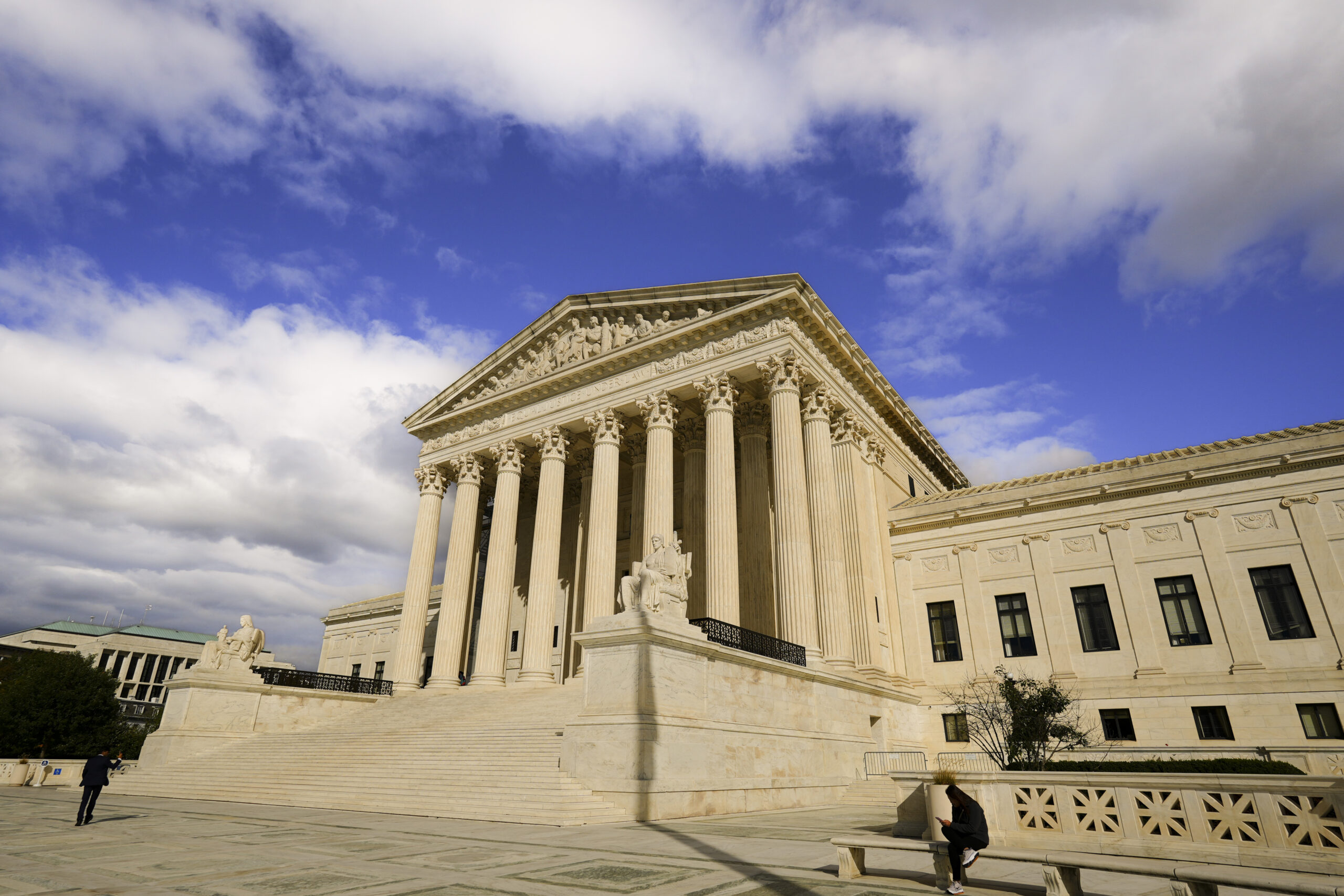
The Supreme Court of the United States has made a decision favorable to Republicans in New Hampshire, allowing state officials to no longer accept student IDs as valid identification for voting.
The Supreme Court cited the “Purcell principle,” which aims to prevent changes to election rules close to the election day.
On Thursday, the Supreme Court issued an unsigned opinion announcing this decision.
Associate Justice Ketanji Brown Jackson provided a dissenting opinion.
In this case, the Supreme Court invoked the so-called “Purcell principle” to oppose court orders changing election rules at the last minute before elections.
Earlier this year, New Hampshire passed a law known as HB 323, which prohibited voters from using student IDs as valid identification for voting. Secretary of State David Scanlan subsequently issued guidance instructing election officials not to accept student IDs as alternative proof of identity.
A group called the Coalition for Open Democracy challenged this state law and the Secretary of State’s directive in federal court. The group’s lawyers argued that the law violated both the United States Constitution and the New Hampshire state constitution, discriminating against young voters based on age. They also claimed that Scanlan’s actions exceeded the statutory authority of the Secretary of State.
Earlier this month, Federal District Court Judge Joseph Laplante rejected the group’s request to halt the enforcement of HB 323 but temporarily prohibited Scanlan from instructing election officials not to accept student IDs under any circumstances. Days later, the judge expanded the scope of the order to include similar statements made by Scanlan publicly. These two orders meant that election officials still had to consider student IDs as acceptable alternative identification.
New Hampshire argued in an emergency application to the Supreme Court that the district court’s orders were issued only 32 days before the election, contravening multiple previous Supreme Court rulings. The Supreme Court has consistently held that lower federal courts should not “interfere with state election procedures on the eve of an election.”
The Supreme Court ruled to stay Laplante’s order.
The Justices cited a precedent from 2020, stating: “This Court has repeatedly emphasized that federal courts should not alter election rules on the eve of an election.”
“In this case, the district court failed to present any legitimate reason for departing from this principle.”
In her dissenting opinion, Jackson stated that Laplante had found it necessary to correct Scanlan’s “public misstatement of the requirements of New Hampshire’s election rules.”
Jackson noted that the district court’s injunction was “meant to address alleged misinformation reasonably, not to change the law.”
She said, “Issuing an injunction against this behavior would not cause public confusion but would prevent the problem from occurring.”
She further stated, “I will not overrule a clearly reasoned federal court order intended to ensure the public has accurate information about state election procedures.”
New Hampshire Attorney General John Formella welcomed the Supreme Court’s decision.
In a statement, he said, “New Hampshire has a responsibility to maintain the integrity of elections and ensure that election laws are enforced as written.”
He added, “We are committed to defending the law and preventing last-minute court orders that leave voters and election officials in limbo. The Supreme Court’s decision is an important victory in this regard.”
The Coalition for Open Democracy criticized the Supreme Court’s latest decision, calling it “wrong” and a misunderstanding of the “Purcell principle.”
In a statement, the group said, “We commend Justice Jackson for her dissenting opinion, defending the constitution, voting rights, and a reasonable invocation of the Purcell principle.”
They added, “We will continue to actively pursue this litigation to defend the basic voting rights of young voters throughout New Hampshire.”
The Supreme Court’s order will remain in effect until the conclusion of the November 3 election, but in the meantime, the case continues to proceed through the appeals process in the lower courts.