
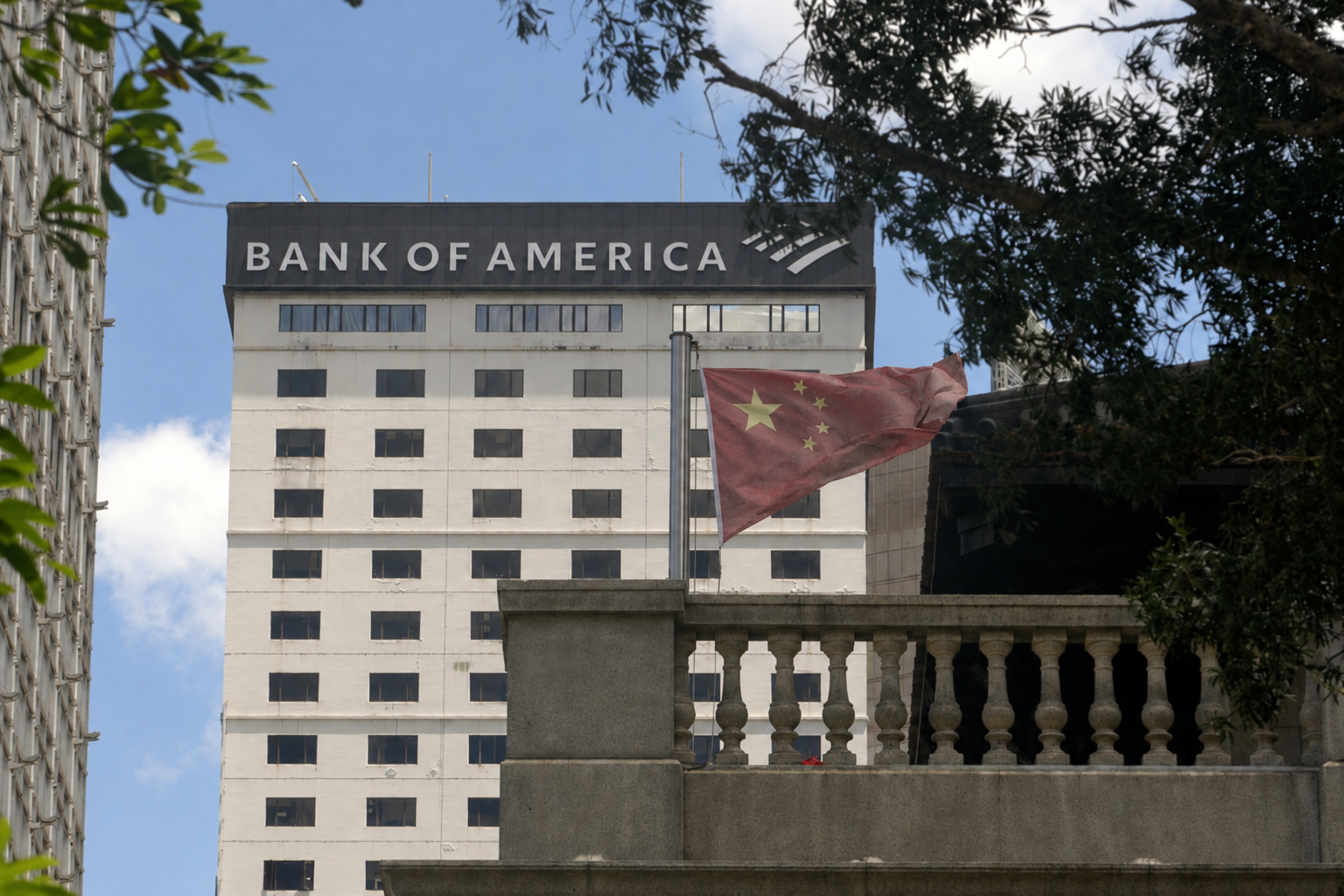
Recently, Chinese authorities have been intensifying their efforts to trace the overseas assets of wealthy individuals. As a result, some affluent Chinese citizens have begun transferring their funds from Hong Kong and Singapore to the United States. This move is aimed at reducing the risk of their assets being monitored by the Chinese tax authorities, as the U.S. has not yet joined the international mechanism for automatic exchange of financial account information.
According to a report by CNBC on October 22nd, since China announced in July the retrospective taxation of offshore trusts, there has been an increase in inquiries from Chinese wealthy individuals opening accounts in the United States. Keith Tan, the CEO of Golden Acacia Capital in Singapore, mentioned that some clients have completed the account opening process in less than two months. Wealthy clients typically opt for major private banks, while accounts with smaller sums are often opened in regional banks or online brokerages.
In July, the Chinese government announced a 20% tax on income and earnings from overseas trusts held by Chinese tax residents. A Reuters report on October 16th revealed that this tax crackdown has led some wealthy individuals to dissolve offshore trusts, sell stocks, and even change their citizenship. Three anonymous sources disclosed that the Chinese State Administration of Taxation has instructed staff to trace the offshore assets and related income of the wealthy using information such as the Hurun Rich List and corporate declaration documents.
Oscar Liu, the CEO of JLT Legacy Group in Hong Kong, mentioned that some provincial and municipal tax departments have set up specialized teams to track the overseas assets of wealthy individuals. He estimated that the tax amount payable for a single case could range from millions to billions of Chinese yuan. Boston Consulting Group estimates that Chinese individuals hold approximately $1.7 trillion in overseas wealth.
Mainland China, Hong Kong, and Singapore are all participants in the Organization for Economic Cooperation and Development (OECD)’s Common Reporting Standard (CRS), which facilitates the exchange of financial account information. Since the U.S. is not part of the CRS, American banks are not required to provide Chinese clients’ account information to the Chinese tax authorities through this mechanism.
James Wang, the CEO of Blue Brick Consulting Group, mentioned that non-U.S. residents can choose investment tools that do not require reporting to the U.S. Internal Revenue Service or have lower reporting requirements. However, Chinese tax residents still need to report their global income to the Chinese tax authorities.
A wealth planning advisor in New York revealed that several U.S. banks are busy handling the increased demand for account openings. Keith Tan from Golden Acacia Capital stated that some Chinese families with children holding U.S. green cards are utilizing foreign grantor trusts to mitigate certain tax risks in the U.S.
Clifford Ng, a partner at Zhong Lun Law Firm in Hong Kong, cautioned that while some wealthy individuals may be gambling that their assets will not be disclosed, the account information from Hong Kong and Singapore may have already been transmitted to the Chinese tax authorities through the CRS, and transfers leave records. He emphasized that “hiding assets does not equal tax planning.”
Cris Cao, a partner at W&H Law Firm in Beijing, stated that even if all funds are transferred to U.S. banks, tax obligations will not be eliminated, as the records of fund transfers alone are sufficient for the tax authorities to levy taxes.
Jingkuan Lin, a private banker at Bank of Singapore, noted that transferring funds already overseas is relatively easy, but it is unlikely that significant amounts of capital will flow out of mainland China in the future. He predicted that the offshore banking business in the future will primarily rely on funds that have already exited China.