
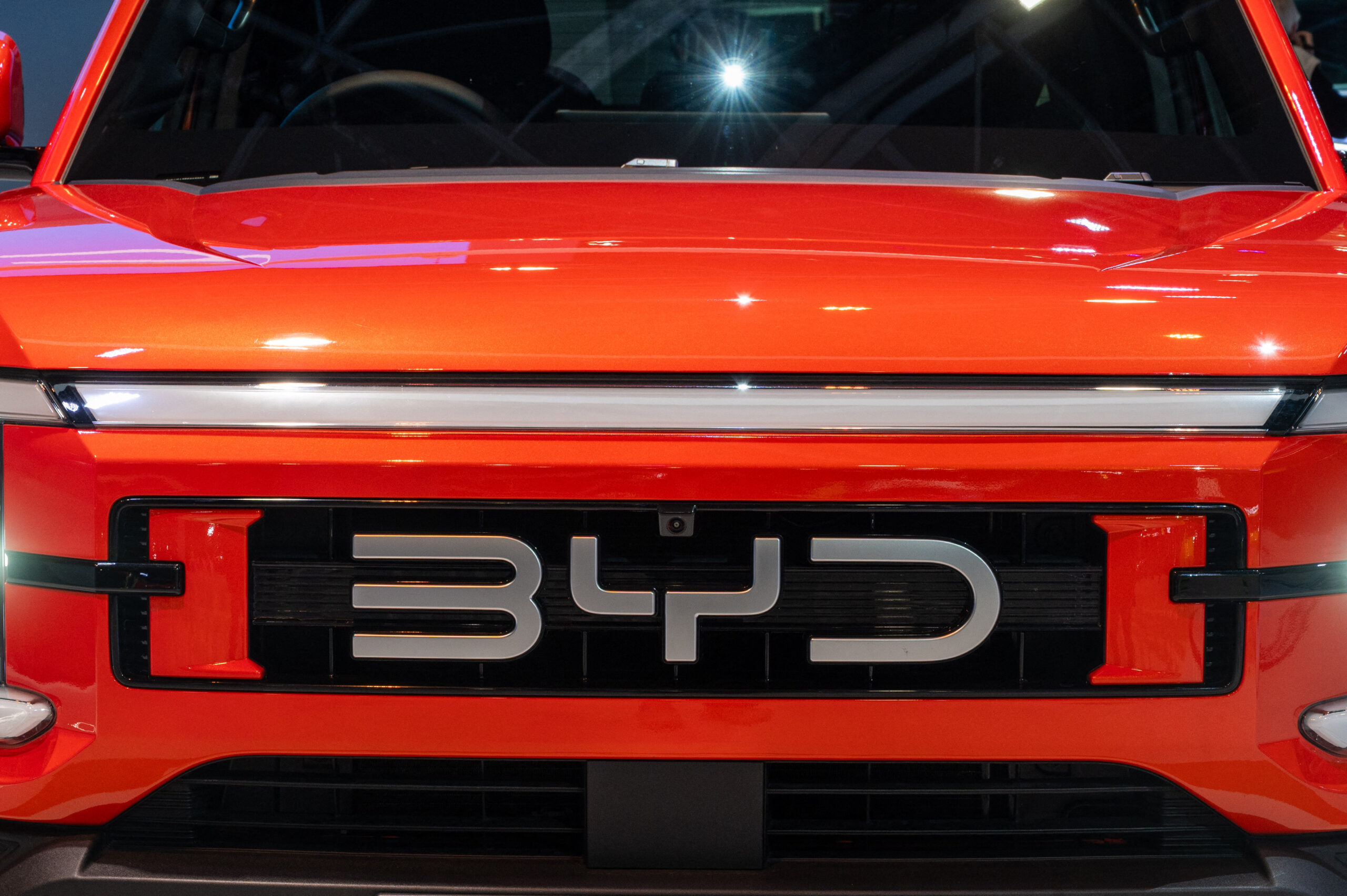
At the 2026 Paris Motor Show, a record-breaking 20 Chinese car companies participated, accounting for about one-third of the total exhibitors, which is double the number from two years ago.
The Paris Motor Show held at the Porte de Versailles exhibition center is globally renowned as the longest-standing and largest auto show in Europe.
For Chinese automotive brands, this event is seen as a crucial opportunity to gain international recognition and prestige, as well as a common strategy for prominent Chinese companies to increase their visibility with the halo of the French capital.
With the US imposing a 100% tariff effectively blocking Chinese electric cars from being imported, Europe has become the most favorable market that remains open to Chinese car manufacturers. Therefore, establishing a foothold in Europe has become a matter of survival for these Chinese companies.
According to Tommaso Pardi, an economist at the National Center for Scientific Research and head of the International Automobile Research Network Gerpisa, Chinese firms have redirected their commercial expansion to Europe as they have been shut out of the US market in the past two years.
The sharp increase in the scale of Chinese companies’ participation in Paris is seen as a worrying signal by industry observers.
The data from Schmidt Automotive Research shows that Chinese brand cars have grabbed a 10.7% market share in the European automotive market in the second quarter of 2026, nearly doubling from the 5.7% share in the same period last year, surpassing Japanese manufacturers.
Bloomberg, citing Dataforce, reported that by August, Chinese brand cars had increased their market share in Europe to nearly 12%.
Bernard Jullien, a French economist specializing in the automotive industry at the University of Bordeaux, commented that the speed of this expansion is astonishing.
He noted, “It took Japanese manufacturers over 20 years to reach a 10% market share. But now (Chinese automakers) have achieved it in four years. So the danger is imminent.”
As Chinese car companies push into Europe, their situation in the domestic market is challenging. Intense competition and weak demand have forced them to seek buyers overseas.
According to the China Association of Automobile Manufacturers, passenger car sales in China dropped by 2.7% in September, while exports exceeded 7.1 million vehicles in the first nine months of 2026, a growth of over 70% from the same period last year.
Thomas Meininger, the Executive Director of the Mobility Global Light Vehicle Demand sector, noted that car sales on the Chinese mainland dropped by approximately 4.5 to nearly 5 million vehicles compared to the same period last year.
Meininger mentioned that despite the challenging situation in the domestic market, Chinese manufacturers can still maintain a substantial profit margin in Europe, as they have diversified their product lines to cater to various needs effectively, showcasing their capabilities at the auto show.
Although Brussels has implemented trade measures aimed at protecting European carmakers from the impact of Chinese products, significant loopholes remain.
In October 2024, the European Union imposed a maximum 35.3% tariff on electric cars manufactured in China on top of the existing 10% import tariff, following an investigation by the European Commission that found unfair subsidies provided by the Communist regime to Chinese manufacturers.
However, hybrid cars are not subject to these tariffs, providing another avenue for Chinese car companies to expand in Europe.
Eurostat data cited by the Chinese Ministry of Commerce shows that imports of hybrid cars from China to the EU nearly tripled, from 107,000 vehicles in 2024 to 302,000 vehicles in 2025.
Furthermore, Chinese customs data reveals that in the first half of 2026, exports of hybrid cars to the EU tripled, reaching $7.5 billion.
This substantial growth has prompted Brussels to consider implementing new restrictions.
On October 9, European Trade Commissioner Maroš Šefčovič stated in Beijing that both parties had reached a “mutual understanding to restrict China’s exports of electric and plug-in hybrid vehicles to the EU,” which is expected to reduce Chinese car exports by over half.
Julien is skeptical about whether these restrictions will lead to a significant decline in Chinese sales and is waiting for the official announcement of China’s export limits to Europe.