
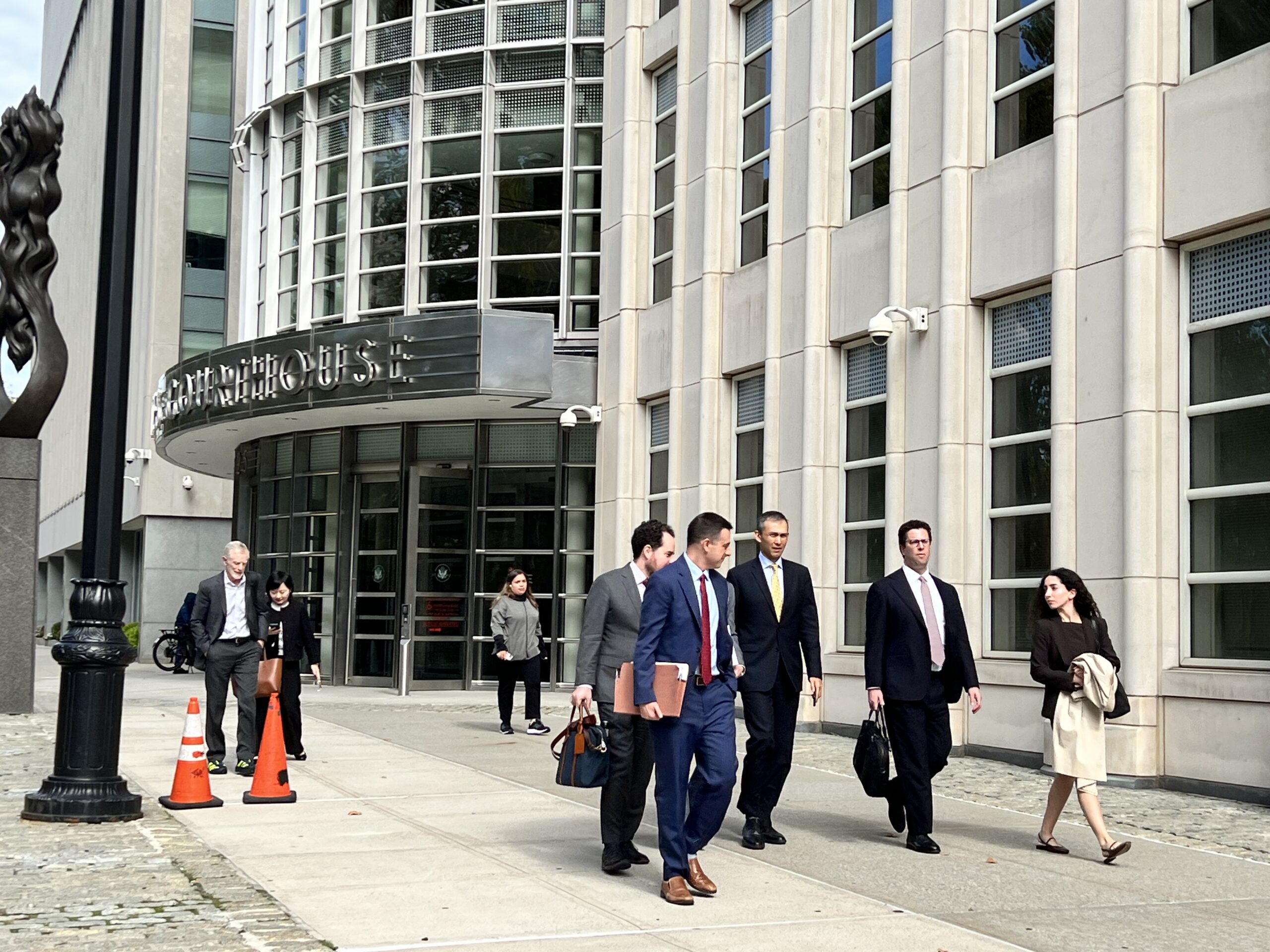
On October 23, 2026, the trial of Huawei’s alleged violation of US sanctions against Iran continues in New York. As revelations about the flow of funds and evidence of irregular settlements come to light, a memorandum released by the Eastern District Federal Court in New York on October 21, signed by presiding judge Ann M. Donnelly, indicates that for the safety of three Iranian witnesses, a brief “closed-door hearing” was conducted during specific testimony periods to prevent public attendance.
The prosecution pointed out in court documents that the three witnesses are all Iranian citizens with close relatives in Iran. They are set to testify about Huawei and its related Hong Kong company Skycom’s business and projects in Iran, which also involve the suppression of dissidents by the Iranian government. Concerned that cooperating witnesses could face retaliation against themselves and their families from both the US authorities and possibly the Chinese government due to their close relationship with Huawei, the prosecution emphasized the need to protect their safety.
The court deemed safeguarding the witnesses’ safety as paramount and restricted the closed-door proceedings to only the testimony periods of the three witnesses. The prosecution also promised to promptly release trial records with identifying information deleted after the testimonies.
During the trial, two Western media journalists opposed the full closure of the court, advocating for “providing real-time audio streams” or limited public attendance. However, the court ruled that measures such as real-time audio, using aliases, masking faces, or setting up screens would not be sufficient to prevent those familiar with the details from identifying the witnesses, with some measures potentially affecting the jury’s assessment of witness credibility.
The focus of the open court session on October 21 revolved around Iranian fund flows and the USD settlement paths. One of the key allegations in the Huawei case is that the company concealed its relationship with the Hong Kong company Skycom, leading outsiders to believe that Skycom’s telecommunications infrastructure and services provided to Iran were unrelated to Huawei. The indictment also pointed out that Huawei’s Iran business included surveillance technology used during the 2009 Tehran anti-government protests to “monitor, identify, and detain protesters.”
During the court session on the 21st, the prosecution presented bank records and fund flow charts showing that after Skycom received payments from Iranian customers, the entire sum was promptly transferred to Huawei, with each transaction going through bank settlements in New York. According to the prosecution’s data, between 2012 and 2014, Skycom wired a total of $95.9 million to Huawei through banks in the US, while during the same period, Huawei only transferred $5 million to Skycom.
For example, in 2014, Iran’s state-owned mobile communication company paid approximately $11.77 million to Skycom, which then transferred a nearly equivalent amount to Huawei. Huawei subsequently sent $5 million to its US subsidiary Futurewei a week later. These transactions were all settled through JPMorgan Chase Bank and Citibank in New York.
The prosecution argued that Huawei, through actual operation of Skycom, caused financial institutions to unwittingly provide prohibited banking services for Huawei’s Iran business, thereby flagrantly violating US sanctions against Iran.
The financial evidence presented starkly contrasts with Huawei North America Chairman Charles Ding’s statement during questioning by US congressional lawmakers in September 2012.
At that time, lawmakers inquired whether Huawei’s North America subsidiary received loans or special capital injections from the parent company, to which Charles Ding replied, “Not for Huawei,” emphasizing that each regional subsidiary was an independent profit center and that the parent company did not provide such financial support.
Additionally, Charles Ding firmly maintained that Huawei’s operations in Iran “did not violate any laws or regulations, including those related to sanctions,” and stressed that “Huawei never provided any equipment to the Iranian government, only commercial civil equipment.”
Related Articles:
– Huawei Case Opens Trial in New York: Prosecution Accuses of “Stealing, Lying, and Concealing” for 20 Years
– Huawei Case Opens Trial in New York: Witnesses Uncover Suspicions of Technology Theft and Surveillance
– Huawei Case in Trial: Huawei’s International Espionage Exposed in Video Footage
– Huawei Case in Trial: CNEX Circuit Board Damaged after Testing in China
– Huawei Case in Trial: Allegations of Operating in Iran through Skycom
– Huawei Case in Trial: Former HSBC Executive Claims Misled by Meng Wanzhou
– Huawei Case in Trial: Huawei Concealed “Being Sliced by HSBC”
– Huawei Case in Trial: Meng Wanzhou’s Notes Reveal Iranian Business
– Huawei Case in Trial: Huawei Once Promoted “Award for Espionage” Policy
– Huawei Case in Trial: Huawei Executives Deny “Award for Espionage” Policy Under Oath
– Huawei Case in Trial: Former FBI Director Recalls Meeting with Ren Zhengfei